Central Asian International Medical University (CAIMU) is one of the fastest growing medical universities in Kyrgyzstan that attracts a large population of foreign students especially the Indian students. How come, if you have been researching MBBS options abroad, you might have come across the fact that Kyrgyzstan has rapidly become popular due to its affordable tuition, easy admissions process, and English speaking courses. This trend suits CAIMU perfectly.
The Indian students feel easier to adapt to the MBBS program of the university since these programs are patterned like most of the medical institutions in India. The students generally like CAIMU as it focuses on exposure in the form of hospital training, real-patient exposure, and practical sessions along with classroom studies.
According to many Indian students, CAIMU is a balanced option since it is cheap, reputable, and situated in a friendly environment. A good choice in this case is CAIMU which is a reasonable and cost effective alternative considering the increasing popularity of MBBS in Kyrgyzstan among Indian students. CAIMU may be a reasonable option worth considering in case you do not want to deal with the competition of NEET scores or high tuition rates when having MBBS.
Why Indian Students Consider MBBS in Kyrgyzstan?
Kyrgyzstan is a trendy MBBS destination among Indian students in the past several years. When you ask students who attended it or watch YouTube video blogs, you will see that the same reasons are repeated over and over again expensive fees, great clinical exposure, and easy lifestyle. Kyrgyzstan is a fairly easy and affordable route to MBBS without any additional complexities, as compared to most other foreign medical destinations.
It is also the reason why students tend to use such a search as the Best medical universities in Kyrgyzstan, and Central Asian International Medical University (CAIMU) regularly enters the list of options because it is affordable and the place where students can feel comfortable.
Kyrgyzstan MBBS Trend
The MBBS trend in Kyrgyzstan started rising around 2015–2016, but in the last 3–4 years it has grown even faster. Why?
Because the country offers:
- Low tuition fees compared to private colleges in India
- English-medium teaching
- Degree recognition that allows students to appear for NExT/NEET PG, FMGE, and even practice in other countries
- 6-year MBBS program similar to global standards
- A large community of Indian students, which makes the environment more comfortable
A lot of students choose Kyrgyzstan because it gives them a balance of quality education and affordability—something that is difficult to find in India unless you secure a government seat.
Primary Concerns of Indian Students (Budget, Quality, Safety)
Whenever an Indian student or parent thinks about MBBS abroad, they usually worry about three main things:
budget, education quality, and safety. Let’s break them down in a simple, friendly way:
1. Budget
For many families, cost becomes the biggest hurdle.
In India, private MBBS colleges can cost ₹70 lakh to ₹1.5 crore, which is simply not possible for everyone.
Kyrgyzstan, on the other hand, offers MBBS programs that range between ₹20–35 lakh total, including tuition, hostel, and living expenses.
This difference alone makes students seriously consider Kyrgyzstan.
2. Quality of Education
Students are concerned that it will not be teaching on par with what is done in India.
Kyrgyzstan medical schools are pragmatic in nature that is, you do not simply study theory but you acquire clinical experience in partner hospitals. Some of the universities that include CAIMU have Indian faculty in some subjects, which makes the students comprehend some topics easily.
3. Safety & Environment
- Parents are predisposed to safety particularly when they are sending their child to a foreign country.
- The mostly assumed security of international students in Kyrgyzstan includes individual hostel accommodation, Indian mess, and a tranquil environment in the country.
- Thousands of Indians are found in such cities as Bishkek and Kant where there is a student-friendly community.
CAIMU Ranking and Recognition Overview
Ranking and recognition are the first items that the students enquire about when considering MBBS in the foreign countries. The same can be stated with Central Asian International Medical University (CAIMU) particularly on the part of individuals who are specifically interested in Central Asian International Medical University ranking. Knowing the position of the university will enable the students to make decisions based on whether this university will satisfy them and their long term goals.
Global & National Ranking
Central Asian International Medical University is a rather young medical university in Kyrgyzstan, and that is why it is not rated in any major global ranking lists, like QS or Times Higher Education. These lists normally include older universities that have high volumes of research and have very large global presence.
A realistic overview:
- CAIMU is considered a developing, mid-tier medical university in Kyrgyzstan.
- It’s not a leading college, yet still offers basic facilities, teachers, plus course structure needed for medical studies.
- Young learners ought to pay closer attention to how well a school is known, whether the diploma counts, also real hands-on practice - instead of old-style ratings that rarely show how good med education really is there.
If you're after a low-cost, respected MBBS course instead of chasing elite world rankings, CAIMU fits what you’re looking for.
Recognition Status (NMC, WHO and Others)
For Indian students, recognition matters more than ranking. Central Asian International Medical University performs reasonably well in this area.
1. WHO Recognition
CAIMU shows up in worldwide medical training guides backed by major organizations. Because of this, its MD qualification works across borders - so learners may take certification tests overseas.
2. NMC (National Medical Commission) Eligibility
India no longer maintains a list of “approved foreign universities.” Instead, NMC sets certain criteria:
- The university must be recognized within its home country.
- The course must meet NMC’s academic duration and structure requirements.
- Trainees need hands-on practice along with a placement, like rules require.
CAIMU fits the bill - so grads can sit for FMGE or NEXT back in India.
3. Eligibility for Other Medical Licensing Exams
Caimu grads may take tests like the USMLE in the U.S., PLAB in Britain, or similar local licensing routes elsewhere. That means their qualification is trusted worldwide when chasing more education or working as a doctor.
What This Means for Students
If you judge CAIMU just by its rank, it probably doesn't look like a leading school. Yet once attention moves to:
- degree recognition
- getting into Indian medical tests
- global acceptability
- affordability
It turns into a workable MBBS choice for plenty of Indian learners.
CAIMU runs like a no-frills med school that fits small budgets, hitting core learning goals without locking out eager students - ideal for anyone wanting a straightforward shot at medicine without the hassle. Rather than big talk, it gives reliable education that actually matters in real practice, guiding aspiring docs to keep eyes on the goal while keeping cash intact.
MBBS Course Structure at CAIMU
Knowing the course framework is also among the most valuable aspects of the decision to attend a medical university in a foreign country. The MBBS course at Central Asian International Medical University (CAIMU) is aimed at providing the student with a well balanced background of theory, applied skills, and clinical practices. To the Indian students, the building is not new since it does not differ too much with international standards like the Indian medical curriculum.
Duration & Academic Pattern
The MBBS program at CAIMU typically follows a 5-year academic course plus 1 year of mandatory internship, making it a total of 6 years.
Here’s how the academic pattern generally works:
1. Pre-Clinical Years (1st and 2nd Year)
Those first few years build a solid base in medical essentials. Pupils dive into key topics like:
- Anatomy
- Physiology
- Biochemistry
- Histology
- Community Medicine
Over this period, learners stay mostly in class spaces, lab rooms, or breakout groups. Classes use English for global attendees - so fresh faces fit in without hassle.
2. Para-Clinical Phase (3rd Year)
This year brings up ideas linking core science to real-life healthcare. These cover things like -
- Pathology
- Pharmacology
- Microbiology
- Forensic Medicine
Young learners start getting small hands-on experience by going to hospitals, doing lab tasks, or talking through real cases.
3. Clinical Phase (4th and 5th Year)
Practice matters most during this time. Pupils move through key areas like:
- General Medicine
- Surgery
- Obstetrics & Gynecology
- Pediatrics
- ENT
- Ophthalmology
- Dermatology
- Psychiatry
This is when learners begin seeing patients while supervised by experienced physicians - building history-taking abilities, doing simple tasks, also learning how hospitals run day-to-day.
4. 1-Year Internship
The last year of internship must be completed, offering hands-on practice in actual clinics. Throughout this time, trainees rotate through various hospital units, handling tasks close to those of intern doctors in India.
Indian Curriculum Alignment
Some Indian students pick CAIMU since their MBBS setup fits well with NMC rules, also matching India’s medical education format.
Here’s how:
- The topics match India’s medical course closely - same order, pretty much the same flow.
- The 6-year span fits what NMC demands from international med grads.
- Young learners get hands-on practice right away - this builds readiness for exams like FMGE or NEXT. One thing leads to another: real experience makes test prep easier down the road.
- Lots of example talks plus hands‑on activities use styles kids from India already know.
- The classes happen in English every school year, so getting used to it feels easier because of that.
The whole setup works so kids can head back to India without hassle when it’s time for tests or work stints.
CAIMU MBBS Fees Structure for Indian Students
Year-Wise Tuition Fees
The cost to study MBBS at Central Asian International Medical University usually beats most private medical schools in India. Usually, what Indian students pay stays fair and doesn't change over the five years. Yearly payments are set up so families can manage without tight budget stress.
Hostel & Mess Charges
CAIMU provides separate hostels for international students with basic facilities.
Students usually pay:
- Hostel charges on a per-year basis
- Mess/food charges depending on whether they choose Indian or local meals
Indian mess options are available in many hostels, which keeps food expenses predictable.
Total MBBS Budget Estimate
Once you add up tuition, dorm stay, meals along with daily spending, the overall price tag for finishing CAIMU’s entire 6-year medical course usually stays pretty low when stacked against studying MBBS in India or elsewhere.
This total estimate includes:
- Tuition for 5 years
- Hostel and mess for all years
- Medical insurance
- Books and personal expenses
- One-time registration and administrative charges
Overall, CAIMU fits well for students who want a complete MBBS degree within a reasonable and manageable budget.
Eligibility Criteria for Admission to CAIMU
Academics & NEET Requirement
To take admission in Central Asian International Medical University, Indian students must meet the basic eligibility rules:
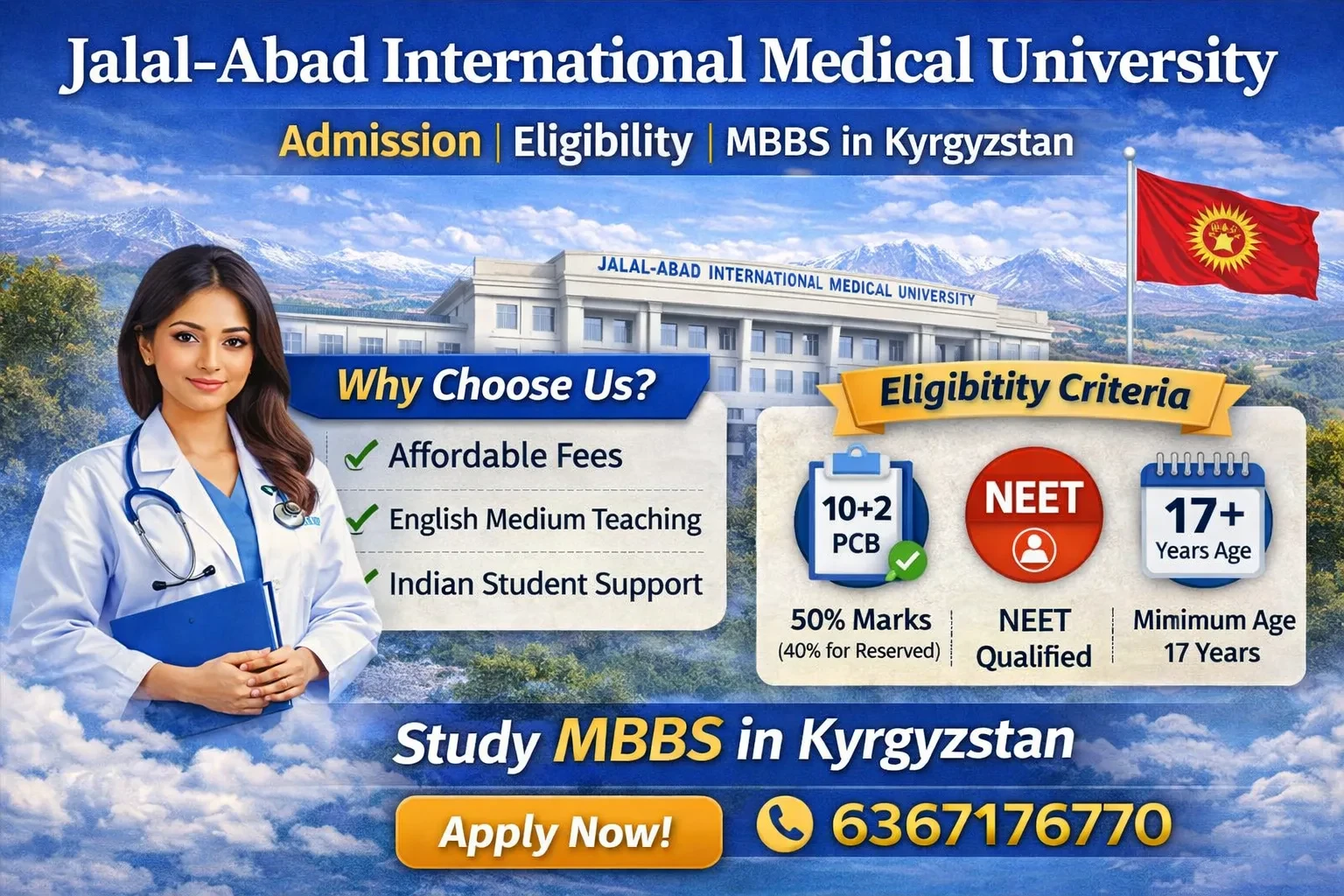
- Those who finished school up to 12th grade with subjects like Physics, along with Chemistry, besides Biology, are eligible.
- A minimum of 50% marks in PCB is required (for reserved categories, the criteria may be slightly relaxed).
- NEET qualification is mandatory as per NMC rules for studying MBBS abroad. Even if the score is low, qualifying NEET allows you to apply.
These criteria ensure students meet both the university’s and India’s medical standards for future licensing.
Documents Needed
For the admission process, students generally need:
- 10th and 12th mark sheets
- NEET scorecard
- Passport (valid for the study duration)
- Passport-size photographs
- Medical fitness certificate
- Birth certificate
- Admission letter and invitation (issued after acceptance)
- Visa application documents
Most of these documents are standard for MBBS abroad admissions, and agencies or university coordinators usually help students organize them.
Step-by-Step Admission Process for CAIMU
From Application to Visa Process
The entry steps at Central Asian International Medical University are clear, made easy for students. This is generally what happens next:
1. Application Submission
Students begin with completing the application, then they send key papers - mark sheets from grades 10 to 12, a copy of their passport, also the NEET score report.
2. University Evaluation
CAIMU checks the papers to see if you qualify. When it's accepted, school sends a letter saying you're in.
3. Invitation Letter
After confirmation, the school sends a proper invitation by standard mail - that’s essential for applying for your visa - using everyday postage.
4. Visa Application
With the invitation letter and other documents, students apply for a student visa at the Kyrgyzstan Embassy.
Documents usually include medical reports, passport, photos, and the acceptance letters.
5. Fee Payment & Final Preparation
Students cover the first cost when needed, sort out their trip plans, bring necessary papers along, also get ready to leave.
6. Departure & Arrival
Folks head to Kyrgyzstan by plane - there, school staff usually meets them right when they land.
Joining Timeline for Indian Students
The academic year at CAIMU typically begins around September or October, so Indian students usually follow this timeline:
- April–July: Application and documentation
- July–August: Invitation letter + Visa processing
- September: Travel and hostel allocation
- September/October: Classes begin
Students who complete the process early get more time for visa approval and better hostel options.
Hostel, Food & Living Conditions for Indian Students
Hostel Facilities
CAIME gives overseas students their own dorms - Indian learners included. Rooms normally have two or three people splitting space. Heating’s there, along with desks for studying, common kitchens, wash spots, plus internet access. Each setup includes these standard features without extra cost.
The dorms sit close to classrooms - so getting around feels easy and safe every single day. Guards plus cameras keep watch, giving families real comfort without any fuss.
Indian Mess Availability
Many Indian students like home-style meals, while Central Asian International Medical University provides Indian food setups via on-campus spots and private hostels nearby.
The mess typically offers:
- Chapati, rice, dal
- Basic Indian curries
- Seasonal vegetables
- Bird eggs or hens you can pick from
Food’s made the Indian way, so kids get used to it fast. Others whip up meals themselves in common kitchens - keeps flavors right and costs low.
Cost of Living in Kyrgyzstan
Indian students find it easier to manage expenses since daily life in Kyrgyzstan doesn't cost much when you look at places like Europe or North America.
Monthly expenses typically include:
- Hostel: Depends on the room and hostel type
- Mess/Food: Moderately priced, especially Indian mess
- Transportation: Very inexpensive public transport
- Personal expenses: Depends on lifestyle
Still, daily expenses stay low - so Kyrgyzstan works well for learners wanting an affordable spot that’s still comfy. While it doesn’t drain your wallet, life here feels smooth enough. Because prices are gentle, stretching your funds is easier. Yet you’re not stuck with poor conditions - it balances cost and convenience. Though simple, the setup suits those watching their spending closely.
Teaching Quality & Faculty Experience at CAIMU
Teaching Methodology
CAIMU uses a step-by-step method for teaching medicine - mixing lectures with hands-on labs and real-world experience. In the beginning, students dive into core topics such as how the body works or is built. As time goes on, they start working through patient cases instead. Later stages drop theory in favor of learning inside hospitals.
The way lessons are taught usually involves interaction, while frequent check-ins, hands-on examples, or working in smaller teams make it easier for learners to grasp ideas without confusion.
Medium of Instruction
International students, like those from India, study in English throughout their degree. That way, they grasp lessons quicker while feeling comfortable in class discussions. When it comes to hands-on training, learners pick up key phrases in the native tongue - this makes patient talks smoother and clearer.
Clinical Exposure Quality
Clinical experience plays a big role in studying medicine at CAIMU. While doing hands-on training at partner hospitals, students get to watch actual patients. They pick up how to talk with people who need care. Also, they start grasping routine tasks doctors handle every day.
The rotation covers areas such as Medicine, Surgery, then Pediatrics, along with Gynecology, among others. At first, learners watch physicians closely - over time they start doing simple jobs while being guided, so they gain hands-on experience plus self-assurance.
Safety & Campus Environment in Kyrgyzstan for Indians
This part shows how secure Kyrgyzstan feels for Indian learners, highlights the type of Indian student circle present there, while also touching on how daily life gets shaped by weather and traditions.
Safety Standards
Kyrgyzstan tends to be a secure choice for learners from abroad, especially those from India. Campus housing uses watchmen who keep things in order instead of leaving gaps. Surveillance cameras are set up across key spots without making it feel like prison. Access points stay restricted so strangers can't wander freely where they shouldn't.
Most campuses - CAIMU included - offer a quiet study vibe, so getting around town by bus or train feels safe most of the time. Still, common sense matters, kind of like when you're visiting any place new.
Indian Community Presence
A lot of Indian students go to Kyrgyzstan each year to do their MBBS - this builds a close-knit group from India that helps one another out.
Many students connect with older peers from their home state, or join Indian food centers, take part in holiday events, yet also team up with culture-based clubs. That setup eases everyday routines while helping newcomers settle in fast.
Local Culture & Climate
Kyrgyzstan’s culture is easygoing and open. Folks tend to treat international students kindly - while city dwellers often get by with some English or Russian.
The weather’s chillier compared to India - winters bring snow, while summers stay mild. Most students get used to it after a couple of months; dorms come with heaters when temperatures drop.
FMGE/NExT Passing Potential for CAIMU Graduates
This part shows why the FMGE/NExT test matters for CAIMU grads, while also looking at how closely their coursework matches the exam’s needs - on top of that, it gives a clear idea about the help Indian students might get when studying for it.
FMGE Relevance
Indian students who go overseas for an MBBS need to pass either the FMGE or the new NExT test - this step lets them work as doctors back home. Those finishing at CAIMU have to get through the same exam, no different than peers from other international med schools.
FMGE puts big focus on key clinical topics, ideas, plus how to tackle problems. So, how well you learn theory and get real clinic experience in MBbs really matters for CAIMU learners.
CAIMU Curriculum Compatibility
CAIMU’s MBBS curriculum follows a pattern similar to the Indian medical structure, which naturally helps students preparing for FMGE/NExT.
Topics such as Anatomy, then Physiology, followed by Pathology, along with Pharmacology, Medicine, Surgery - also Obstetrics - are covered step by step, much like how they do it in India's MBBS course.
The clinical rotations plus hands-on case studies help learners face actual health situations - that’s key for NExT, since it focuses way more on practice compared to FMGE.
Preparation Support for Indian Students
Most learners getting ready for FMGE or NExT at CAIMU use:
- Study groups formed by Indian seniors
- Online coaching platforms
- Revision notes and FMGE-oriented content shared among Indian batches
- Frequent practice tests using old FMGE formats
Even if universities don't offer official coaching, Indian students often form tight study groups - these help everyone keep up with prep. Those who stick to regular studying right from year one tend to do well on the FMGE or NExT.
Advantages of Studying MBBS at CAIMU
This part shows what CAIMU gives Indian learners - strong courses, low costs, yet a smooth daily life.
Benefits for Indian Students
CAIMU pulls in plenty of Indian learners - thanks to solid teaching standards, affordable costs, or a friendly college vibe. Getting in doesn't take much effort; classes run in English while existing Indian groups help fresh faces settle without hassle.
Above all, the course matches what Indian students need when getting ready for FMGE or NExT.
Academic Advantages
CAIMU runs an organized MBBS course where topics build step by step while giving real clinic experience. Learners sharpen skills via labs, ward visits, or talking through patient stories - this builds solid know-how. Since the setup feels familiar, like what’s back home in India, it helps them prep better for tough tests.
Financial Advantages
Many learners pick CAIMU because it doesn't cost much. Fees for classes, dorms, plus daily expenses? Way less than private med schools back home. So getting an MBBS becomes doable - for those wanting solid training minus the money stress.
Lifestyle Advantages
Life in Kyrgyzstan feels easy for students. Hostels come with simple amenities, plus Indian food spots pop up everywhere. Getting around town won’t cost much either. A big group of Indians lives there, so it kind of feels like home. Since things stay calm, learners can keep their minds on classes instead of noise.
Possible Disadvantages Students Should Know
This section highlights actual challenges Indian students might face in Kyrgyzstan - such as shifting climates, difficulties picking up the local tongue, or mismatches between medical curricula back home and those offered there.
Challenges in Kyrgyzstan
Though CAIMU comes with plenty of benefits, there are some hurdles worth thinking about. Staying in another country means getting used to new routines, setups, or daily life patterns. School demands might seem strange; so can classroom methods or how clinics operate - especially at the start. Everything’s doable - but knowing ahead helps when deciding on CAIMU.
Weather
Kyrgyzstan sees long winters that bite hard - snow piles up fast, tough on folks used to India’s heat. Dorms stay warm inside, though stepping outside feels rough at first. Getting across town or making it to dawn lectures in freezing air? Takes a while before it feels normal.
Language
Although classes use English, casual conversations plus discussions in hospitals often go in Russian or local languages. That’s why knowing basic phrases lets students communicate with patients during rounds. Since there's this difference, practical experience can seem a little slow at the start.
Curriculum Gaps
The CAIMU curriculum lines up with international standards - but doesn't always fit India's MBBS setup. Teaching style, hands-on practice, or topic depth might not match up. Because of these gaps, many Indian students end up studying alone or using online courses just to stay ready for FMGE/NExT.
CAIMU vs Other Kyrgyzstan Medical Universities
This part checks how CAIMU stacks up against other med schools in Kyrgyzstan - looking at costs, teaching standards, also student preference from India.
Fees & Education Comparison
When stacked up against most med schools in Kyrgyzstan, CAIMU sits around the lower to middle price range. Though certain older institutions charge more - thanks to better facilities or experienced teachers - CAIMU keeps costs down while still holding core education quality steady.
In terms of schooling, CAIMU sticks close to Kyrgyzstan’s standard medical program - mixing lectures, hands-on lab work, but also real-world clinic shifts. While older schools might give more hospital time thanks to years-old partnerships, newer ones such as CAIMU are slowly building up their practice spots.
Popularity Among Students
CAIMU’s picked up steam with Indian learners lately - thanks to low costs, classes in English, plus an easy sign-up path. Not as famous or old-school as certain leading schools in Kyrgyzstan, yet its expanding local network and helpful vibe draw those hunting a no-fuss, wallet-smart medical degree.
Though big-name colleges often get more attention and boast wider grounds, CAIMU pulls ahead by being easier to reach, lighter on the wallet, yet still cozy for learners from India - this is why more sign up every single year.
How Ensure Education Supports Students as an MBBS Consultancy Partner
Picking an MBBS course overseas matters a lot to kids and families - good advice turns it into a calm experience. Ensure Education walks beside you like a real helper, giving one-on-one tips and full backup starting from day one of chatting till you land on campus.
One major plus of Ensure Education? Tailored uni support. Each learner’s got unique aims, cash limits, a distinct school history. Rather than dishing out generic tips, advisors show them which schools fit best, what life looks like at each, how to map out their future in medicine. That way, picks are smart - based on fit, not hype.
Getting into a program isn't just about classes - dealing with entry rules, paperwork, or visa steps matters too. For learners and families, these stages often feel overwhelming; still, this service helps get every form filled right, turned in when needed, plus checked against school and consulate demands. That way, fewer mistakes pop up, along with less waiting.
Beyond getting in, the team offers prep talks before you go - covering flights, dorm policies, what to pack, swapping cash, staying safe, also how to adapt socially. When learners land overseas, help kicks in right away: ride from the terminal, room assignment, phone setup, plus guidance settling into daily life.
First off, keep school costs open and chats with parents straightforward, so each price - like college bills, dorm payments, or paperwork fees - is spelled out clearly. No secret extras. That kind of openness grows real trust, helping families map out their kid's path into medicine without stress.
Is CAIMU Good for Indian Students?
Central Asian International Medical University might suit Indian students - particularly if you’re after a low-cost, well-organized med course minus the steep prices and cutthroat admissions of private institutes back home. Classes are taught in English, the syllabus fits what Indians expect from their education system, while a rising number of Indian learners on campus makes it easier to fit in. Getting recognized means grads can take the FMGE or NExT exam while keeping study costs low. The application is simple, dorms are okay, and daily life doesn't cost much in Kyrgyzstan. Because of this, CAIMU turns into a solid pick for those wanting an affordable way into medicine.
Getting recognized means grads can take the FMGE or NExT exam, while tuition stays affordable. On top of that, signing up is hassle-free for students. They also get okay dorms when studying there. Living doesn’t cost much in Kyrgyzstan either. Because of this mix, CAIMU works well for those aiming to become doctors without spending too much.
Even so, much like any foreign medical school, CAIMU has its challenges - bitter cold during winter, hard talks on clinic rounds, also lessons that feel unfamiliar compared to what you're used to. People who stay focused on learning, jump into practice work headfirst, but still prep wisely for licensing exams usually get solid results.
In short, CAIMU works well for plenty of Indian students who don’t mind adjusting to a fresh setup while staying focused on studies and test prep during their entire MBBS run.
Conclusion
Central Asian International Medical University stands out as a solid pick for Indian learners chasing low-cost med school that’s respected worldwide. Thanks to its approval by NMC, courses taught in English pop up alongside seasoned teachers plus a welcoming campus vibe - mixing good learning with global insight.
The price for an MBBS here is cheaper than in lots of nations - so it’s solid for those wanting low-cost med school. Dorms, meals (like Indian-style canteens), plus secure campuses help Indian students fit in easier. Sure, harsh cold seasons, small talk hurdles, or exams like FMGE/NExT might trip you up - but good prep and support smooth things out.
CAIMU works well for Indian students aiming to study medicine overseas without spending too much, while still getting solid training.
Folks, Ensure Education helps out big time, handling everything from start to finish - like getting you in, sorting papers, dealing with visas, or planning your trip - all aimed at keeping things easy and worry-free for learners and their families.
 About Us
 Blog
Blog
 Insights & Awareness




 Ensure TV