Farming stands among India’s earliest and key trades, shaping much of its economic strength. Thanks to progress in tech and science, growing crops now stretches beyond just planting fields. Today’s agricultural world weaves together studies, business ventures, digital tools, care for nature, making meals, along with smarter ways to guard ecosystems.
Farming studies across India equip learners with hands-on experience, research-based learning, yet real-world application for strong futures in crop-related industries. Still, these programs mix fieldwork with classroom insight, so graduates enter jobs ready. Because science guides growth here, trainees grasp soil health, pest control, followed by modern tools without overload. Meanwhile, career paths open in agribusiness, extension services, even government roles after completion. Though often overlooked, such education shapes resilient experts who adapt fast when conditions shift.
Agricultural Course Goals
The main objectives of agriculture courses are to:
- Develop scientific understanding of crops and soil
- Improve food production and sustainability
- Promote modern farming techniques
- Train students in agribusiness and management
- Encourage innovation in agriculture technology
- Support rural development and food security
Agriculture Course Topics
Agriculture courses cover both theoretical and practical learning, including:
- Crop production and management
- Soil science and fertility
- Plant breeding and genetics
- Agricultural biotechnology
- Pest and disease management
- Irrigation and water management
- Agricultural economics
- Sustainable and organic farming
- Farm machinery and technology
Farming Areas with Specific Focus
Students can specialize in various agriculture-related fields such as:
- Agronomy
- Horticulture
- Soil Science
- Agricultural Biotechnology
- Plant Pathology
- Entomology
- Agricultural Economics
- Food Technology
- Dairy Science
- Forestry
- Organic Farming
Agriculture Courses in India Types
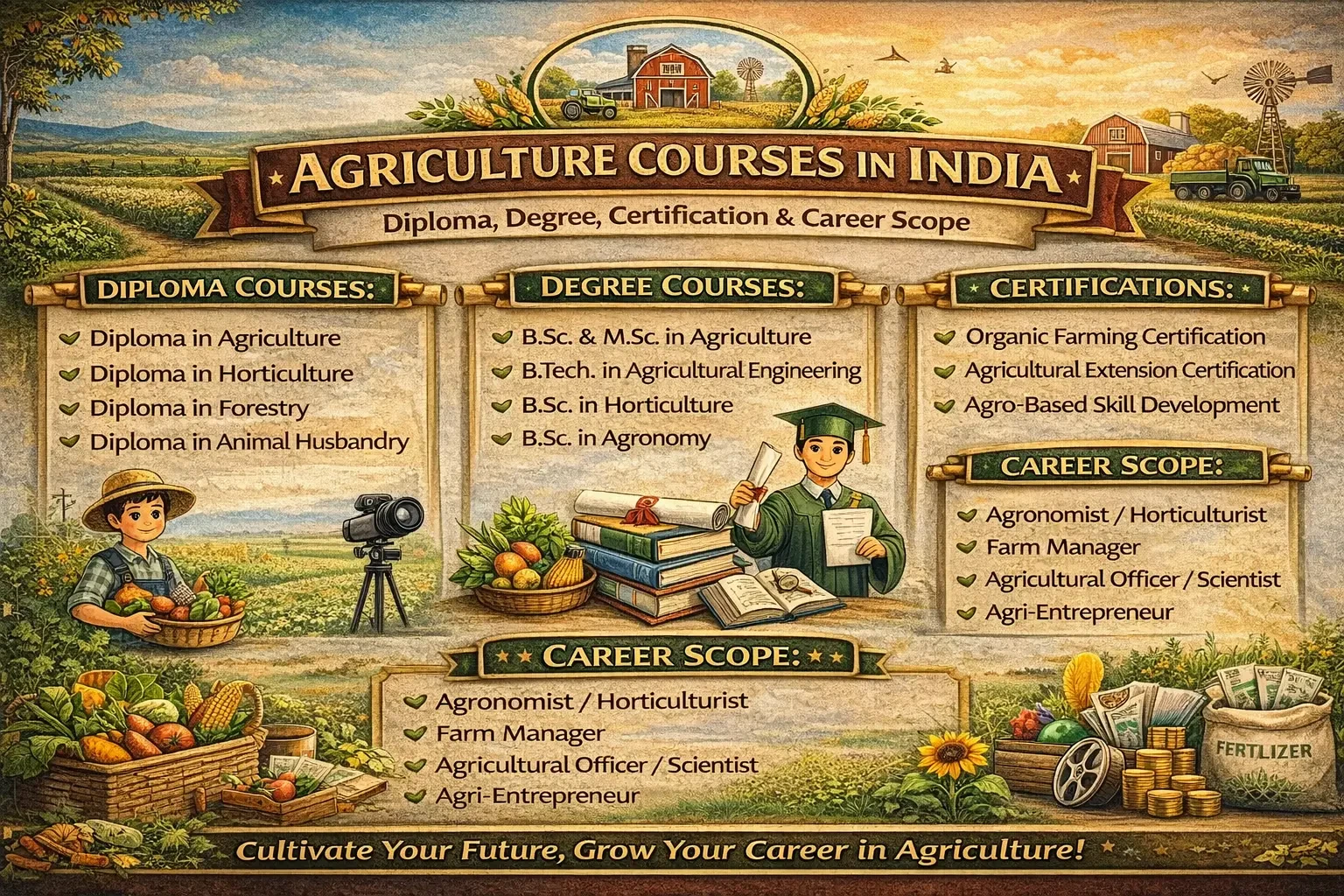
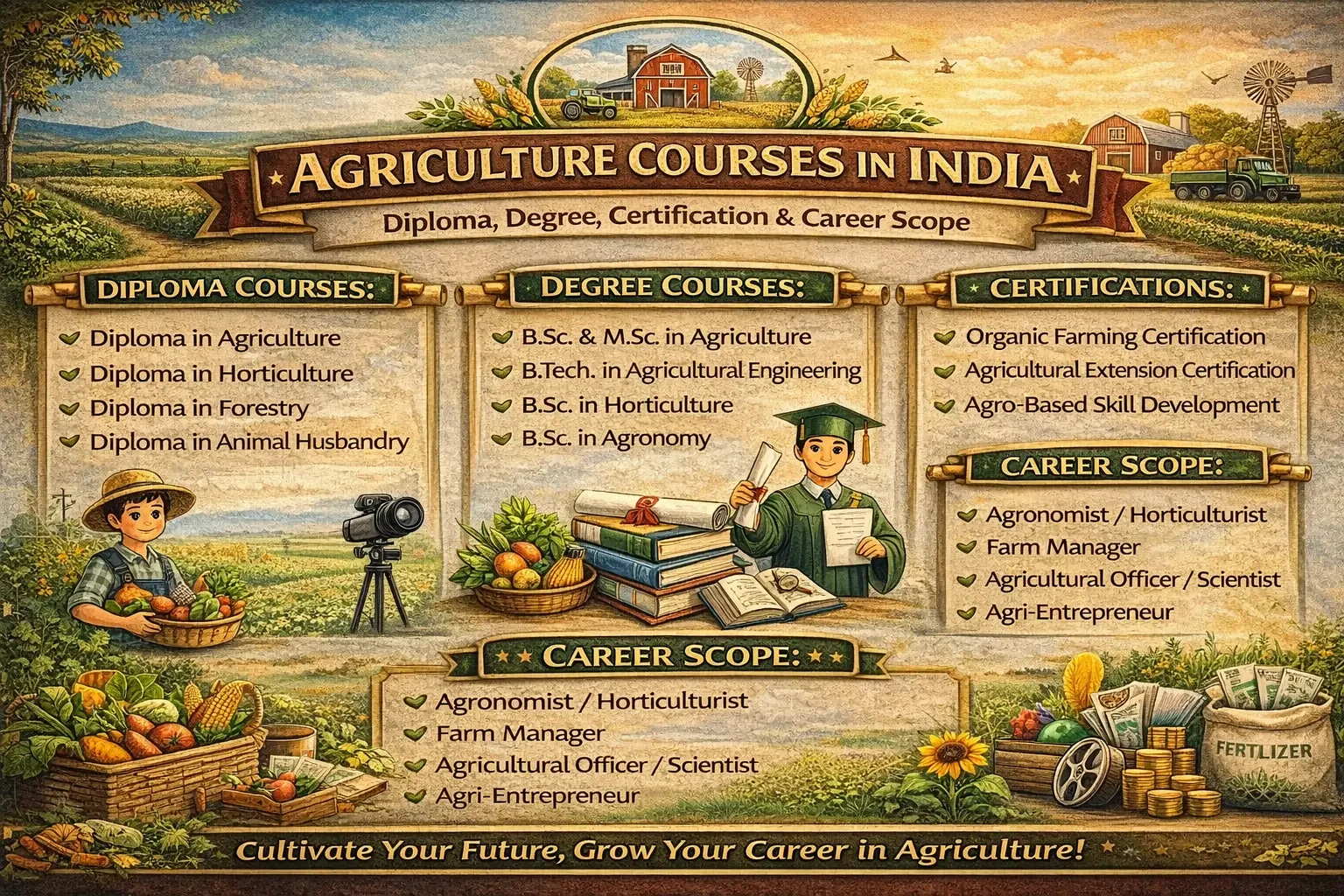
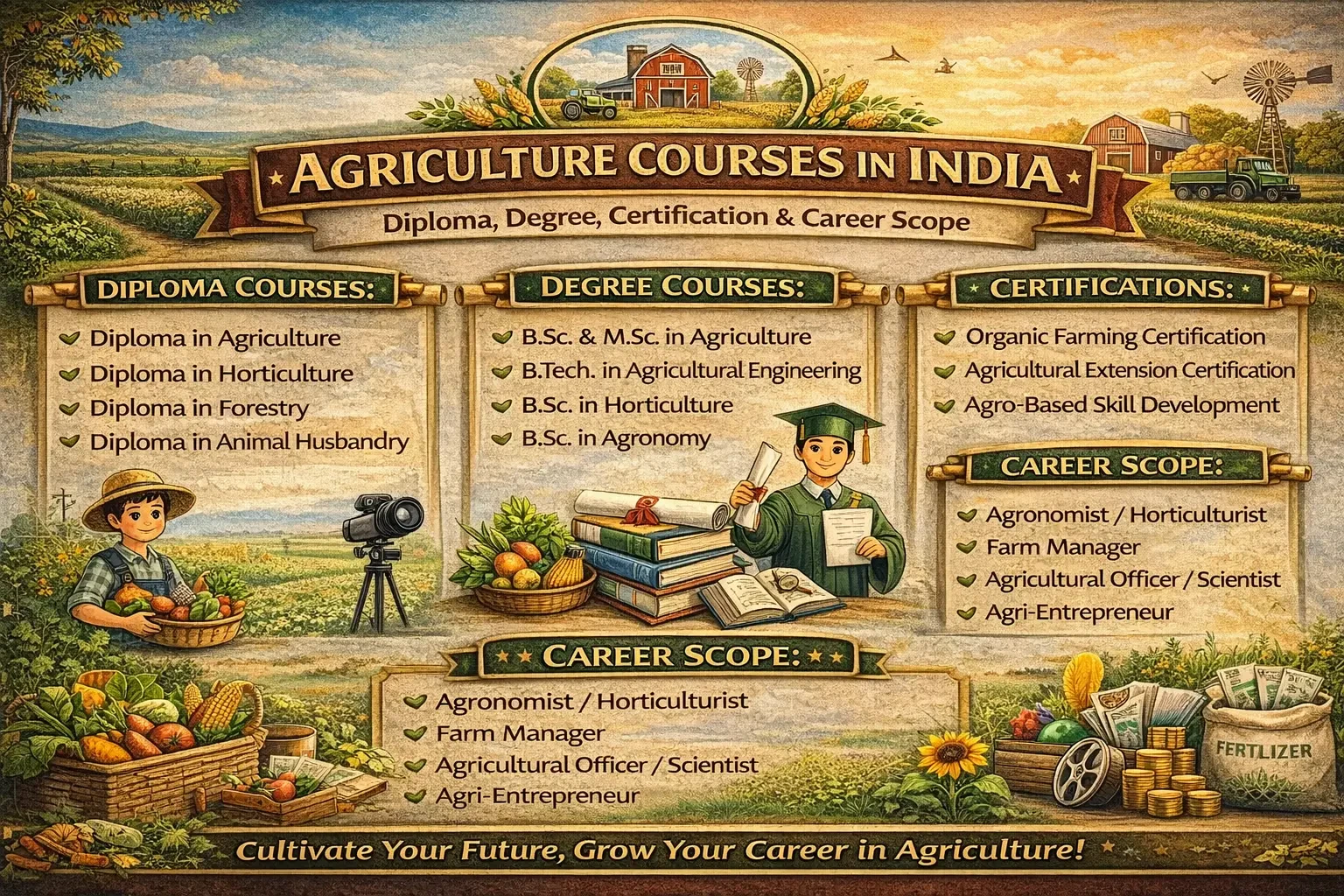
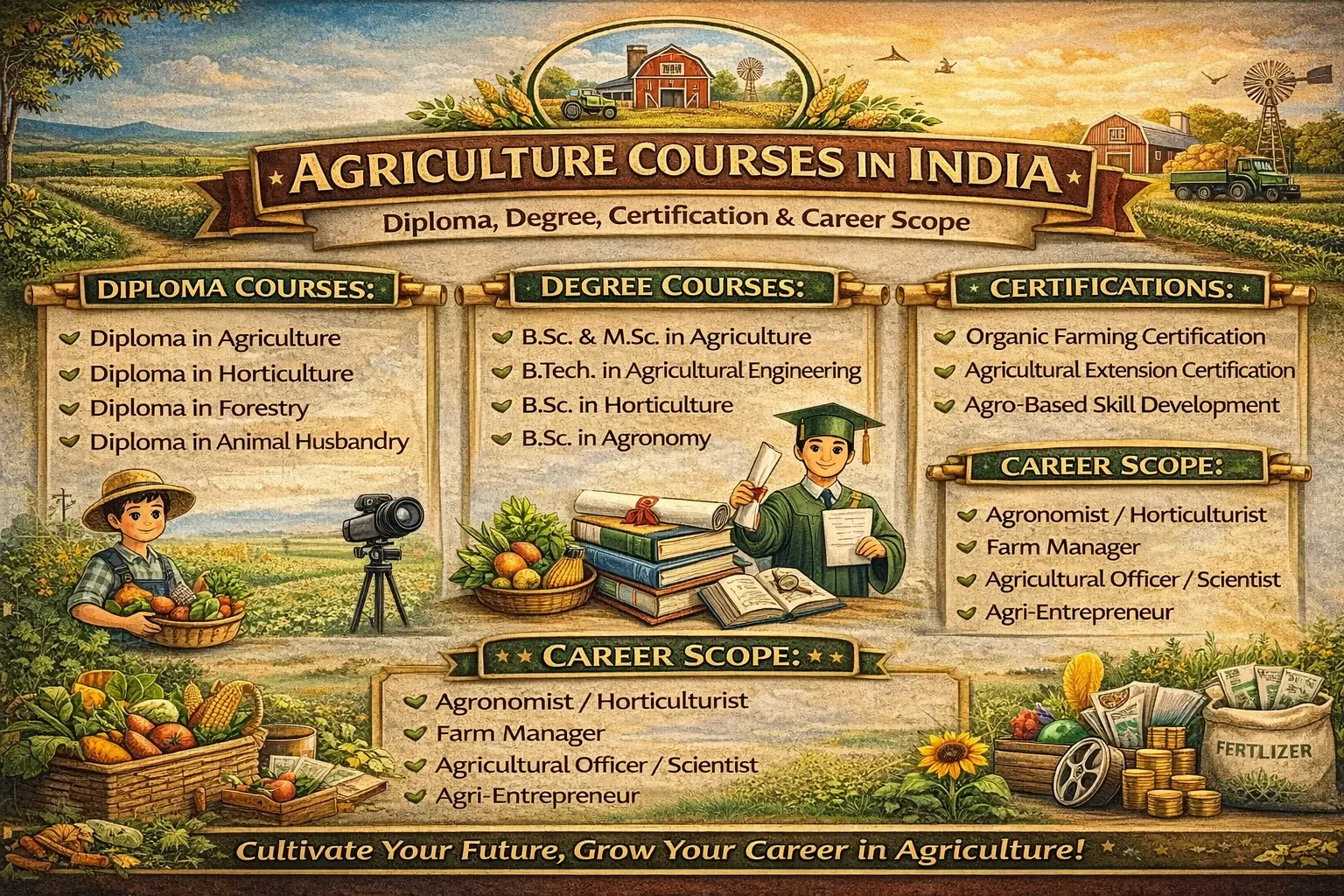
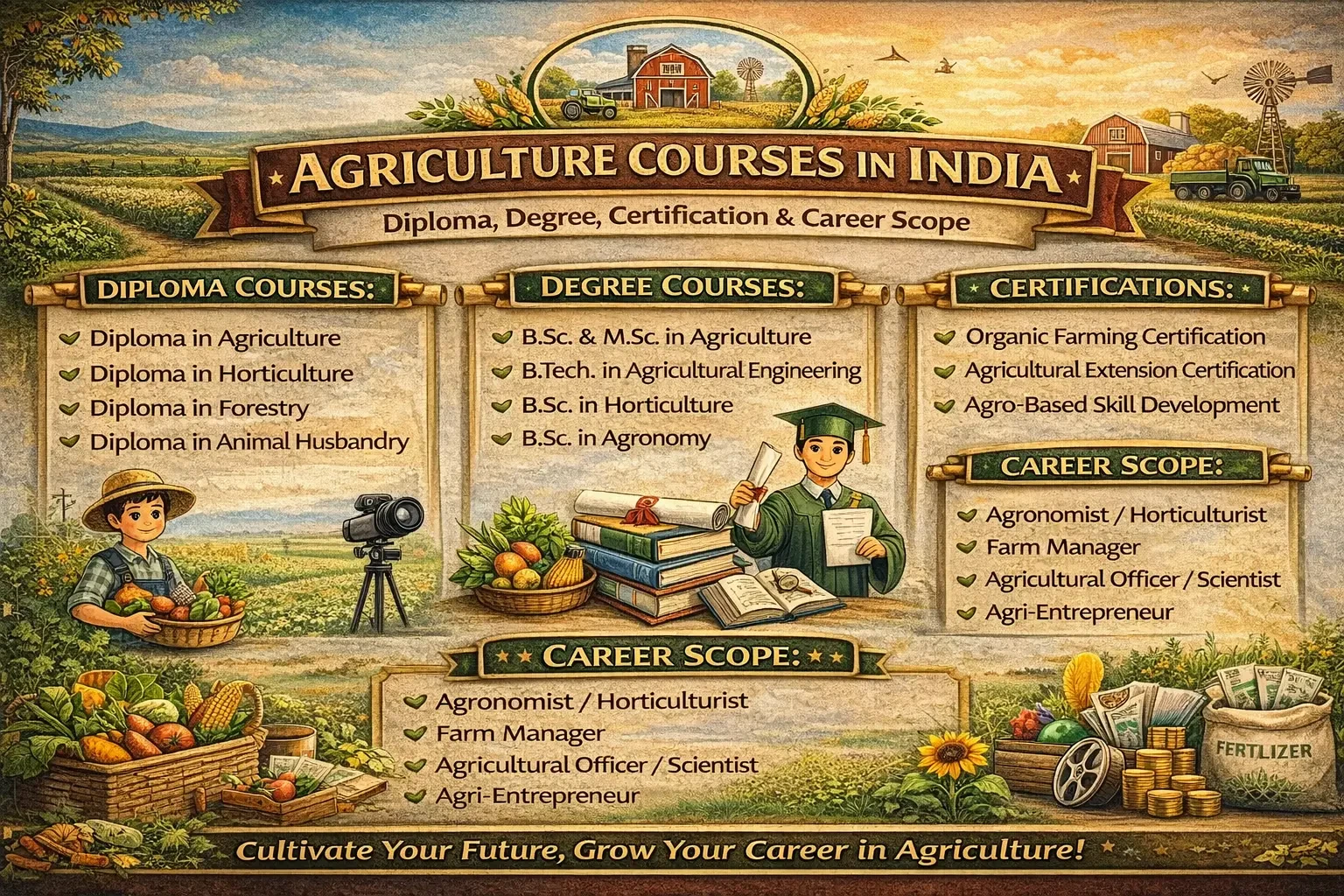
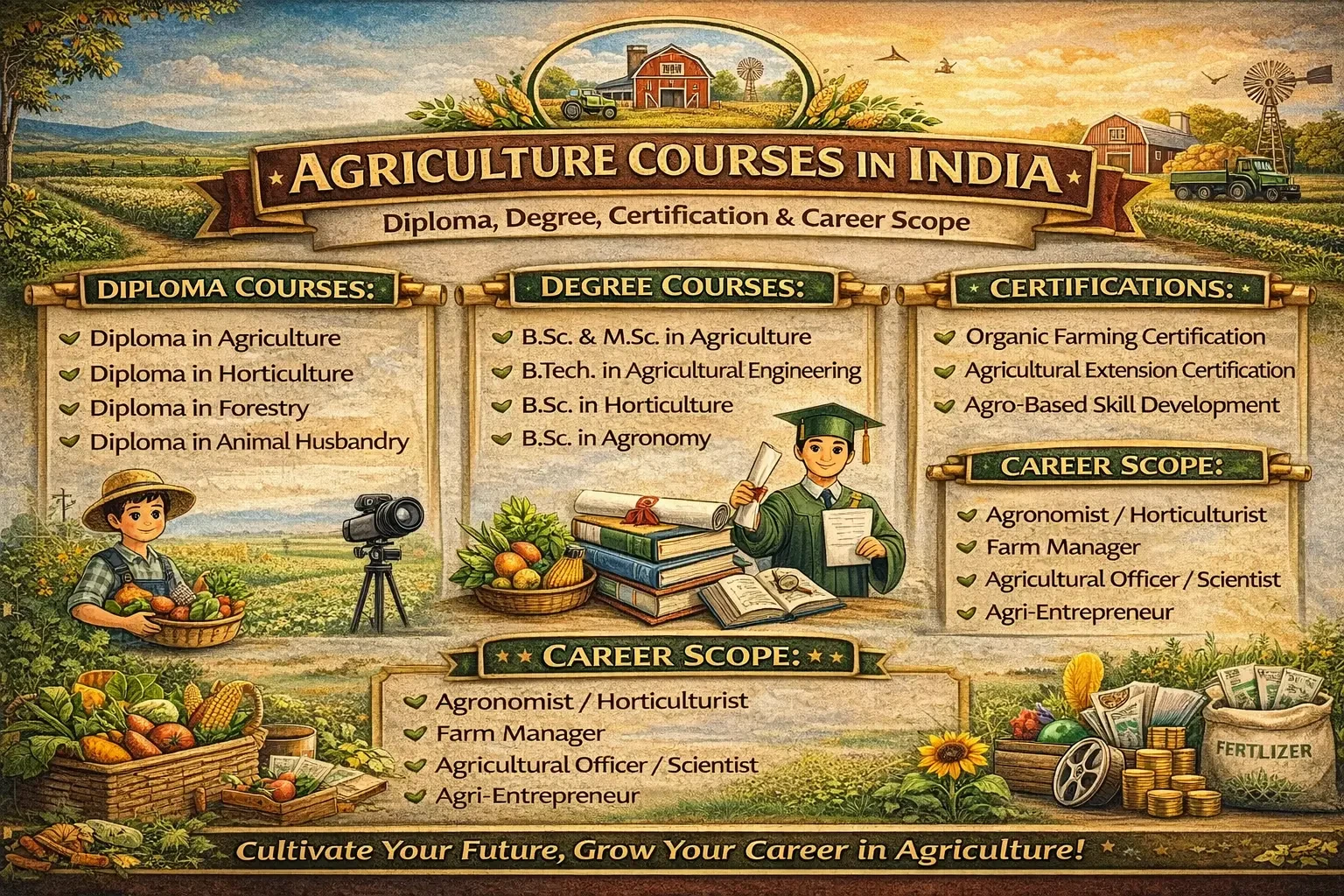
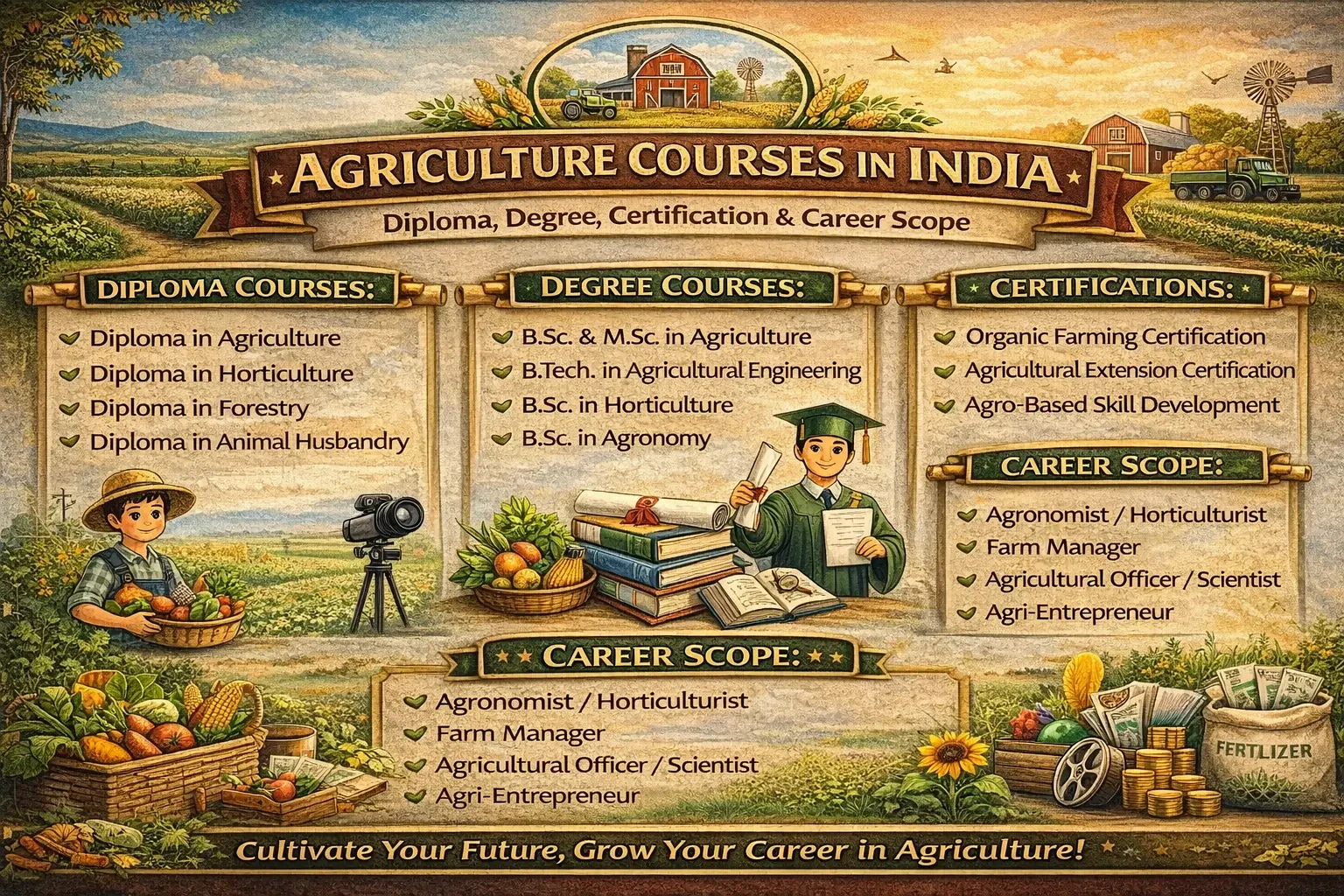
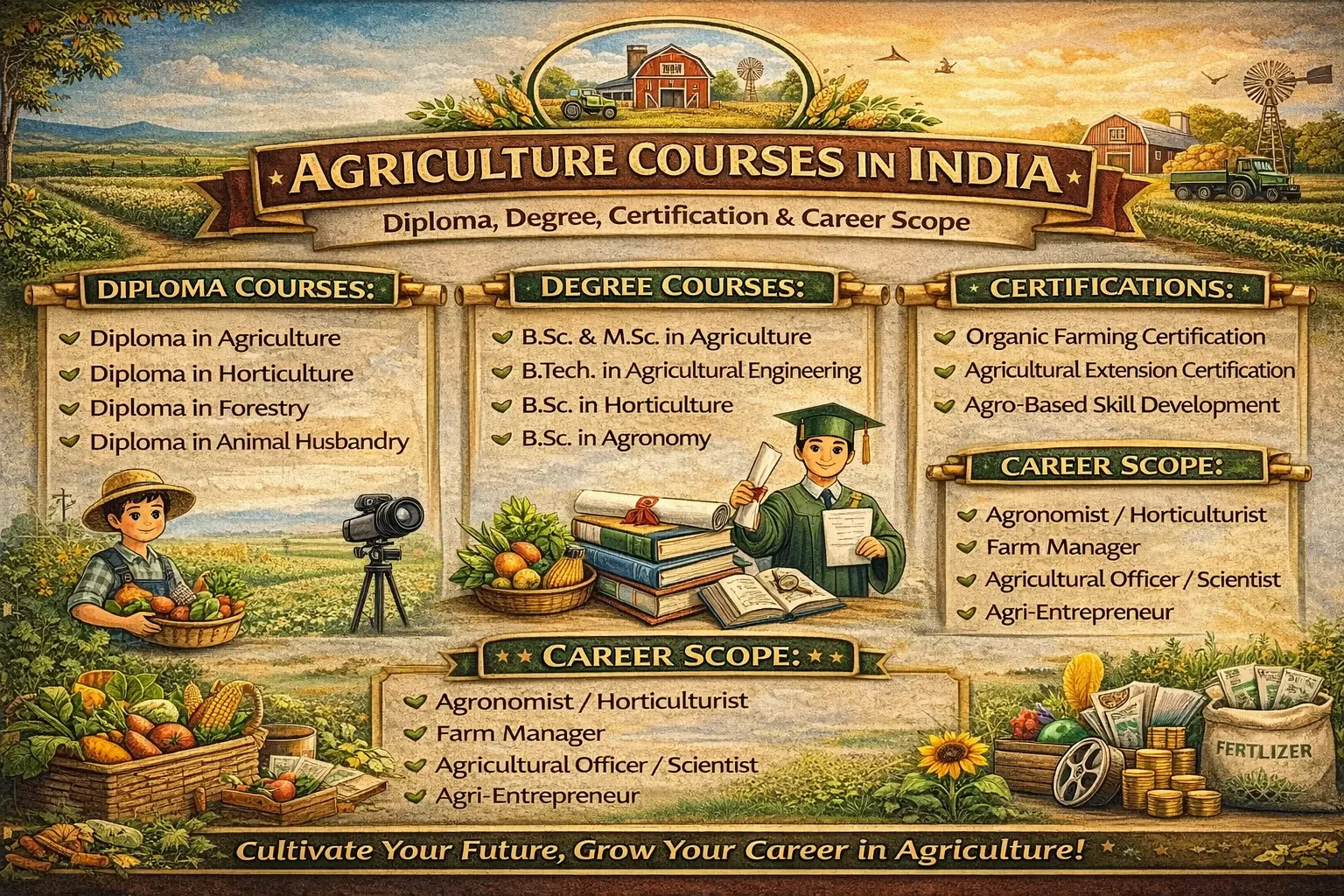
Diploma Courses in Agriculture
Farming know-how and hands-on training sit at the heart of diploma programs. Yet they skip heavy theory.
- Duration: 1–2 years
- Suitable after Class 10 or 12
- Emphasis on farming techniques, crop care, and fieldwork
Degree Courses in Agriculture
Degree programs offer in-depth scientific and professional education.
- Science degree in farming, Engineering path focused on farm tech instead.
- Duration: 3–4 years
- Exploring studies shapes how tools evolve. Yet machines change the way teams organize work. Meanwhile progress pushes methods beyond old limits
Certification Courses in Agriculture
Short-term courses for skill enhancement.
- Lasted a short time, stretching into half a year at most
- Farming without chemicals grabs attention these days. Yet machines that plant seeds with precision also shape how food grows. Healthy dirt beneath crops matters more than many realize. Business around growing things shifts quietly under new ideas
- Farmers find it useful. Students use it too. Professionals rely on it now because of how things work out
Agricultural Courses Can Be Divided Into
- Undergraduate courses
- Postgraduate courses
- Diploma courses
- Certification courses
- Research-based programs
Agriculture Courses in India Basic Requirements
To pursue agriculture courses, students generally need:
- Finish class 10th or 12th - depends on the program you pick. Some courses need tenth-grade completion. Others ask for twelfth grade instead. Check what fits your chosen path. Level required shifts with each option available
- Science background preferred for degree courses
- Farming catches attention when roots dig deep into soil. Nature matters because seasons shape how things grow. Sustainability sticks around since balance keeps systems running
- Physical readiness for fieldwork
Some major agricultural institutes in India
- Indian Agricultural Research Institute (IARI)
- Punjab Agricultural University
- Tamil Nadu Agricultural University
- Acharya N.G. Ranga Agricultural University
- Govind Ballabh Pant University of Agriculture and Technology
- State Agricultural Universities
Personality Traits Needed for Farming Jobs
Successful agriculture professionals often have:
- Interest in nature and environment
- Problem-solving ability
- Patience and perseverance
- Analytical and research skills
- Physical endurance
- Adaptability to weather and field conditions
- Teamwork and leadership qualities
Job Outlook in Farming
Farming connects people to many careers, both in public offices and business groups. Those who finish school might find roles such as:
- Research institutions
- Government agriculture departments
- Agribusiness companies
- Food processing industries
- Farm groups plus local aid workers. Village projects working alongside volunteer teams
Farming Fishing Forestry Ranching
- Farms and plantations
- Seed and fertilizer companies
- Agricultural equipment industries
- Food processing units
- Dairy and poultry farms
- Research labs
- Educational institutions
Types of Farm Work
- Agricultural Officer
- Farm Manager
- Agronomist
- Soil Scientist
- Horticulturist
- Agriculture Researcher
- Food Inspector
- Agribusiness Manager
- Agricultural Consultant
Remuneration (Salary)
Most times, pay in farming jobs links closely to training level. Workers with more years on the job often earn higher amounts. A person's specific duties also shape what they make. Roles differ widely across fields and greenhouses alike
- Entry-level: ₹2–4 LPA
- Mid-level professionals: ₹5–8 LPA
- Folks with years under their belt, plus those deep into research? Pay often hits 10 lakh rupees a year, sometimes more
Starting a business in farming might pay better than expected. A person who builds their own path here could earn more through fresh ideas instead of old methods.
Why Can Agriculture Be a Career Path?
- Strong demand and job stability
- Opportunity to work with nature
- Contribution to food security and society
- Growing scope with technology and innovation
- Entrepreneurial opportunities in agribusiness
Conclusion
From soil to harvest, learning about farming in India mixes science with new tools and care for nature. Because more attention now goes to growing healthy food, working without chemicals, plus using smart methods, choosing this path feels like preparing for what comes next. Fewer people say it’s just old-fashioned work - it holds value, respect, grows quietly into something solid.
 About Us
 Blog
Blog
 Insights & Awareness








 Ensure TV