How to Overcome Overthinking: Simple Steps to Calm Your Mind
Most people get caught in their thoughts now and then. Conversations loop inside the mind, long after they’re done. Worries about what might happen later take up space without warning. Situations get examined one more time, even when answers seem clear. Thinking things through has its value - sure - but too much of it pulls strength away. Stress grows heavier with every extra minute spent staring inward. Calm begins to slip once the mind won’t let go.
Stuck inside your head most days? Good news - simple routines can help quiet the noise. Instead of shutting thoughts off, try steering them. What matters isn’t stopping thought, but shaping it. Quiet moments come not from force, yet gentle guidance.
YouTube Video Link: https://youtu.be/m1RGFegL83c?si=8Q9yOD7XU4tPAzeG
1. Spotting the Signs of Too Much Thinking
Finding your thoughts loop again? That's the moment to pause. Spot habits like these:
Going over errors again, yet somehow never moving forward
Imagining worst-case scenarios
Struggling to make simple decisions
Feeling mentally exhausted without doing much
Spotting these signals lets awareness break the pattern. The moment they show up, a pause becomes possible.
2. Focus On What Is Yours To Manage
Worrying tends to fixate on stuff you cannot change. Rather than chasing worst-case scenarios, try asking what step feels possible at this moment
A single move ahead can quiet your mind. Taking steps chips away at doubt. Doing something shrinks the weight of endless thoughts.
3. Limits on thinking time
Start with a short clock ticking - say ten or fifteen minutes - to turn over one idea. When the time drops, pick an answer. Or walk away. Whatever sits there when the minute hand stops is your move.
When you follow this approach, thoughts stop spinning in circles. Because clear patterns help thinking move forward, while chaos pulls it into repetition.
4. Mindfulness and Deep Breathing Practice
Breathing slowly can pull you out of scattered thoughts. When the mind races, pause - feel each breath fill your body instead
Breathe in gently - count four. Hold it there a moment before moving on
Hold for 4 seconds
Exhale for 4 seconds
Breathe slowly a few rounds. That settles your nerves plus clears the mental noise.
Now here’s a quiet moment - try sitting still, paying attention. Movement helps too, say a slow stroll through trees. Writing things down works just as well, one thought at a time. Each of these eases the noise inside your head.
5. Challenge Negative Thoughts
That little worry? It grows when you stare too long. Try wondering instead: What if it's not that deep?
Could that idea actually be true?
Why should I believe it? What proof exists?
One year down the line, does this even show up on the radar? Maybe not.
Worry often fades when an answer shows up. Sometimes it’s just that - less noise, more quiet.
6. Stay Focused on What Matters
When thoughts race, motion slows them down. Try moving your body, picking up a fresh habit, or sitting beside someone who listens. A still head dreams up problems. Fill the hours with steps, pages, voices. Restless energy twists quiet moments into worry. Let effort shape the day instead - walk, practice, talk. Empty minutes grow loud. Crowd them with action that anchors you.
When you move your body, it often clears tension while lifting how you feel. A shift happens inside when motion becomes part of the day.
Conclusion
Thoughts don’t have to run the show. Spotting habits in your head shifts everything. Doing something - anything - pulls attention away from loops. Staying present, even briefly, cuts through noise. Questioning grim predictions opens space for calm. Clarity grows when effort meets awareness. Control builds slowly, without drama.
See, not each idea needs your focus. Often, strength shows when you walk away.
Long ago, people thought what we see is all there is. Today’s science wonders if something else hides beyond - maybe even whole worlds like ours, sitting alongside.
This thought - called the multiverse idea - points to our universe possibly being one tiny piece within an enormous cosmic setup. Though it might seem wild, maybe impossible, multiple physics frameworks actually take it into account. Into that unknown we now step, guided by research on this puzzling notion.
YouTube Video Link: https://youtu.be/tuYlnUMG1T0?si=8fQplrT9pzf7l2O-
What the Multiverse Means?
A single cosmos might not be all there is. Beyond what we see, countless realms could stretch out. One after another, these domains might operate under entirely new rules. Different forces here, alternate outcomes there. Reality itself changes shape depending on where you land. Not every version follows our physics. Some run hotter. Others colder. Time bends differently across them. What feels constant to us may shift elsewhere. Existence isn’t locked into one form.
A long time ago - about 13.8 billion years - the universe started with what we call the Big Bang. Yet certain researchers think this beginning may not stand alone; perhaps it is just one burst among countless others unfolding within a broader reality.
The Science Behind The Idea
Several advanced theories support the possibility of multiple universes:
1. Cosmic Inflation
Out of the Big Bang came a swift stretching, known as cosmic inflation. In distant corners, this expansion might never stop - giving rise to isolated pockets, each a universe of its own
2. String Theory
Reality, according to string theory, comes from small strings that vibrate. Because these vibrations can arrange in countless ways, each setup might form a universe where rules aren’t quite like ours. Different rhythms, different worlds - each tuned by how strings move.
3. Quantum Mechanics
A single moment might split into countless versions of what happens next. Some views on quantum mechanics point to this kind of branching. Reality could unfold in many directions at once. These paths rarely touch, yet they may all exist. One result does not cancel out another. Instead, each possibility lives on its own track. Parallel worlds emerge without meeting. The notion fits neatly within certain scientific debates.
Other universes unseen for now?
Out there, past what we can see, other universes might hide. Because space stretches nonstop, their light could miss us completely.
Finding proof gets tough when other universes stay out of reach - hard to study what stays hidden.
The Shocking Truth
It turns out, nobody really has an answer just now. Right at this moment, the idea of many universes still lives only in theory. Still, certain numbers and equations hint - pretty loudly - that ours may not stand by itself.
A shift like this could reshape how we grasp existence itself. What we observe might merely be fragments within an immense, hidden framework.
Conclusion
Maybe there are more universes out there. There’s no proof either way, not yet. Still, even thinking about it pulls you into the deepest questions space has to offer.
Now think about it - chasing down the multiverse lifts our understanding higher, showing just how wide and strange everything might be. Could turn out reality is way beyond what anyone pictured so far.
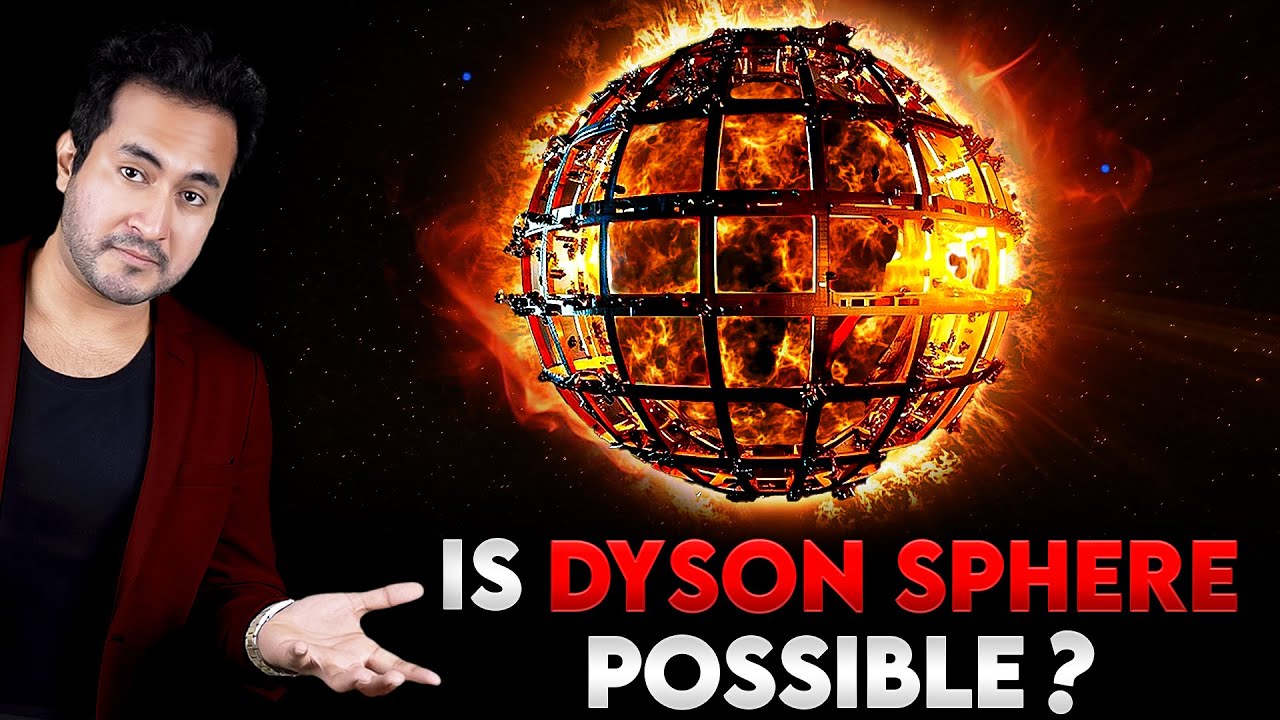
A single star’s full power - harnessed by a vast structure around it. That concept goes by the name Dyson Sphere. Could such a thing ever exist, though? Or does it stay fixed in stories, far from real physics?
A strange idea came into focus when Freeman Dyson, a physicist, wrote about it in 1960. Because technology could advance so far, one day a civilization may surround its star with something huge - just to catch vast power. Now imagine capturing nearly all sunlight using an artificial shell; that is the core thought behind such a design. Yet despite sounding like science fiction, scientists still ask: could this ever actually exist?
YouTube Video Link: https://youtu.be/Co3TgjTTDOw?si=-UYsOLbZUf_ztFpS
What A Dyson Sphere Is?
A giant structure around a star - that’s what people mean by a Dyson Sphere - meant to grab nearly all its power. Most think it's like a hard ball enclosing light, yet that image misses reality.
A cloud of gadgets looping around a star - that was Dyson’s first sketch. Not one stiff bubble, but many pieces dancing in space fits better with how things move out there.
A thought jumps to mind when thinking about how far tech might go - the Kardashev scale tracks progress by energy capture. Powering everything a star gives off fits what a Type II society does, maybe wrapping the star in a vast structure built to collect light.
Why would we need one?
One second of sunlight holds more power than people burn through an entire year. Growing societies need ever more energy to keep moving. Right now, most of that comes from coal, oil, atoms splitting apart, or wind and water spinning machines. The sky's giant fireball offers a supply so vast it dwarfs everything we pull from the ground.
One day, grabbing just a bit of that power might run our planet for ages. The idea? Wrap a star in a shell - humans could tap endless energy. That’s what a Dyson Sphere offers: survival on cosmic timescales.
Can It Be Done?
True, it's possible. No physics rule shuts down the idea of a Dyson Swarm outright. Yet the hurdles in making one are massive
A huge quantity of stuff might be needed - entire worlds could get taken apart.
A building method like that hasn’t been invented so far.
Millions of structures holding steady paths? That’d get messy fast.
Apart from gravity messing things up, wrapping a firm casing around a star seems out of reach. Instead, something looser - like scattered platforms orbiting in loops - might actually work on paper.
Looking for Dyson Spheres?
Funny thing - researchers once scanned faraway stars looking for Dyson-style constructions. When one of those giants is wrapped in a massive artificial shell, its heat glow could act strangely.
Still, nobody has found a real Dyson Sphere yet. Yet scientists keep looking, hunting signs of powerful alien societies across space.
Conclusion
A Dyson Sphere - could it actually exist? In theory, sure. Yet in reality, we are nowhere near making one happen. Such a structure demands tools and materials we simply do not have today.
One thought keeps nudging researchers forward - what if power on a massive scale could reshape how societies grow? Even without constructing such a structure, its mere possibility pulls minds toward far-off horizons where human reach expands beyond today’s limits.
Life passes pieces of itself down through families, shaping who we become. Because of this transfer, faces often echo across generations. Hidden patterns show up when illnesses move from parent to child. What sets one person apart from another lies partly here, in these coded threads. Inside every cell, a quiet guide directs growth, daily operations, even change over time. Understanding these mechanisms opens a window into existence itself.
What shapes your eyes’ hue or your blood’s kind? It is genes at work, touching almost everything alive carries. Step into basic ideas now - put simply, said straight.
YouTube Video Link: https://youtu.be/QN0n0W_XD8Q?si=0Hfrm8WxOhR-E9c-
What Is Genetics?
What we inherit comes down to tiny codes inside us. Hidden within cells, a long spiral holds life’s blueprint instead of random chance. This code shapes how living things grow, behave, work - almost everything about them.
Inside every living thing, tiny pieces hold life's blueprint - these bits go by the name of Gene. One single trait, like how tall someone grows, gets its plan from just one of these. A different shade of hair? That too comes from another small unit doing quiet work behind the scenes.
DNA and Chromosomes
Wrapped tight, DNA fits inside what we call a chromosome. Most people carry 46 of these, split into 23 matching sets. From mom arrives one half, while dad supplies the second. Each pair holds shared pieces, passed down without fanfare.
Females carry two X chromosomes within their cells. Males have one X plus one Y chromosome instead. That mix shapes how traits pass between generations. Each person ends up with a pattern unlike any other. The way these strands pair defines biological differences early on.
Dominant And Recessive Traits
One way genes show up is through dominance - just a single version will do. Yet sometimes, like with hidden features, both gene forms must match. Starting with the obvious ones, they pop out even if there’s only half the pair. The less noticeable characteristics? They wait quietly until doubled. Not every inherited detail shouts; some whisper only when repeated.
A child might inherit two different versions of an eye color gene - one from each parent. When that happens, the stronger version tends to show up in how they look. So if one copy says brown and the other says blue, brown often wins out. That means most people with both genes end up with brown eyes anyway.
A single gene can come in many forms - these are known as alleles. Because people inherit different versions, traits differ from one person to another.
Gregor Mendel's Influence on Genetics
Pea plant tests led Gregor Mendel to uncover patterns in trait inheritance. Traits passing through generations became clearer because of his careful observations. One idea he shaped was how gene pairs split during reproduction. Another concept showed that different traits are passed down without influencing each other. His findings laid what we now call the base of modern genetics.
Genetics Matters Because Traits Pass Through DNA
Genetics plays a crucial role in:
Understanding inherited diseases
Improving agricultural crops
Advancing medical research
Studying evolution and biodiversity
Starting off, today's tools such as DNA analysis and altering genes rely on simple rules of heredity. These methods grow from fundamental ideas about how traits pass down through generations. From the beginning, they connect back to core lessons learned in early genetics research. Each step forward ties into long-standing concepts first seen in basic biology studies.
Conclusion
Life hands down its blueprint through tiny codes tucked inside every cell. Inside those cells, DNA holds the plan like a quiet guidebook no one reads aloud. Traits show up because specific sections called genes switch features on or off. Tightly wound packages named chromosomes keep everything sorted and ready. How things unfold across families comes down to unseen threads pulling from past generations.
What if life's smallest code held the key to everything alive? That tiny strands of DNA do just that - revealing how bodies work, why diseases spread, who we are at a core level. Size means little when it comes to impact; invisible threads pull visible outcomes across nature, health, generations.
What if our universe isn’t alone? That thought pushes scientists to wonder - could multiple realities exist beyond ours? Not just similar ones, but entirely separate realms where physics works differently. Some of these places might follow rules we can't imagine. Reality itself might wear many faces.
Though it feels like a story from outer space, this concept grows out of actual physics research. What lies beneath the term "multiverse" becomes clearer when looking at data - not dreams - followed by scientists.
YouTube Video Link: https://youtu.be/orKSUmOHDCE?si=C6lMC_aAzuLmW1lM
What the Multiverse Means?
A single universe might just be one piece of a much bigger puzzle. Beyond what we observe lies the idea of countless realities floating out there. Everything visible - the galaxies, stars, even time and space - is part of our own cosmic bubble. Other bubbles could run on entirely different rules.
Still, a few ideas propose our universe might simply be one small pocket within something far bigger.
Science Ideas About Many Universes
Several scientific ideas support the possibility of a multiverse:
1. Cosmic Inflation
Right after the Big Bang, space began stretching fast because of something known as cosmic inflation. In some models, this expansion doesn’t fully end - instead it carries on elsewhere, far beyond what we can see. Because of that, separate pockets of reality might form, each like its own universe
2. String Theory
Reality might rest on small strings that vibrate, according to string theory. Because these vibrations can arrange in countless ways, separate worlds may exist - each with its own rules.
3. Quantum Mechanics
Out there, some versions of quantum theory suggest each tiny chance happening splits off its own world. That concept goes by the name Many-Worlds. Not everyone agrees, yet it sticks around. Each decision point? A new branch begins.
Any Evidence Found?
Right now, nobody has seen real-world data showing the multiverse is real. It still lives only in theory. Researchers look for hints instead - clues like strange shapes hidden in the glow left over from the early universe.
Still, without clear evidence, the idea of many universes stays just a guess - nothing proven yet.
Reasons People Disagree With the Multiverse
Not every scientist agrees - when unseen realms stay beyond reach, they might sit just past science’s edge. Testing ideas drives discovery; without it, proof slips far away. Other worlds? Hard to pin down through experiments we run today.
Beyond our universe, ideas spin differently now. Still, some scientists question everything beyond the known cosmos. A few claim endless versions of reality might exist. Others find that too far to accept. So - this puzzle stays open for study.
Conclusion
Truth is, nobody can say for sure if the multiverse is real. Right now, it remains unknown.
Floating between theory and mystery, the multiverse captivates minds despite having no proof yet. Still, if tomorrow’s findings back it up - or tear it down - the search itself drives science further into what real means.
Right now, across silent galaxies, the concept of many universes floats unproven - tugging at what we think reality means. Though unseen, it twists the edges of physics like wind bending tall grass.
What shapes who you are? Eye color from a parent, maybe even the way hair curls - clues hide in DNA. This tiny code runs through nearly every living thing on Earth. Think of it like a quiet guidebook inside each cell. It shows life how to build itself, step by step. Instructions tucked in strands decide growth, actions, repair.
Life becomes clearer once you grasp DNA - whether looking at a tiny bacterium or a person. What we are ties back to these molecular blueprints, shaping existence without fanfare. A single thread connects all living things through this code. From the simplest organism to us, patterns emerge in quiet ways. Hidden inside cells lies the instruction set driving it all forward.
YouTube Video Link: https://youtu.be/kZUunHP4XKw?si=m9hbltcw7sVbGFbr
What Is DNA?
Bits of life carry instructions inside them. That stuff goes by the name Deoxyribonucleic Acid, short form DNA. Inside each living thing, this molecule holds a blueprint. Hair shade might come from it. So can how tall someone grows. Blood variety shows up too. Even chances of catching some illnesses trace back here.
Inside most cells, DNA sits within a central core known as the nucleus. Chromosomes are the form that nearly identical genetic material takes in human cells.
In simple terms:
Life gets shaped and held together by DNA, its guiding code.
The Shape of DNA
A spiral twists through life's code, shaped like a rope ladder turned. This twist holds the pattern found in every cell.
Down along its edges, the rungs link up through sugar joined with phosphate bits. Each strand holds shape because those parts repeat, forming a steady frame that twists into place where needed.
A staircase forms when molecules pair up - Adenine links with Thymine, while Cytosine bonds to Guanine. These partners repeat along a spiral frame.
Bases link up in particular ways
A pairs with T
G bonds to C
Starting with A, T, C, G - these letters spell out life's blueprint inside cells. Their order carries precise directions to assemble protein molecules step by step.
DNA Genes and Chromosomes
Inside cells, DNA gets split into chunks known as genes. These tiny sections hold the exact code needed to build one particular protein. Each gene acts like a blueprint, guiding how molecules come together. What matters most is their role in shaping biological processes.
Folded tight, DNA lives inside what we call chromosomes. Most people carry 46 of these, split into 23 matched sets. One set comes from mom, the other from dad, without exception. Each pair holds a mix of hereditary pieces from both sides.
Why DNA Matters?
DNA is essential for:
Growth and development
Cell repair and reproduction
Inheritance of traits
Evolution over generations
A strand of life holds clues scientists now unlock with tools built for precision. Through it, family ties come into view without guesswork involved. Hidden risks within genes show up under careful analysis done in labs. Crime scenes yield answers when biological traces speak louder than words. Engineering living code changes how traits pass between generations. Tests based on these molecules reshape what medicine can reveal.
Conclusion
What even is DNA? This tiny molecule holds the blueprint for how life works. Not just shaping how you look, yet also steering what cells do inside your body. Every creature alive runs on it, quietly calling the shots behind the scenes.
Frozen inside tiny molecules, DNA quietly runs the show behind every living thing. Scientists keep peeling back layers - revealing how genes steer health, traits, and change across generations.
Looking into space has made people curious about life beyond Earth for ages. The Milky Way holds countless stars - each one a distant sun. Around many of those stars, planets circle quietly through darkness. One after another, new discoveries suggest company might exist out there among the constellations.
Maybe aliens exist. Or maybe people just hope they do. What does research actually show about creatures living beyond Earth? A look at galactic possibilities through data, not dreams.
YouTube Video Link: https://youtu.be/-UOp9pfa1lA?si=mbG0otye1IHO9ys_
Size of the Milky Way?
Huge stretches define the Milky Way - roughly a hundred thousand light-years wide. Within it, anywhere from one hundred to four hundred billion stars likely exist; quite a few probably have planets orbiting around them.
Nowhere near Earth, powerful eyes in orbit - such as the James Webb and before it, Kepler - have spotted countless worlds beyond our sun. Lately, a handful of those distant spheres sit just right in their star's warmth range, making steady water possible.
Finding signs of water boosts hopes of living things out there, simply because life here depends on it.
The Drake Equation
Out there, folks have attempted to count space societies with something called the Drake Equation. It weighs things like star formation rates - then adds planet counts, sort of how one might tally ingredients without a recipe. Some stars host planets; those conditions could allow life to emerge, given enough time. Not every world stays stable long enough though. Signals might escape into space only on rare ones. Others simply burn out too fast. Intelligence? That part remains a total mystery
The rate of star formation
The number of planets around stars
The fraction of planets that could support life
The likelihood that intelligent life develops
Floating somewhere in the vast stretch of the galaxy, a handful of smart societies might exist - nobody knows for sure. Numbers? Unclear. Yet guesses point to more than one out there among the stars.
The Fermi Paradox
If intelligent life beyond Earth could exist, yet we’ve seen no proof - this puzzle goes by the name of the Fermi Paradox.
There are several possible explanations:
Far apart, civilizations might never reach one another. Distance could silence any chance of contact. Out there, echoes fade before they start. Across space, timing falls out of sync. Alone in gaps between stars, messages dissolve.
A race far ahead could wipe itself out long before reaching distant stars.
Some tools are invisible to us. Machines might work in ways we do not see.
Maybe smart beings are few and far between.
Still nothing - no clear sign, not one solid clue pointing to extraterrestrial societies has turned up yet.
Ongoing Search for Alien Life
Out there, efforts such as those by the SETI Institute keep scanning skies for messages from thinking beings. Meanwhile, researchers turn their eyes toward worlds beyond Earth - probing distant planets and moons just to see what tiny life might hide within.
Far out in the quiet of space, listening devices scan the stars. Meanwhile, machines shaped by code reach into the unknown. Out there, silent travelers move between planets, sending whispers back home.
Conclusion
Floating somewhere in the quiet of space, thoughts about alien life in our galaxy stick around like unanswered questions. Even without solid evidence showing up so far, the sheer scale of the Milky Way keeps curiosity alive - because huge spaces tend to hide things.
Still hunting for smart beings beyond Earth keeps pushing what science can do. Because of that effort, we see space a little clearer now. Evidence has not shown up yet, so the big wonder sticks around. Could it be that nobody else is out there at all?
Reality might hold layers unseen. Picture life within just up, down, forward - then add now, moment by moment. Scientists exploring deep patterns suggest extra directions exist, though invisible. Among those guesses stands a peculiar one: the tenth direction, tucked far behind what eyes catch.
One way to start - imagine reality holding more than just length, width, height. String theory hints at unseen layers folded into everything. Ten or maybe eleven directions exist, though we feel only three. The term "10th dimension" sounds strong, almost like a force. It is not magic. Instead, it stands for choices, paths, every possible timeline branching out endlessly. Picture all events that could happen, might have happened, somehow tied together there. This level wraps up every version of existence, each star, each life, each change. Not space. Not time. Something beyond both.
YouTube Video Link: https://youtu.be/bthbOmVAx4k?si=ngwmA3_FVHtiaPV5
Understanding Dimensions Step by Step
Picture the 10th dimension - it only makes sense once the simpler ones click into place
1st Dimension: A single line (length only).
Flat shapes live here - just length, no depth. Width stretches across while height stays absent. Think of it like paper without thickness. Only two directions matter now. This plane holds figures that cannot rise up. Length pairs with breadth, nothing more.
A space you can touch - this one has depth, stretch, sideways room. It stands around us every day, built in three directions at once.
4th Dimension: Time.
Out here past the fourth dimension, ideas get fuzzy fast. Beyond isn’t a place you walk into - instead, think of layers beneath what’s visible, hidden rules shaping how everything behaves.
Understanding the Tenth Dimension?
Every universe, every timeline, every rule of nature - all packed into one idea. This space isn’t built step by step; it just holds everything at once. Picture a place beyond size or shape, where all that could ever be already is. Some call it the tenth layer of reality. Not proven, never seen, yet imagined as the total collection of what might exist. Its meaning shifts depending on who describes it. Still, the core thought stays fixed - every option, everywhere, somehow fits within.
Not sci-fi after all - scientists actually try linking gravity and quantum physics this way. Gravity works on big levels; that comes from general relativity. Tiny particle behavior? That’s quantum mechanics handling things down there. Instead of treating them separately, string theory brings in unseen dimensions - one being the tenth - to tie both sides together somehow.
Down past the visible world, vibrations hum inside hidden layers of space. These thin threads move where eyes cannot follow.
The Power of Ten Dimensions
Inside the tenth dimension, there's no magic - just everything joined as one. Reality could stretch every way imaginable, should that place turn out real.
This concept suggests:
It might just turn out that every rule of physics ties together somehow.
A single framework could hold countless versions of reality. Hidden layers may link them all together. Worlds beyond ours might stretch across unseen dimensions.
Maybe what we see is only a tiny part of something way bigger. Reality could stretch far beyond our measurements. A sliver caught by instruments might hide entire realms. What's visible sits inside an unseen whole. The cosmos as known fits within wider layers. Our view cuts through one fragment among many.
Existence feels different when science stretches beyond what we know, pulled forward by curiosity instead of certainty.
Is It Proven?
A single idea floats here - ten directions might exist, though none can touch it yet. Proof stays absent, hidden behind math and guesswork. Looking deep into tiny particles helps some researchers wonder. Others scan the sky, hoping stars will whisper clues.
A whole bunch of scientists still scratch their heads over higher dimensions. These hidden layers pop up everywhere in today’s big physics questions. Not quite real, yet impossible to ignore. They twist how we see space, time, even reality itself. Some theories lean hard on them, though proof? Nowhere in sight.
Conclusion
A single step beyond what we sense might hold the key to tying all cosmic puzzles together. Though invisible, untouched by hands or eyes, this concept drives researchers further into thought. Its strength? Not proof, but possibility - opening doors that once seemed locked tight.
One thing stays clear, even if science reshapes the idea later: the thought of extra dimensions shows how much lies beyond what we see. Our eyes catch only fragments while deeper layers might stretch unseen beneath ordinary experience. What feels solid could just be a slice of something wider unfolding in silence around us. The world may hold shapes too strange for touch to confirm yet still real in their own way. Hidden depths often appear once old views stop limiting imagination.
Biology throws around words like DNA, chromosome, gene, or allele - so much that they start blurring. Yet every one of these carries its own clear job inside genetics. Traits pass down through families because of how DNA works, shaped by chromosomes housing genes where alleles show up as variations. Life's tiny blueprint makes more sense once you see what sets DNA apart from a gene, even though they link tightly. Confusion fades when their roles stop overlapping in your mind.
Start by peeling apart what each idea really means. A different angle shows how they connect without forcing it. Look close - details matter when clarity is the goal. One step at a time reveals structure beneath confusion. Meaning emerges when words stop getting in the way. Clarity arrives quietly, not with fanfare but focus.
YouTube Video Link: https://youtu.be/kSrKtVGTOhk?si=xs0G3khD_xSc62zc
What Is DNA?
Inside nearly every life form, DNA holds what's required to grow and operate. This molecule - short for Deoxyrib nucleic Acid - shapes how things develop. Not just a blueprint, it guides daily processes too.
A spiral staircase shape is what DNA resembles, commonly known as a double helix. Pairs of molecules - labeled A, T, C, and G - make up its rungs. These pairings carry the instructions for life. Though tiny, they hold vast information inside every cell.
In simple terms:
Life’s full set of directions lives inside DNA.
What a Chromosome Is?
Inside each cell's control center, DNA gets coiled into dense bundles called chromosomes. These compact forms combine genetic material with supporting proteins. Because strands of DNA stretch extremely far, they must wind up neatly to stay contained. Packaging them this way allows cells to handle genes without tangling or losing data.
Twenty-three pairs make up the usual count - forty-six threads of life tucked inside most human cells. From mother and father, these twisted strands hand down traits through tiny coded messages written in DNA.
In simple terms:
Wrapped tight, a chromosome carries DNA inside cells. Inside every cell, that bundle holds genetic material together tightly.
What a Gene Is?
A chunk of DNA called a gene holds the code needed to build one exact protein. What you see in someone - like their eyes or hair - comes from these proteins working behind the scenes. Health patterns hiding in families? Those often trace back to what proteins show up - and how they act.
A single thread inside a cell holds many sections that carry traits. These pieces pass down features through generations.
In simple terms:
Inside the DNA manual, one single direction tells cells what to do. That's a gene.
Understanding Alleles?
A single version of a gene goes by the name allele. Take eye color, it comes down to which variant shows up - brown lands if one type appears, blue when another takes over.
A single allele comes from mom, another from dad - this pairing shapes how a feature shows up. What you see depends on that genetic mix passed down without choice or delay.
In simple terms:
A single gene might show up in more than one form. That variation has a name - allele.
Quick Comparison
DNA: The complete genetic material.
A threadlike unit holds genetic material inside cells. This bundle carries instructions for life processes across generations.
A piece of DNA might shape one particular feature. That snippet holds the code for just a single characteristic. Sometimes it switches on a visible quality. Other times it stays quiet but still matters. Each segment plays its part without showing itself.
One version of a gene might differ slightly from another - that difference is called an allele.
Picture a situation where things work much the same way
A single story lives inside every cell, tucked like pages in a volume. Pages form sections, each one holding distinct parts of the tale. Those segments split into lines, where small shifts change meaning. Slight differences appear, like reworded phrases saying similar things.
Conclusion
Finding your way through genetics gets simpler once you see how DNA, chromosomes, genes, and alleles differ. While DNA holds every piece of inherited data, chromosomes keep that data packed neatly. Specific directions for building proteins come from genes, yet slight changes in those instructions appear because of alleles.
Inside every little cell, pieces smaller than dust decide much about us. Because of that, studying genes feels like reading life’s hidden notes. What shows up in our bodies often starts as whispers inside DNA. Science digs into these clues, slowly uncovering patterns once thought unknowable. Each discovery shifts how we see inheritance, health, even identity. Tiny threads within us hold stories older than memory.
Fast changes in technology now hit even how armies work. Not just computers - smart machines help guard countries differently today. Instead of old ways, drones that think on their own shift how missions unfold. Even outer space plays a role, hosting tools that watch and warn far above Earth. These shifts don’t shout - they simply redefine what safety means now.
Faster choices, sharper results - modern tools shape battlefields beyond brute force. Picture defense evolving through precision minds, not just muscle. See tomorrow’s edge taking form where speed meets accuracy.
YouTube video Link: https://youtu.be/hvJ_X_hA6ms?si=ntlvrWTPMZe4KRbc
AI in Military Conflict
Now showing up in battle planning, artificial intelligence works fast through huge piles of information. Seconds after receiving inputs, these smart setups highlight patterns leaders might miss. Speed meets precision when machines assist human judgment during high-pressure moments. Decisions once delayed by paperwork now form almost instantly. Hidden risks surface earlier because software tracks what people often overlook. Military strategy shifts subtly as digital tools learn from each new scenario.
Out in the field, drones that fly themselves are taking shape thanks to artificial intelligence. Instead of people stepping into danger, machines handle the task - making things faster, too. Watch how cameras with smart software keep an eye on activity before trouble shows up. Efficiency climbs when decisions happen quicker than a person could manage.
Hypersonic Weapons
Speeds past Mach 5 define hypersonic missiles, a topic now common in military talks. Hard to spot, harder still to stop - such velocity changes how threats move across distances.
A few nations - such as the United States - are pouring resources into hypersonic tech, aiming to sharpen military edges. China follows a similar path, pushing speed and precision in new weapons. Meanwhile, Russia moves fast too, treating high-velocity systems as key tools for power.
Fleet-footed, these machines twist through battle lines like wind through trees. Tactics once built on slow advances now pivot around their quick turns. War plans adapt fast because movement has become its own weapon.
Cyber Conflict and Online Protection
Out here, where signals travel fast, fights happen without guns. Not just soil, water, or sky - now code becomes a battlefield too. Hacking systems? That counts as an offensive move these days. Protecting power grids, communication lines - that's defense kicking in. Machines clash through hidden paths most never see.
Nowadays, safeguarding information weighs as heavily as guarding frontiers. National security plans rely more on tools like encrypted networks, cyber shields, sometimes even smart defenses built into software itself.
Space-Based Military Systems
Out there beyond the sky, militaries now see space as key ground for action. From orbit, satellites pass along messages, guide movements, spot enemy activity, also warn of incoming missiles.
From high above, new systems could watch movements across Earth without delay. Think about the United States Space Force - its presence signals a shift toward protecting interests beyond the atmosphere. Instead of ground-only strategies, eyes now turn skyward, where satellites might soon do more than just observe. Real-time tracking becomes possible when tools float among the stars, ready to respond before threats grow. These steps forward aren’t science fiction - they’re already taking shape.
Robotics and Autonomous Systems
Fewer soldiers need to face danger now that machines handle risky jobs. From self-driving land units to unmanned subs, robots take on missions too hazardous for people. Machines move ahead where humans cannot safely go.
With fewer lives at risk, operations gain sharper eyes, smoother supply lines, one step ahead in combat aid.
Ethical And Security Concerns
When new military tools bring stronger battlefield control, they still stir tough moral debates. Because machines can now act on their own in war zones, rules need to keep pace with how fast technology moves.
Staying ahead with new ideas means walking carefully, so things do not go wrong on a large scale.
Conclusion
Faster machines now shape how nations protect themselves, each advancement built on speedier thinking. Because intelligence runs through weapons, responses happen before humans react. Hypersonic arms move beyond old limits while digital shields guard invisible borders instead. In orbit above, tools track threats others never see yet, linking far edges into one view. War changes when time shrinks plus silence speaks louder.
Bold steps forward mean countries have to balance new gadgets with doing what's right. Years ahead hinge on how weapons tech evolves, quietly steering safety worldwide.
Out of nowhere, what we see as distance ties together with moments passing. Where stuff happens mixes with when it unfolds, not one without the other. Flip that idea on its head - physics now says they’re stitched together. Call it space-time: one fabric shaped by both location and moment.
Out there, where stars stretch across darkness, time bends just like fabric when something heavy sits on it - Albert Einstein saw that first. Because he did, people now grasp why planets pull things close, what hides inside black holes, plus how everything in existence keeps drifting farther apart.
YouTube Video link: https://youtu.be/TbisbqzscN4?si=lr1S0t6-qAOoQrue
The Simple Idea of Space-Time
Space once seemed unchanging, separate from time - so folks thought before Einstein came along. Yet he proved both stretch and bend, tied close, much like fibers tangled in cloth.
Down there where time and space meet, think of a quiet fabric stretched wide. Heavy things - a star, say - sink into it without tearing. A planet nearby rolls slowly around that dip, drawn by shape alone. The path curves because the ground beneath has tilted. Light stuff follows the slope just like anything else caught in the lay of the land.
What feels like gravity? It's space-time curving. That twist shapes how things move near massive objects.
Space-Time and Relativity
Time and space bend, said Einstein in one theory. Gravity warps them, he showed in another
Special relativity
General relativity
When things go extremely fast, time acts differently - that is what special relativity revealed. Moving near light speed means a person might grow older slower compared to folks back home. An astronaut on such a trip could return younger than their Earth-bound twin.
Space-time gets warped by heavy things, said general relativity. Where gravity grows, so does the bending of space and time. Around the Sun, Earth follows a path shaped not just by pull, but by the dip in space-time itself.
Time Space and the Nature of Black Holes
A black hole shows just how much space and time can twist. When a huge star falls in on itself, one takes shape. Gravity grows fierce during this collapse - warping the fabric of reality around it.
Far from a black hole, clocks tick faster than they do nearby. That link between space and time runs deeper than it first appears.
Why Space-Time Matters
Out near Earth's orbit, clocks tick faster than on the ground. Because they move quickly and sit higher in gravity’s field, satellite time drifts without adjustment. Fixing this shift keeps maps from going wrong after just minutes. What seems like abstract physics shows up plainly in every turn-by-turn route.
Scientists gain insight into how the universe expands, while phenomena such as gravitational waves become clearer through study. Cosmic happenings reveal details when examined alongside universal growth patterns.
Conclusion
Here's a thought. Space-time blends space with time into one connected framework shaping everything around us. Not split apart but linked, affecting how things move, how gravity works, sometimes even slowing down seconds. One guides the other, back and forth, without clear start or finish.
Out there, where stars hang quiet, everything moves in relation. Time bends when mass presses close. You stand within it, not apart. Each glance skyward ties you to warps and curves. Reality stretches, shifts, folds - without warning. What you see now has already changed shape
Nowadays machines talk online just like people do, sending messages through invisible wires across countries. Because so many things plug into this web, risks pop up where nobody expects them. Trouble can start small yet spread fast when guards are asleep. Protection plans help families stay safe but also shops plus towns running quietly behind screens. Safety isn’t magic - it grows when someone pays attention.
Cyber attacks like hacking, phishing, malware, or ransomware target systems, networks, and information - so defenses must keep up. With tech evolving fast, protection can’t stay behind.
YouTube Video Link: https://youtu.be/YIxm4LRZOgs?si=82z9xsZZP2KDEBP_
Understanding Cyber Security Programs?
Starting strong, cyber security efforts mix software, rules, learning sessions, along with tech setups to protect online data. Depending on the situation, these steps fit into place across various stages
Organizational Level: Protecting company data and networks.
Government Level: Securing national infrastructure and public services.
Educational Level: Training students and professionals in cybersecurity skills.
Besides classrooms, online platforms host courses that build skills for tackling digital threats. Learning paths lead straight into jobs where experts guard systems from attacks.
Essential Elements of Cyber Security Programs
1. Network Security
Shielding inner networks keeps them safe from intrusions and harm. These barriers work because of tools like firewalls, also constant watch systems. What helps most is how they spot threats before damage happens. Each layer adds resistance without slowing things down too much. Watching traffic closely means risks get caught early. Security lives in these quiet background actions.
2. Information Security
Keeps private information locked down, stopping leaks before they happen.
3. Application Security
Firm on locking down weak spots in programs and apps. Built tough where hackers look first. Stays sharp by fixing cracks before they widen. Runs deep inside code to block hidden risks. Keeps threats out through steady checks and smart updates.
4. Cloud Security
Keeps information safe inside online storage systems, a setup more companies across the globe now rely on every day. While these digital spaces grow in popularity, safeguards remain essential behind the scenes.
5. Cyber Security Training
Folks who learn what to watch for tend to spot sneaky emails before clicking. One wrong move less when they understand how tricksters operate online.
Cyber Security Programs Matter
One wrong click might empty bank accounts. Stealing information happens fast, so guards must be ready. A tarnished name takes ages to fix. When shields are built well, companies stand steady
Prevent data breaches
Protect customer information
Maintain business continuity
Comply with legal regulations
Cybersecurity awareness gets a push globally, backed by governments along with groups like the International Telecommunication Union. While nations step up efforts, international bodies lend support - spreading knowledge becomes a shared mission across borders.
Career Opportunities in Cyber Security
Finding work in cybersecurity means stepping into a field that's expanding fast. Jobs here range widely, from monitoring threats to building secure systems
Security Analyst
Ethical Hacker
Cybersecurity Engineer
Information Security Manager
Facing more digital dangers, companies now seek experts who can handle security challenges - every sector needs them. Professionals with sharp skills find doors opening wide, simply because risks grow daily.
Conclusion
It’s not about if anymore - staying safe online is simply required. With more things moving into digital spaces, guarding data has to stay front and center.
A solid defense online starts with smart security steps plus clear guidance for everyone involved. When gadgets run everything, staying safe in digital spaces means building walls before trouble arrives.
Picture fixing DNA like you’d fix a typo on your screen. This kind of control comes from CRISPR. Scientists now tweak genes with sharp accuracy, thanks to this tool that’s both quick and low-cost. Instead of long waits, results come fast - altering life at its core. Medical fixes for inherited conditions are possible today because of it. Even farming gains strength, as plants adapt better under stress. The shape of science shifts quietly, one edit at a time.
Those repeating DNA bits? They’re called CRISPR - Clustered Regularly Interspaced Short Palindromic Repeats. Sounds like a mouthful, right? Yet once you see how it works, everything clicks into place.
YouTube Video Link: https://youtu.be/AQMiBb6K88E?si=88iuXdsnDKLaS01Q
CRISPR technology explained simply?
Inside cells, CRISPIR tweaks genetic code by targeting exact spots along strands of DNA. A helper molecule, known as Cas9, slices the strand open - much like tiny shears snipping thread.
Out of nowhere, bacteria had been using a clever trick to fight off viruses. This trick? A built-in scanner that cuts up invading viral DNA. Turns out, researchers caught on to how precise it was. Instead of just fighting germs, they saw a chance to aim it like a molecular scalpel. Precision shifted everything - editing genes in crops, lab mice, people became possible. What started as bacterial immunity now shapes genetic research.
Beyond the lab bench, Jennifer Doudna teamed up with Emmanuelle Charpentier to shape CRISPR-Cas9 into a method for editing genes. Because of their effort, both received the Nobel Prize in Chemistry by 2020.
CRISPR Explained Simply?
Finding the spot comes first when using CRISPIR. After that, cutting happens right at that location. Then, new material slips into place while cells do their repair work
Scientists create an RNA snippet matching the exact DNA stretch needing adjustment. This match acts like a homing device. It guides editing tools right where they need to go. Precision comes from alignment between molecules. The cell’s repair system then steps in. Changes follow only after confirmation of correct positioning. Location matters more than size here. A tiny strand directs big shifts.
A snip happens right where it should - Cas9 makes the cut in the DNA strand. Location matters, yet the enzyme finds its mark without delay. There, precisely there, slicing occurs. Not before, not after, just at that point does separation take place. The break forms exactly when guidance leads the way.
A snip in the DNA gets fixed by the cell, giving researchers a chance to swap, delete, or add fresh genetic code. By mending that break, the door opens to tweak genes with precision. Repairing the damage lets changes take hold naturally. Once healed, the site accepts edits like a blank page ready for ink.
Faster it lands on target, thanks to CRISPR’s sharp scissors compared to the earlier tools that fumbled more often.
CRISPR technology uses in science and medicine
CRISPR has many powerful applications:
Medicine: Potential treatment for genetic disorders like sickle cell anemia.
Plants built to survive bugs, then tough weather too. Tougher harvests come from seeds changed on purpose. When storms hit, these crops stand tall anyway. Pests show up - nothing happens. Growing food gets easier under rough skies.
Genes hold clues scientists follow when hunting illness causes. One clue leads to another through careful lab work. What they find shapes how medicine treats sickness later on.
Biotechnology: Developing new therapies and biological products.
Fighting cancer, plus tackling infections - researchers dig into how CRISPR might help. Still early, yet progress creeps forward through labs worldwide.
Ethical Concerns and Challenges
One thing is clear - CRISPR brings big advantages, yet concerns follow close behind. Changing genes in unborn children might echo through generations, simply because edits stick. What seems helpful today may ripple in ways we do not expect tomorrow.
Folks in labs, along with officials, now shape rules so this strong tool gets used the right way.
Conclusion
A single tool changed how we alter life - CRISPIR makes edits sharp, exact. Because of this power, treatments shift. Farms might grow tougher crops. Labs now test ideas once thought too hard. Each step forward begins with a snip.
Even with hurdles still standing, CRISPR might just redefine medicine across the globe. What we’re seeing shows how deeply science can shift what comes next.
What seems complex at first turns out to be straightforward once you look closer. How things move through space and time shifts when speed or size increases dramatically. A well-known physicist named Albert Einstein shaped these concepts long ago.
One moment stretches longer when close to something heavy. Light speed becomes a wall no traveler passes. Answers hide inside how things move and bend. Imagine space as fabric, tugged by weight. A clock ticks slower on a mountain’s base versus its peak. Speed reshapes time without asking. Mass curves the path of everything nearby. This isn’t magic - just rules playing out. Facts twist what feels obvious. What seems solid shifts when watched closely. Relativity explains these oddities quietly.
YouTube Video Link: https://youtu.be/2W-v9l008O8?si=9wWZokwb1GGz-x_c
Two Kinds of Relativity
One part came first, then another followed. Einstein laid out these ideas step by step
Special relativity (1905)
General relativity (1915)
One tells part of the story behind how everything moves. Another uncovers why things stick together or fly apart. A third reveals what happens when light bends through empty space.
Special Relativity The Speed of Light Rule
A single thought holds up special relativity: light moves at a fixed pace regardless of your motion. Though you race forward, its speed stays unchanged.
What's odd is that light moves at a fixed pace, so time bends while space stretches to keep up.
Speeding near light's edge makes your clock tick slower. Moving that quick bends how time feels. Fast like that, moments stretch out longer. Rushing so close to light speed changes time's pace. Time crawls when you go that fast.
A fast object squishes along its path. Length shrinks when things race forward.
Time slows down when moving very fast - that's what scientists mean by time dilation. Picture a space traveler flying near light speed while folks back home tick through seconds just the same.
General Relativity Gravity and Curved Space
Gravity shapes space itself. Things move through bent paths because spacetime curves around mass. What looks like attraction turns out to be motion along warped geometry
Heavy stuff twists the fabric of space along with time.
Picture dropping a bowling ball onto a trampoline fabric pulled tight. It sags in the middle. A marble rolled close begins to shift its path, sliding inward without touching anything solid. Movement happens due to shape change below. Curvature guides motion, not invisible strings. Space behaves like that stretched layer when mass sits within it.
A planet or a star tugs at the fabric of space and time, much like how heavy weights warp a stretched sheet. What we feel as gravity comes from that warping effect.
Why Relativity Matters
What happens in space changes how we find our way on Earth. Even though it sounds like something only experts study, relativity plays a role each day. Satellites guiding your map apps run slightly faster due to their position above the planet. Because of this shift, timing adjustments are needed - otherwise maps point you somewhere wrong. A small physics effect turns into big real world results.
Black holes become clearer when seen through relativity, since it shapes how space stretches. The way galaxies drift apart ties back to these rules, showing time bends near massive objects. Cosmic events unfold differently under such conditions, revealing motion isn’t fixed but fluid.
Conclusion
The easiest explanation of relativity is this:
Speed changes time.
Mass bends space.
Space bends because Einstein said so. His thoughts changed how we see time - no longer stiff, but stretchy, linked to where you are. Impossible stuff? Now it's just normal science.
Out of nowhere, reality shows just how odd and captivating everything can be.
Quiet moments shape how some people see the world. Loud spaces tend to drain energy rather than build it. Deep thoughts come more naturally when there is space to reflect. One might listen closely instead of speaking quickly. Strength shows up in stillness just as much as in action. Attention stays sharp over long stretches without need for distraction. Feelings are noticed, understood, then shared with care. Words matter more when they are chosen slowly.
Alone time fills an introvert’s tank, while parties tend to drain it. Because they listen more, their words often carry weight. Thought moves before speech, shaping answers that come later. Stillness gives space for patterns to surface, unseen by others. Their presence speaks without needing volume. Depth shows up in conversations where most see silence. What looks like hesitation is actually processing. Energy returns when the room empties out. They notice what loud moments miss. Value hides in pauses between sentences. Reflection leads where impulse cannot go.
YouTube Video Link: https://youtu.be/QlNPxCC-7hQ?si=cH3nN7wmAen05cxo
1. Deep Thinkers
Thinking deeply comes naturally to many introverted people. Because they take time to observe, choices tend to feel more considered. With a focus on clarity, quick reactions usually seem less appealing.
Folks who look inward tend to come up with fresh solutions, while also mapping out steps ahead. Stillness fuels their thinking, so ideas take shape slowly but clearly. What others see as quiet time becomes a space where plans form, simply because they listen more than speak.
2. Excellent Listeners
Quiet types often tune in closely when someone speaks. Rather than taking over talk time, they stay focused on the words coming their way. That focus helps others sense they truly matter.
When people show up honestly, connections grow without force. A shared moment of realness pulls folks closer, slowly. Trust slips in where pretense fades. Quiet moments matter just as much as loud promises. What sticks is how it feels when someone means what they say.
3. Strong Focus and Concentration
Silent spaces tend to suit introverts most - that is when their thinking sharpens. Long stretches of quiet help them stick with one thing, slowly peeling layers without rush.
Working carefully comes naturally to them, so tasks like studying data, crafting text, building code, or examining details often go smoothly. Their strength shows when precision matters most.
4. Independent and Self-Motivated
Working solo feels natural to many introverts. Not needing constant feedback from others shapes how they operate - self-direction becomes second nature through quiet confidence rather than loud assertion.
Fueled by their own inner push, they tend to stick with big plans over time. Patience shows up naturally because the drive comes from within.
5. Emotionally Aware
Folks who lean introverted often notice moods - both their own and people around them - with quiet clarity. Because of this, bonds they form usually run deeper, skipping surface-level noise in favor of real closeness.
What matters most is depth, not how many. A few true connections mean more than crowds. Real bonds take priority every time.
6. Thoughtful Communication
Quiet folks tend to weigh thoughts before saying them. Words come out measured, like stones dropped in still water. In crowded rooms they stay back - yet once they lean in, what follows carries weight. What slips through their lips often cuts deep, not loud.
Conclusion
Quiet moments often reveal sharp minds at work. A single thought can carry more weight than loud voices ever do. Inside stillness grows clarity that shapes steady choices. Listening closely opens doors talkers never notice. Relationships built slowly tend to last longer. Energy saved becomes energy used well later. Depth shows up where others expect silence only. Intelligence moves without needing attention. Balance comes not from noise but from presence.
Quiet moments say nothing about courage or skill. Still, those who listen more than they speak tend to carry a steady kind of power inside. That quiet force pushes them forward in paths few expect
Surrounding you right now - everything - is built from tiny pieces called atoms. Inside each one hides a world of smaller parts. Among those bits, electrons stand out clearly. What exactly makes an electron tick? Their role shapes much of how things behave.
Even though you can’t see them, these little particles matter more than most realize. From powering devices to shaping chemical reactions, their presence quietly drives everything around us. Life? It depends on them too. Imagine a world without screens, lights, or phones - that is what happens if they go missing.
YouTube Video Link: https://youtu.be/qNeiJq956W4?si=QbZ5V1kA_M4EEOog
What an Electron Is?
Inside every atom, electrons sit alongside protons and neutrons as key building blocks. A tiny speck of matter, the electron holds a negative charge by nature. While protons bring positive balance, these particles whirl outside the core. Their presence helps shape how atoms behave in everyday materials.
Spinning fast, electrons circle the core of an atom where protons pack a positive charge while neutrons stay balanced. Held close not by glue but pull, they stick near the center thanks to opposing charges linking them.
One speck of an electron weighs almost nothing. Actually, it takes 1,836 electrons to match one proton's heft. Even so, these specks shape everything around us.
Discovery of the Electron?
A tiny piece of matter came to light in 1897, found by a scientist from England named J. J. Thomson. Using beams inside vacuum tubes, he showed something surprising - atoms could be split into parts, contrary to old beliefs. Instead of being solid blocks, they held even tinier pieces within.
Out of nowhere, this find rewrote how atoms were seen, shifting everything toward today’s physics. One moment it was theory, next it shaped real science. Hidden clues surfaced, guiding a new direction - suddenly old models felt outdated. Instead of closing paths, it sparked routes once unimaginable. What followed wasn’t just progress - it became foundation.
Electrons Matter Because They Enable Chemical Reactions And Electricity Flow In Atoms?
Every bit of electricity comes down to tiny particles called electrons. Moving along something such as a metal strand, these bits form what we call current. That movement powers up lamps, runs machines that think, even fills the energy tanks inside handheld screens.
When it comes to chemistry, atoms link up based on their electrons. Molecules come into being because electrons move or get shared around. How electrons act is what every single chemical change relies upon.
Looking into how electrons act sparked a new kind of physics called quantum mechanics, showing tiny things follow odder rules than expected. Instead of neat orbits, these particles hang out in fuzzy zones where only chances define their spots near the center core.
Electrons in Daily Use
Far beyond wires and gadgets, tiny particles called electrons keep both machines alive and cells working. Sun-powered rooftops store energy because these bits flow just right through thin layers. Stored power in portable boxes works the same way - movement along set paths makes it run. Even the spark behind thoughts traces back to their quiet travel inside nerves.
Falling electrons inside atoms? That's what makes visible light most of the time.
Conclusion
What even is an electron. A speck with negative charge, found in each atom, driving most things we rely on daily. Despite being unseen and minuscule, it handles electric current, bonds between elements, modern tools too. Not flashy, yet everywhere.
It's hard to see something so tiny, yet its role is everywhere. What we know about stuff, power, and how things work starts right here. Tiny? Yes. Weak? Not even close. This bit of nature holds up everything around us.
What makes up the world around you? Air, stars, even your own body - each formed by small pieces known as atoms. Not big news? Still, it matters: these specks construct every physical thing. Call it basic if you like. Truth is, without them, nothing exists.
Atoms make up everything, so studying them reveals how stars, Earth, even people are built from similar tiny pieces. What we find in a lab here connects directly to what happens far out in space.
YouTube Video Link: https://youtu.be/_gN2zXFbx9M?si=jY-s6OYvTtYEjF1X
What an Atom Is?
What makes up everything around us? Tiny building blocks called atoms. Each one keeps the traits of whatever element it belongs to. Deep within, things get stranger. Protons show up first - packed in a central hub. Neighboring them sit neutrons, similar in size but without charge. Orbiting far away, almost like invisible dancers, electrons move in wild paths. These three pieces define what each atom can do.
Inside every bit of matter sits an atom, first pictured clearly by thinkers such as Niels Bohr. His version had tiny particles circling a dense middle point, much like planets around a sun. Over time, new findings revealed deeper layers within these building blocks. Still, one truth holds firm across science: each material thing comes from atoms linked together.
From tiny pieces joining up come substances that build what surrounds us every day. These groupings link together, forming the stuff of life and matter alike.
Stars and galaxies made of atoms
Out there among the stars, atoms start telling a deeper story. Not long after everything began, hydrogen appeared - then slowly pulled together, grain by grain, into glowing suns.
Deep within star cores, fusion builds elements such as carbon, then oxygen, finally iron. Huge ones blow apart, scattering those pieces into the void. Your bones, skin, blood - each holds bits forged in long-dead suns. So yes, stardust breathes, walks, looks up at night.
Atoms and Modern Science
Atoms became a focus of science, opening doors to Quantum mechanics - this framework shows particle behavior on incredibly tiny scales. Instead of acting like miniature marbles, they move through layers of chance and fixed energy steps, guided by odd yet captivating patterns.
This shift in thinking reshaped how gadgets are built. Because of insights into atoms, devices like phones and hospital scanners now shape daily routines.
The Deeper Meaning
It's strange to think that every star far away shares the same small pieces we see here. Though space stretches endlessly, one truth stands - those little building blocks repeat everywhere. Life looks complex, yet rests on bits so small they barely register. Galaxies spin wide, still made of what lies in our hands. What we find under microscopes matches what burns in suns.
Everything ties together through a single thread of connection. Though space feels vast and puzzling, deep down it runs on tiny basic pieces that never change.
Conclusion
It starts small - an atom builds a world. Out of such tiny pieces, everything grows. Molecules form when atoms link. Life rises once molecules arrange. Thought follows where life spreads. Curiosity blooms after thought takes root.
Tiny pieces make everything, even us. What feels so far out there lives right here too. Looking close reveals what's big. These bits tie stars to skin. Finding them changes how we see things. The small holds answers to large mysteries.
Every now and then, a company must step back and rethink how it learns. Past wins won’t carry teams forward when tools shift without warning. New methods pop up overnight, while others fade fast. Workshops help firms stay steady amid the noise. Listening closely each morning - even just five minutes - can quietly reshape thinking over time.
Workshops at work? Think of them like skill boosters, carefully built to lift up how people lead, talk, solve problems, and get things done. Not your usual sit-and-listen meeting - these become launchpads where teams grow sharper, companies think clearer.
YouTube Video Link: https://youtu.be/X-IxI_7IDDM?si=JxsGCG3CytX5sHp3
Corporate Training Workshops Explained?
Running through a company's daily grind, these sessions aim to sharpen particular abilities. Instead of lectures, they rely on hands-on activities that pull people into the moment. Leadership might take center stage one day, while another could tilt toward working better together. Selling techniques sometimes fill the room, just like how organizing minutes gets its turn. Feelings at work matter too - so does knowing your way around software tools. Each session shifts shape depending on what the group needs most.
Workshops differ from standard lectures by inviting people into conversations, teamwork, practice tasks, also tackling actual challenges. Learning sticks better when it involves doing things firsthand.
Every day, spending just five minutes thinking about what was covered in the workshop helps workers remember it better. Because of this pause, applying those ideas later feels more natural. With time, small moments like these build stronger habits at work. They find ways to use insights right away when challenges come up. Without extra pressure, changes start to stick quietly.
Corporate Training Workshops Have Value
1. Improved Employee Performance
Workshops give workers a chance to get better at what they do, also feel more sure of themselves. Because clearer thinking shows up when tasks hit hard, things move faster without pushing.
2. Stronger Leadership
One way to grow better at making choices comes through practice in leadership sessions. Teams rise when those guiding them sharpen how they express ideas. A steady mind handles feelings without letting them take charge. People follow clear direction that stays calm under pressure.
3. Better Team Collaboration
Work done together grows stronger when people really listen. A shared task becomes smoother once trust takes root.
4. Higher Employee Retention
When workers see chances to learn, they feel respected. A business backing skill-building sends a message - growth matters here. That sense shifts how people view their role, making them more likely to stay put.
Corporate Training Workshop Types
Leadership and Management Training
Communication Skills Workshops
Sales and Marketing Training
Technical Skill Development
Soft Skills and Personality Development
A single workshop might sharpen skills while another builds confidence - each one moves the company forward by growing people. What ties them together isn’t structure but outcome - better teams through learning. One session teaches communication, yet also strengthens trust behind the scenes. Growth doesn’t always look the same across events though it stems from the same root. Different methods appear week after week despite steady progress underneath.
Five minutes every day
Called "Listen This 5 Min Daily," the idea skips flashiness but sticks through repetition. Though workshops offer insight, returning each day helps more than any single session could. Five minutes may seem small - but doing it every morning shapes behavior without force. Over weeks, brief pauses become cues that shift how people act at work and think on their feet.
Every day counts when it comes to getting better. Tiny steps forward add up over time.
Conclusion
Workshops at companies? Not a cost. A way to grow. Teams get better because of them. Productivity climbs when people learn together. Organizations ready for what comes next start here.
Five minutes a day might seem small - yet when workers and bosses both learn, results grow quietly over time. Lasting change never arrives fast; still, steady practice paired with clear guidance shapes how teams move forward. Success sticks around if effort stays regular.
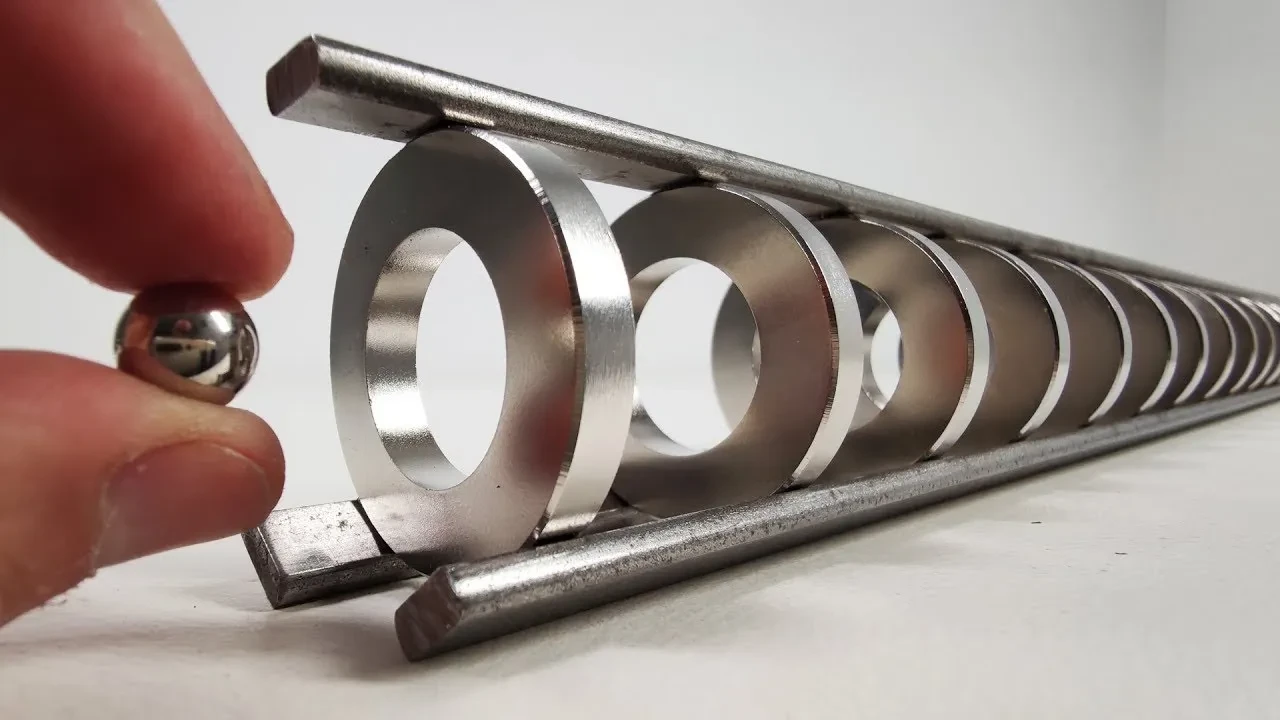
Out of nowhere, tiny pieces of metal jump toward these strange little blocks - super strong, way beyond regular magnets. Called neodymium, they’re the toughest permanent kind made right now. Technology leans on them heavily, though doctors use them too - for scans, tools, things inside hospitals. Even rockets and gear floating in space rely on their silent pull.
What makes supermagnets tick becomes clear when you look at their role across labs and households alike. Their strength shows up quietly, shaping tools we rely on without thinking twice.
YouTube Video Link: https://youtu.be/60qnTvDbOZ0?si=yz53dd0F8PcIO2oM
What a Supermagnet Is?
Most powerful magnets come from a mix of neodymium, iron, because of boron. Known by scientists as NdFeB types, these attract far more than older versions ever could. Strength jumps sharply when comparing them against basic iron or ceramic ones.
What makes a magnet strong comes down to how intense its magnetic field is. Unlike common fridge magnets, supermagnets create fields that are far stronger. A tiny neodymium one might hoist something ten times heavier than itself.
Supermagnets and How They Work?
Inside every magnet, little regions line up to make it work. What sets supermagnets apart is how tightly those pieces lock into place. Neodymium types hold their order better than most. That rigid structure builds an especially strong push or pull around them.
A sudden surge of invisible force makes these tiny powerhouses useful in tight spaces demanding serious strength. Think about how things like sound systems, data storage disks, or spinning engines work - each leans heavily on intense magnetism to keep running smoothly.
Machines such as MRI scanners rely on superconducting magnets found in high-level science work. Inside the body, these devices allow physicians to view clear pictures. Strong magnetic forces show their effect in both big systems and tiny permanent ones. Instead of regular magnets, MRIs depend on those that conduct without resistance. The ability to capture inner details comes from intense fields created by such technology.
Uses of Supermagnets
Supermagnets are used in many industries:
Few gadgets fill pockets these days like phones do. Ears often meet music through snug earpieces instead. Storage lives inside small metal boxes that hum quietly when working.
Flying high on breezes, wind turbines spin power through hidden magnets inside their core. Magnets pull and push within the generator, turning motion into electricity without burning fuel.
Gliding above the tracks, maglev trains rely on magnets instead of wheels. These systems move fast because there is no friction slowing them down.
Medical Technology: MRI machines for advanced medical imaging.
Fitting into tight spaces while delivering strong force, supermagnets help today’s gadgets shrink without losing power. Their strength allows engineers to cut bulk elsewhere - efficiency climbs as size drops.
Safety and Precautions
Even though they’re useful, supermagnets need caution. Fingers stuck between two snapping together might get hurt. When near electronics, harm could happen. A pacemaker may stop working right if one comes too close.
Magnets that pack a strong force need smart keeping plus cautious use. Storage matters just as much as how you move them around.
Conclusion
Out of nowhere, powerful magnets show just how far we’ve come in building better materials. Not only do they live inside common gadgets, but also help run high-end medical tools. Because of their intense pull, these metals quietly shape much of today’s tech world.
One step at a time, science inches closer to materials that grip harder and work faster. Hidden pushes and pulls shape what we hold, move, and build. What seems unseen runs much of daily life.
From up above, the planet shows its vivid blue face. That shade arrives because seas stretch across over seventy percent of the landmass below. Oceans here do far more than sit still - they pulse with purpose. Because they help control temperature shifts, host countless sea creatures, generate breathable air, while shaping storms and calm alike around the world.
Life makes more sense when we grasp how oceans work, since our planet wouldn’t look anything like this without their presence.
YouTube Video Link: https://youtu.be/hLDgWjn35r0?si=S_z4aptl7mnKX9Jc
The Five Big Oceans
One after another, Earth's five big oceans appear - the Pacific, then the Atlantic, followed by the Indian, the Southern, finally the Arctic. Holding the title for biggest, the Pacific stretches wider than every continent put together. Down below, it holds the Mariana Trench too - that’s where the sea plunges furthest.
West of Europe and Africa lies the Atlantic, cutting across to the Americas while shaping how nations exchange goods and explore. Moving eastward, trade flows through the Indian Ocean where connections link Asia with Africa and reach down into Australia.
Frozen waves curl around Antarctica, where the Southern Ocean pulls heat through Earth's veins. Northward, past windswept poles, sits a quiet basin - its surface locked under shifting ice most months.
Why oceans matter
Big seas shape how life survives on our planet. By soaking up tons of carbon dioxide, they slow down shifts in weather patterns. Thanks to little ocean plants known as phytoplankton, over half the air we breathe gets made there.
Waves of warmth travel far when sea flows carry heat across Earth’s surface. Think of it like this: where water runs hot, shores tend to feel milder. On the flip side, chilly streams dragging down temperatures near coastlines show a different pattern entirely.
Ocean life feeds countless families, moves goods across continents, shapes daily work routines. When fish thrive, so do coastal markets - tourism rises alongside shipping routes. Healthy waters support jobs, link economies, sustain cultures through quiet tides.
Life Under the Sea
Life fills the oceans in countless forms - tiny beings to enormous whales thrive there. Not just vibrant coral cities known as sea rainforests, these structures host multitudes of underwater neighbors. Far below, beyond sunlit zones, strange animals survive where light vanishes completely.
Most of Earth is water - yet huge parts stay unseen. Hidden creatures might still lurk below, unknown to science.
Conclusion
Blue waters beat at the globe’s core. Life thrives because currents flow, while weather finds rhythm through their sway. Still, plastic chokes deep corners. Nets pull too much from below. Heat alters what once stayed balanced.
Fish need healthy seas, so do people - this balance shapes what comes next. Knowing how waters work helps keep things running long after today ends.
Strange skies have always drawn eyes toward Mars. That dusty world, painted rust by iron oxide, stands apart from others nearby. Long before telescopes sharpened their gaze, people dreamed about what might move across its dunes. Writers shaped tales around imagined canals. Scientists traced seasonal shifts like clues. Each mission sent back fragments of a larger puzzle - frozen poles, dried riverbeds, windswept plains. What once seemed a dead neighbor now hints at chapters buried in dust.
Peering into Mars gives clues about how planets form - yet it's the quiet hope of finding life beyond Earth that keeps eyes on the red dust. What if someone else is out there, looking back?
YouTube Video Link: https://youtu.be/pjtomy2hXbA?si=GjczZxcwozRyDYFG
Why Mars Looks Red?
A dull glow comes from Mars, thanks to a coating of iron-rich dust spread wide across its face. Sunlight bounces back after hitting that rough, reddened ground, making it stand out at night.
Most of the air around Mars is carbon dioxide, yet it's far thinner than Earth's blanket of gases. Cold hits hard there, mainly because that faint layer cannot hold heat - near the poles, mercury plunges to minus 125 degrees Celsius. Storms kick up dust until skies darken across every corner of the world, sometimes lasting weeks without pause.
surface features and giant volcanoes
A giant volcano towers over Mars - Olympus Mons, the biggest one found anywhere nearby. This place holds records others can only dream of matching. Three times the height of Everest sits right there on a rusty red world.
A huge canyon named Valles Marineris cuts across the surface, stretching well beyond four thousand kilometers. Because of formations like this, scientists see clear signs that Mars was geologically lively long ago.
Finding signs of ancient streams, researchers point to long-gone water on Mars. River-like paths carved into the surface hint at a time when warmth and moisture shaped the land.
Missions to Explore Mars
Now and then, probes have left Earth to check out Mars. Right now, gadgets built by NASA - Perseverance and Curiosity - are crawling across dusty ground. Rolling slowly, they dig up dirt, snap sharp photos, while sniffing for old tiny creatures long gone.
Mars may one day host human settlers, according to researchers who study the red planet. Returning soil samples to Earth is part of upcoming mission goals - alongside preparing for crewed flights down the line.
Conclusion
Mystery still wraps around Mars, even today. Its rust-colored dirt stretches under huge volcanoes while long canyons cut through the land. Clues hide beneath that cracked ground - about where we’ve been, maybe where we’re headed next.
Now we know more about Mars because tools keep improving. Life might have existed there before, or people could live there later - this planet still grabs attention like few others around our star.
Fascinating beyond most tales of life on Earth stands the long shift from primitive apelike beings to now. Over countless ages, small changes piled up - shaping what would become us. Our origins, our adjustments to shifting worlds, even present traits trace back here. Fossils whisper clues, old tools add context, while DNA reveals hidden paths through time. Piece by piece, science builds a picture - not perfect, yet powerful.
YouTube Video Link: https://youtu.be/LVMfDC-Xvqo?si=5PvyyvJtwDvvGMCE
The Start of Human Origins
Out of Africa came the first whispers of human history, roughly six to seven million years back. Humans today, along with present-day apes, likely trace roots to one ancient relative. Standing on two feet started creeping into some lineages, shifting how movement worked. That shift? It marked a turning point, slow but deep, in what would become us.
Australopithecus ranks among the first human relatives ever found. Around four million years back, they moved across ancient landscapes. Though able to stand and move on two feet, their arms stayed lengthy - useful when swinging through branches. With hands no longer needed for walking, gripping objects became easier over time. This shift quietly set the stage for crafting simple instruments much later.
The Rise of the Human Line
Long before modern times, about two million years back, a fresh kind of human showed up - Homo habilis. Called “handy man,” this one earned its title by shaping stones into useful objects. Because these early people could craft tools, everything shifted slowly but deeply in how life unfolded. With sharp rocks in hand, they took on hunting, sliced through animal flesh, made it past tough moments out in the wild.
Homo erectus showed up after earlier humans, standing out as a highly effective ancestor. With a bigger brain than predecessors, this group handled sharper, more complex tools. Moving beyond Africa, they reached parts of Asia and Europe - the first hominin to do so. Their spread reshaped where humans could live, stretching presence worldwide.
The Time When Neanderthals Lived
Frostbitten winters did not stop them - Neanderthal groups thrived across Europe, reaching into Asia long ago. Built sturdy, thinking deep, surviving sharp seasons shaped their days. Tools took form under careful hands, flames stayed tamed through dark nights. Burial of bodies hinted at bonds beyond survival, moments held close.
For a while, modern folks shared Earth with Neanderthals - some even had offspring together. Right now, bits of their ancient DNA linger in many living humans.
The Rise of Early Homo Sapiens
Some time after that, roughly three hundred thousand years back, people like us showed up in Africa. With minds able to form detailed speech came a rush of new ideas. Because of this shift, making art became possible. Group life grew deeper and more layered over time. Culture began forming, shaped by shared habits and thinking.
Slowly, people moved into each landmass, learning how to survive cold, heat, dryness. After that came farming tools, machines appeared later, discoveries built step by step - this made now.
Conclusion
Footprints in the dust show where it began - creatures standing tall long before thought took shape. Moving forward, minds grew while climates shifted, one step at a time shaping what came next. Not just strength but clever hands and shared signals carried life onward. Slow changes, generation after generation, led to fire, tools, voices that could tell stories. What we call human emerged through quiet persistence, not sudden leaps.
Each step forward begins with knowing where we came from - our bones, choices, struggles. That trail connects ancient steps to how people live now. Change never stops; it moves quietly through time, showing up in bodies, minds, habits. Today is just another page in motion
Up there, beyond the stars, sits a world that grabs your attention - Saturn. Its pale shine cuts through darkness, framed by wide rings that circle like frozen whispers. Century after century, those who study the skies return to it, drawn without explanation. Size alone does not explain the pull; mystery wraps around it tighter than any orbit. Ice floats in bands where physics seems bent, maybe broken. Near the pole, something odd churns - a six-sided fury no model fully predicts. Each new finding shifts what was certain.
YouTube Video Link: https://youtu.be/xVQEHip7Z4s?si=Ma86gjDddATzncQ5
The Rings of Saturn
Not just any planet wears such a dazzling crown - Saturn does, thanks to its vast ring display. While Jupiter, Uranus, and even Neptune carry faint loops around them, it's Saturn that stands apart with intricate bands you can spot through small telescopes. Most striking? The sheer detail hidden within those icy circles, stretching wide yet paper-thin across space.
Bits of ice and stone make up these rings, ranging from tiny specks like sand to chunks bigger than hills. Broken-up moons or icy visitors passing near Saturn might explain where they came from, according to researchers who think the planet's pull ripped them apart.
Shining bright, the rings bounce sunlight in a way that makes Saturn stand out. For this reason, some say it looks like no other world we know.
A Giant Gas Planet
Biggest after Jupiter, Saturn floats out there without any ground you could stand on. Made mainly of hydrogen plus some helium, it belongs to the group called gas giants. No rocks under its clouds - just endless layers of thick air stretching down forever.
A strange thing happens when you think about Saturn - its weight is so small for how huge it looks, it would bob on water given a pool wide as a planet. That odd result comes from the way its insides spread out, making it puffier than most neighbors in space.
Beauty aside, Saturn holds extremes. At times, winds there race as fast as 1,800 kilometers each hour - few spots in our cosmic neighborhood blow harder.
The Mysterious Hexagon Storm
A spinning puzzle sits atop Saturn, a storm shaped like a perfect six-pointed figure. Found by a passing machine built on Earth, it twists where no similar sight exists elsewhere in the solar family.
Still, researchers dig into how this pattern takes shape - then sticks around. Bigger than our planet, the tempest rages on, year after year. Proof, really, that Saturn keeps hidden corners no one has touched yet.
Moons Full of Secrets
Over a hundred forty moons circle Saturn, every one different in its own way. Rivers cut across Titan, though they flow with liquid methane instead of water. Shooting out plumes of vapor, Enceladus grabs attention among the rest. Hidden beneath its icy shell might lie an ocean we still know little about.
Beyond Earth, secrets of life might linger within these moons - deepening Saturn’s riddle. A quiet hint floats among their icy trails.
Conclusion
Beauty surrounds Saturn, yet mystery hides just beneath. Bright rings wrap around it while fierce storms swirl without pause. Moons circle close, each one odder than the last. Cassini–Huygens brought answers after years of travel through dark space. Still, secrets stay locked inside that distant sphere.
Still gazing beyond Earth, humans find Saturn glowing like a quiet treasure among planets.
 About Us
 Blog
Blog
 Insights & Awareness








 Ensure TV