From gathering facts to checking their truth, journalism shapes how stories reach us via print, TV, online spaces, or apps. Not just writing, but thinking clearly matters - India’s training programs build sharp, honest communicators for modern media.
Nowadays, more people turn to online sources for updates - this shift gives reporters bigger roles across screens and feeds. Because information spreads fast through networks, working in news feels weighty, full of impact. When headlines pop up nonstop on phones and sites, shaping stories can steer how others see events.
Objectives of Journalism Courses
The main objectives of journalism courses are to:
- Develop strong news reporting and writing skills
- Understand media ethics and responsibilities
- Start with how tales unfold when details matter. A good probe digs deeper than first answers show. Truth waits where evidence lines up straight
- Build communication and presentation abilities
- Train students for print, broadcast, and digital media
Journalism Course Material
The syllabus generally includes:
- Introduction to Journalism
- News Reporting And Writing
- Media Ethics And Laws
- Editing & Proofreading
- Print Journalism
- Broadcast Journalism TV and Radio
- Digital and Online Journalism
- Photojournalism
- Media Research
- Interviewing Techniques
- Internship and Field Training
Specialized Fields in Journalism
Specializing becomes possible for students in:
- Print Journalism
- Broadcast Journalism
- Digital Journalism
- Photojournalism
- Investigative Journalism
- Sports Journalism
- Politics and Business News
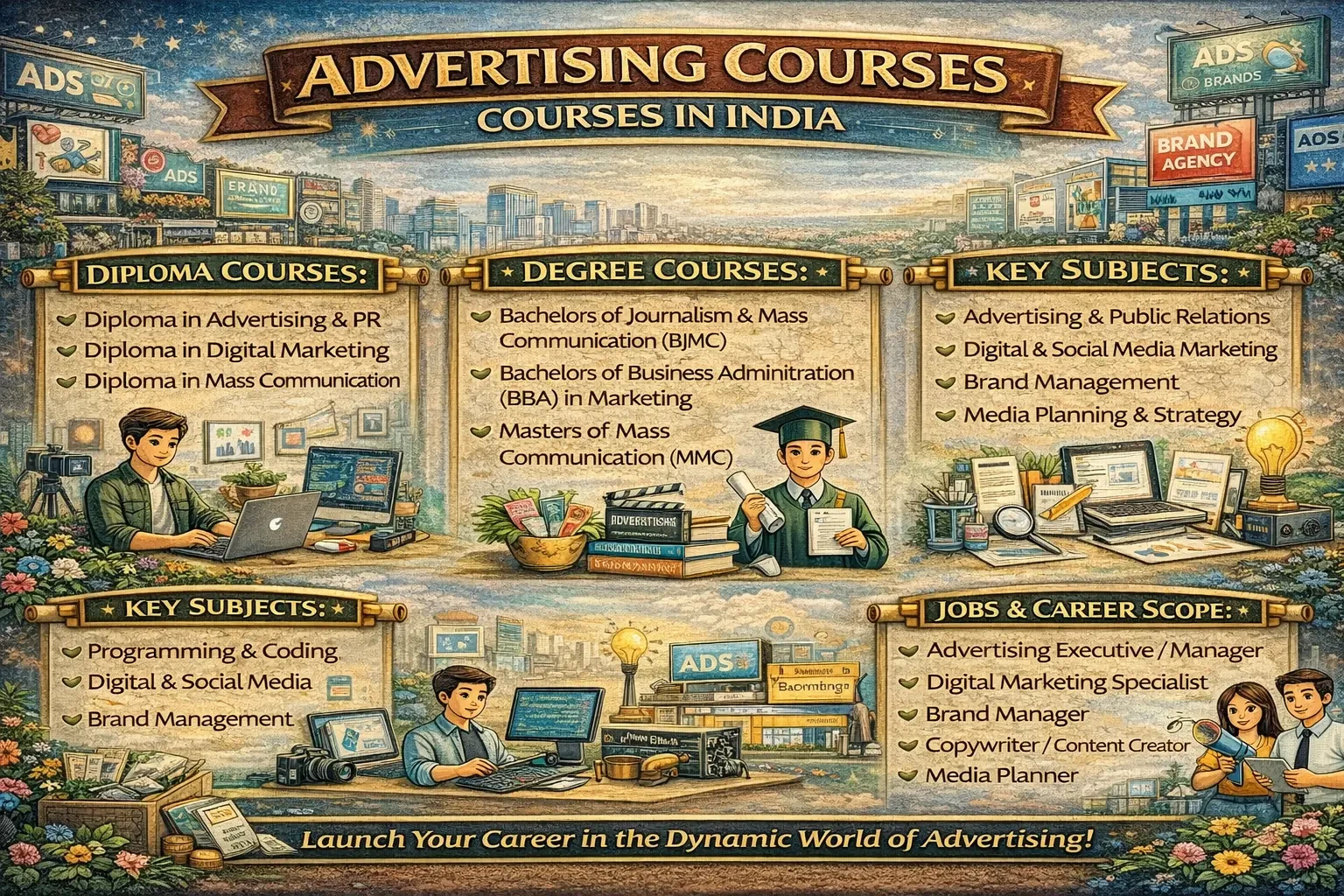
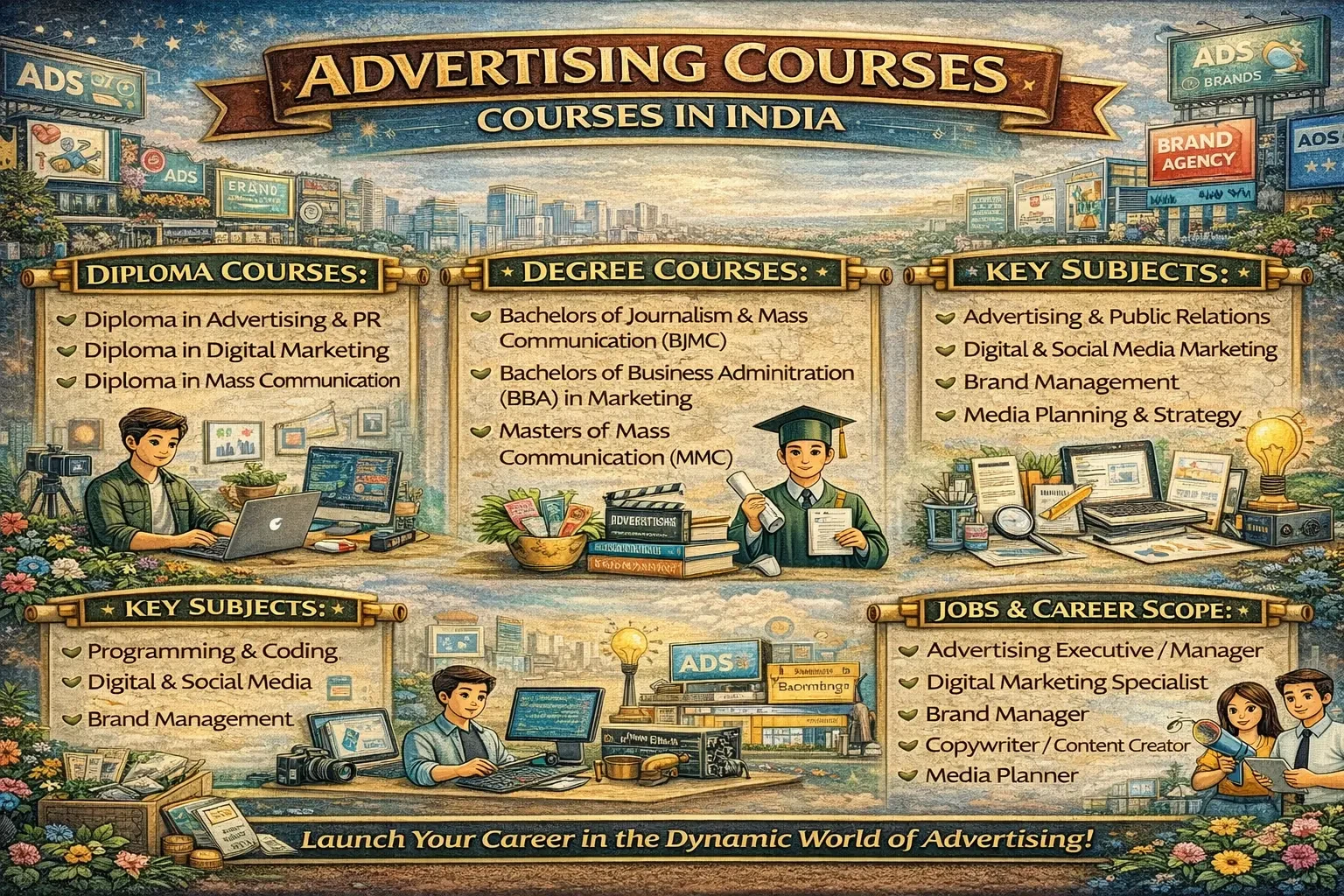
Types of Journalism Courses in India
Certificate Courses in Journalism
- Duration: 3–6 months
- Focus on basic reporting, writing, and digital media
Diploma Courses in Journalism
- Diploma in Journalism
- Diploma in Mass Communication
- Duration: 1–2 years
Degree Courses in Journalism
- B.A / B.Sc in Journalism
- B A In Journalism And Mass Communication
- M.A in Journalism / Mass Communication
- PhD in Journalism
Journalism Courses in India Eligibility Criteria
- A year after finishing school, pick a path - arts, business, or science. Each opens doors two years later. Twelve full years of study, then move ahead. Start counting from when classes began
- Graduation for postgraduate courses
- Good communication and language skills
- Interest in current affairs and storytelling
Major Journalism Schools in India
- Indian Institute of Mass Communication (IIMC)
- Asian College of Journalism (ACJ), Chennai
- Xavier Institute of Communications (XIC), Mumbai
- Jamia Millia Islamia, Delhi
- Symbiosis Institute Of Media And Communication
- Amity University
- Makhanlal Chaturvedi National University
Personality Traits Needed
- Curiosity and alertness
- Strong communication skills
- Confidence and clarity of thought
- Ethical mindset
- Ability to work under pressure and deadlines
Job Paths After Journalism Training
Journalism graduates can work in:
- Newspapers and magazines
- Television news channels
- Radio stations
- Digital news platforms
- Media houses and agencies
Major Employment Areas
- Print Media Houses
- TV News Channels
- Online News Portals
- Radio and podcast platforms
- News Agencies
- Corporate Communication Departments
Job Roles in Journalism
- Reporter
- News Anchor
- Correspondent
- Editor / Sub-Editor
- Photojournalist
- Content Writer
- Digital Media Journalist
Earnings in Journalism
- Entry Level: ₹2.5–4 LPA
- Mid-Level: ₹5–10 LPA
- Top reporters and news hosts earn between 12 and 25 lakh rupees annually, sometimes more
Pay changes based on how long someone has worked, what site they're on, also how well known they are
Career Scope in Journalism
Because news keeps changing, jobs in journalism grow. New paths appear as media shifts shape. Opportunities stretch far when platforms multiply. Since information moves fast, roles adapt quickly. As audiences split across channels, openings spread wider. When tech reshapes delivery, careers shift direction
- Growth of digital and social media
- Demand for credible news and fact-based reporting
- Opportunities in regional, national, and international media
- Working alone on projects opens doors. Blogging lets people share thoughts freely. Journalism done solo brings stories to light without big teams behind it
Good work stands out when done right. Truthful stories earn trust over time. People notice those who stay fair under pressure. Respect builds slowly through steady effort.
Conclusion
Journey into journalism across India opens doors shaped by energy, purpose, and duty toward society. Those drawn to asking questions, speaking clearly, standing firm - especially when facts matter most - often find their place here.
Folks who report the news help guide what people think, also they support fair systems. When stories get shared widely, trust grows because honesty shows through now and then.
 About Us
 Blog
Blog
 Insights & Awareness








 Ensure TV