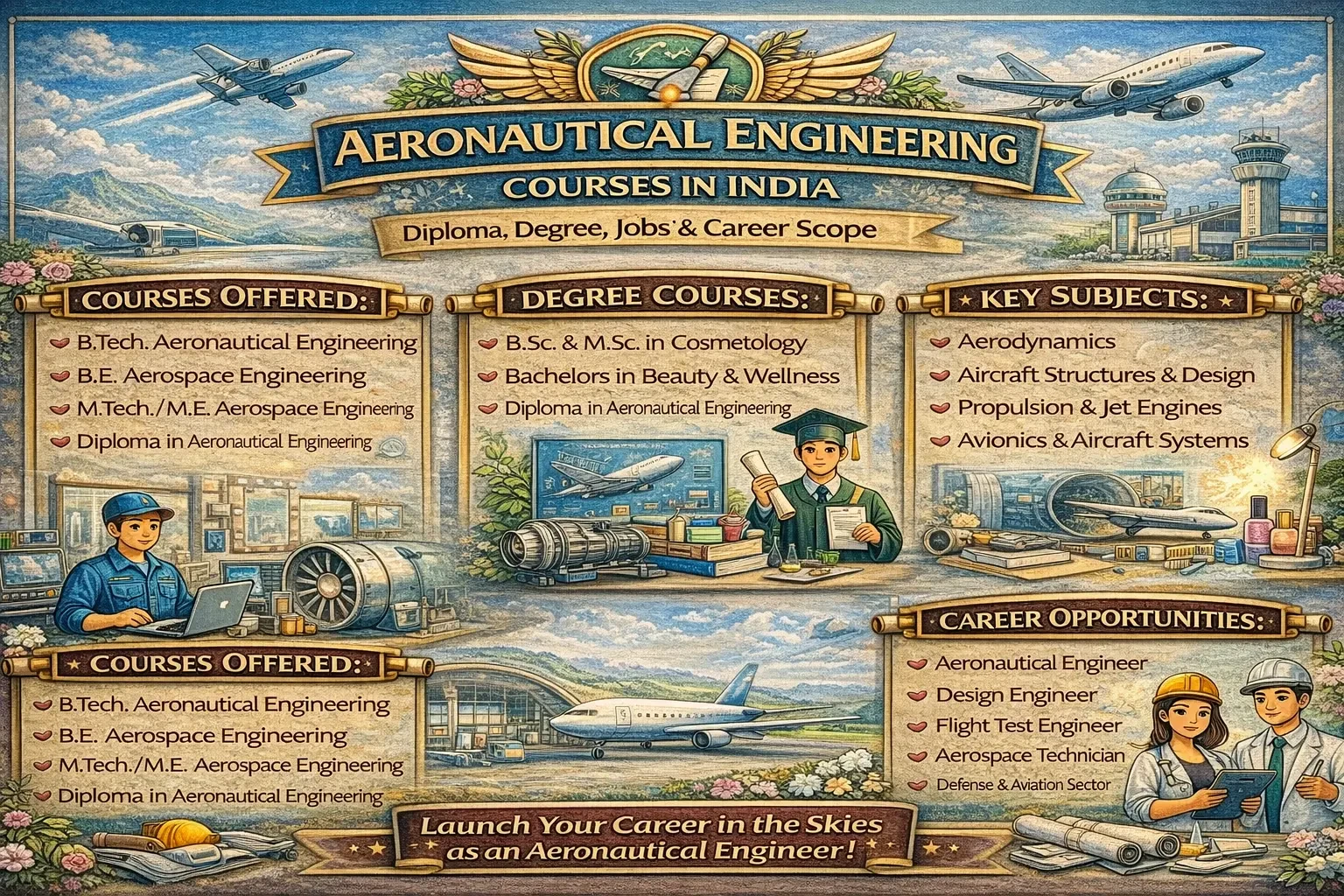
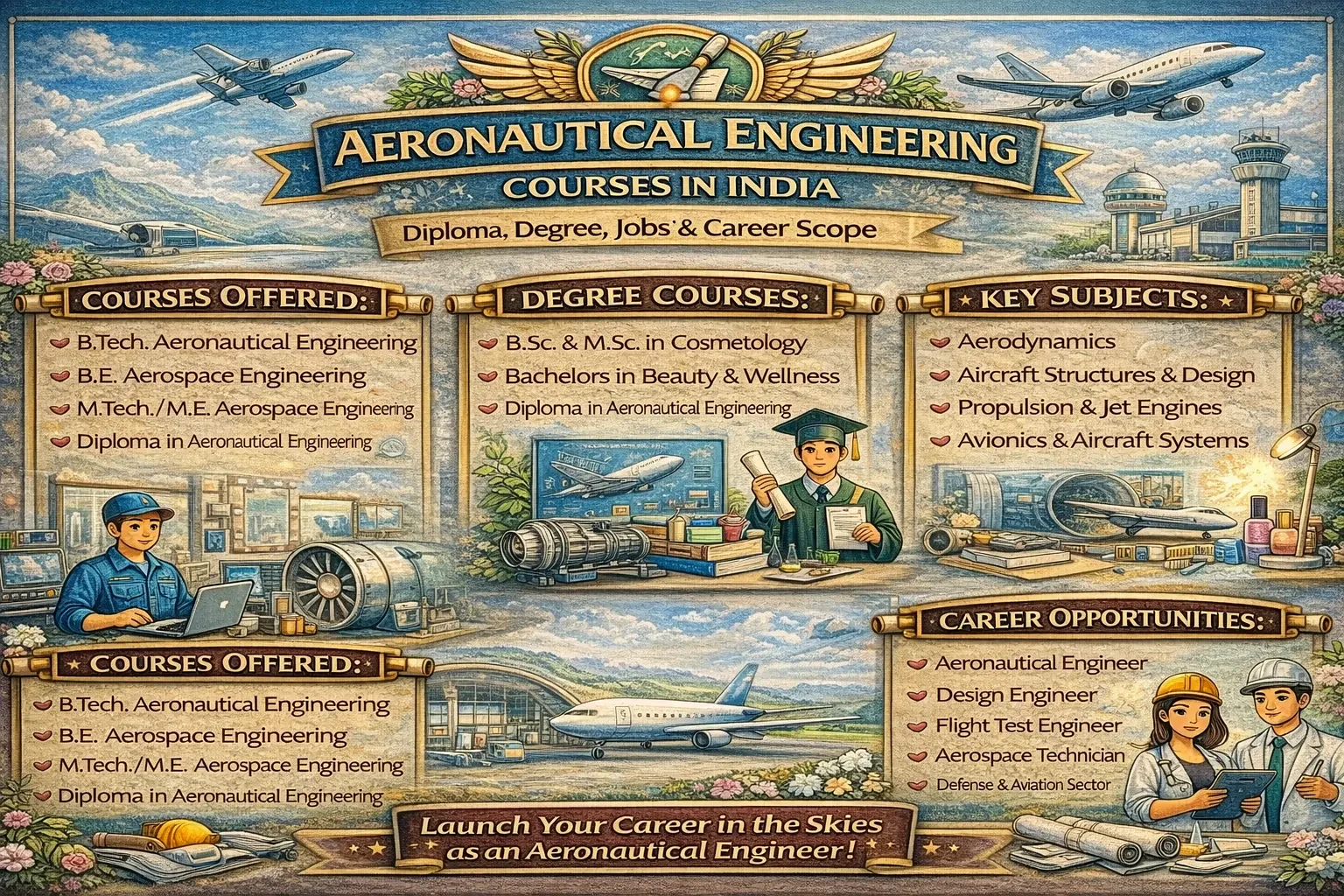
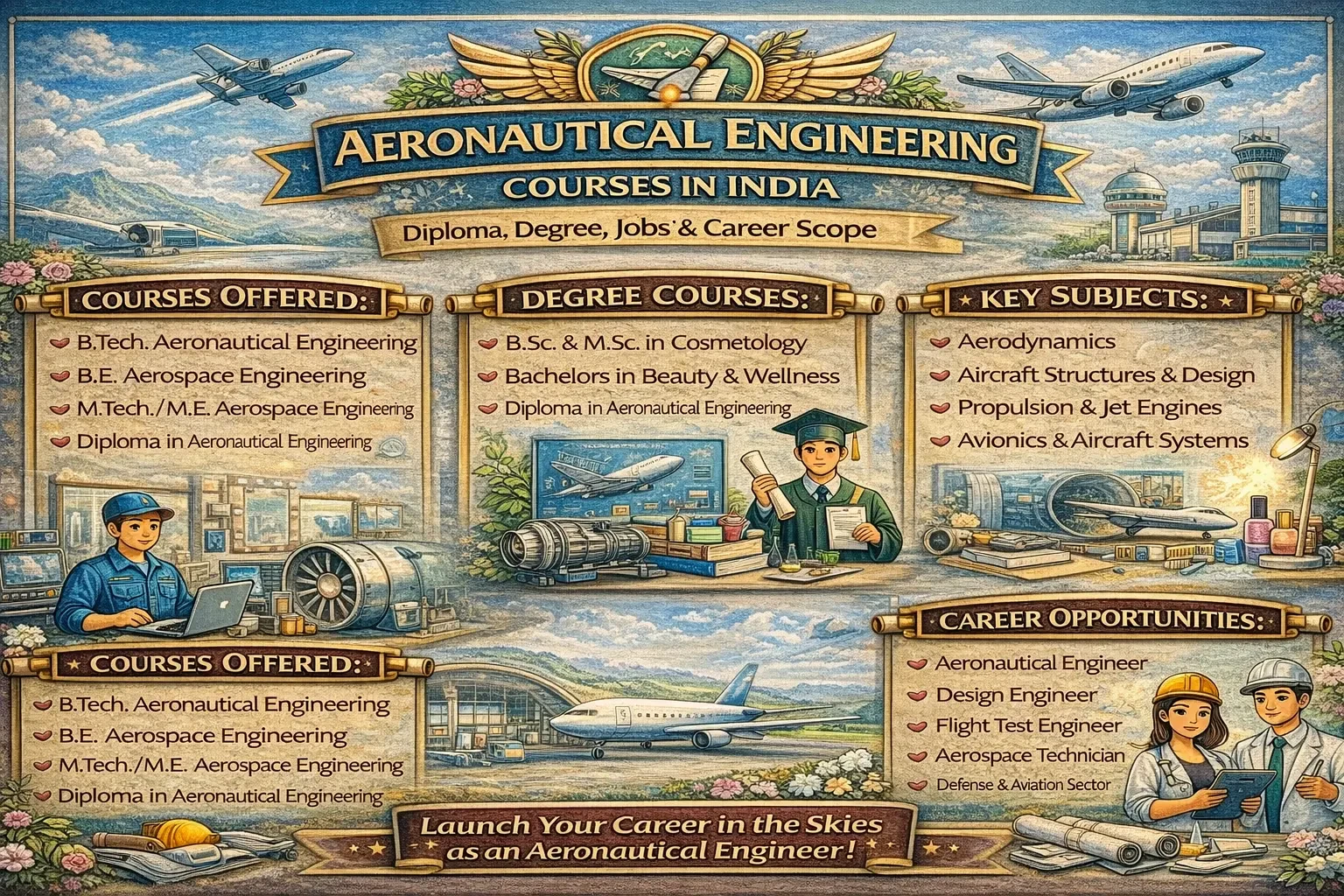
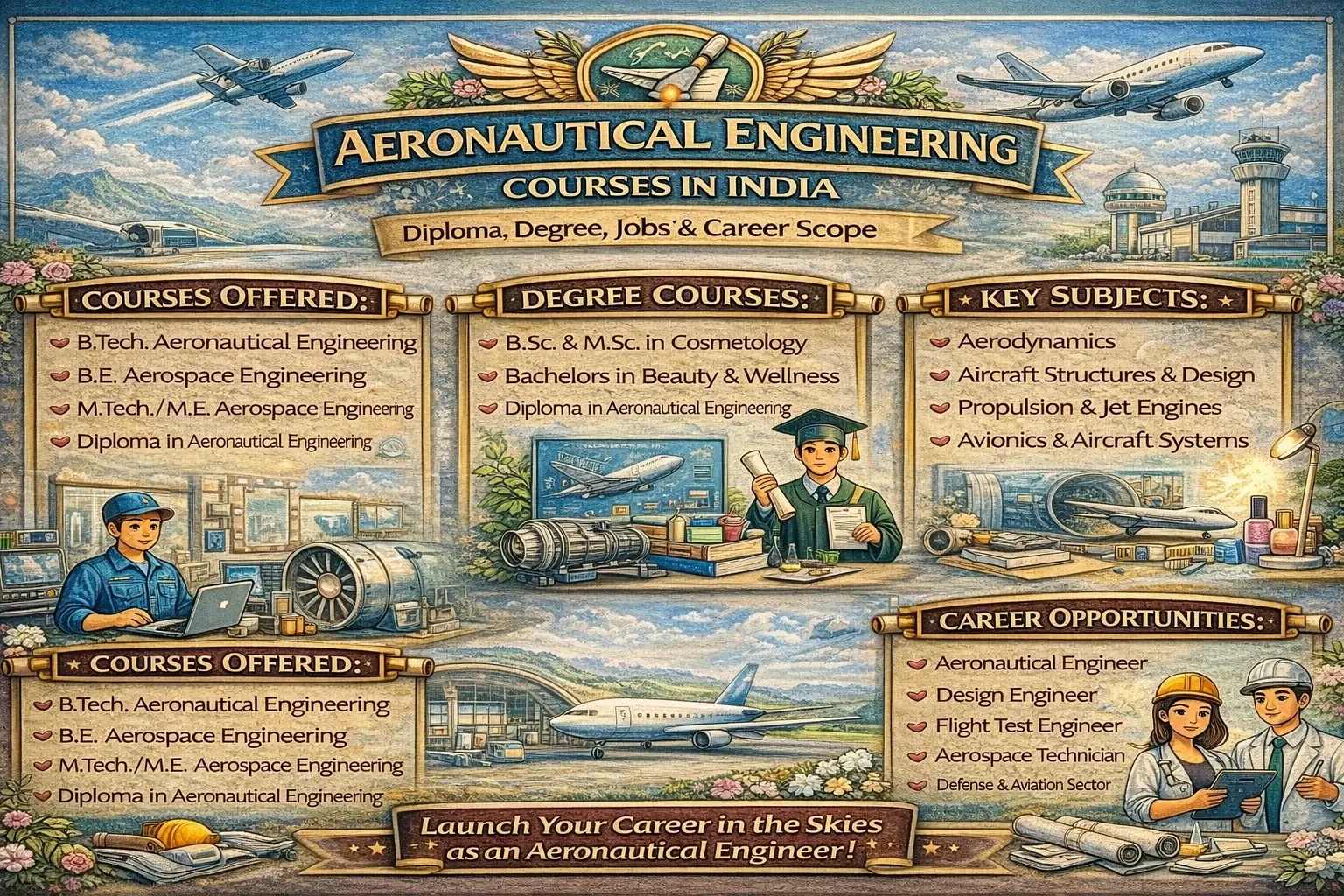
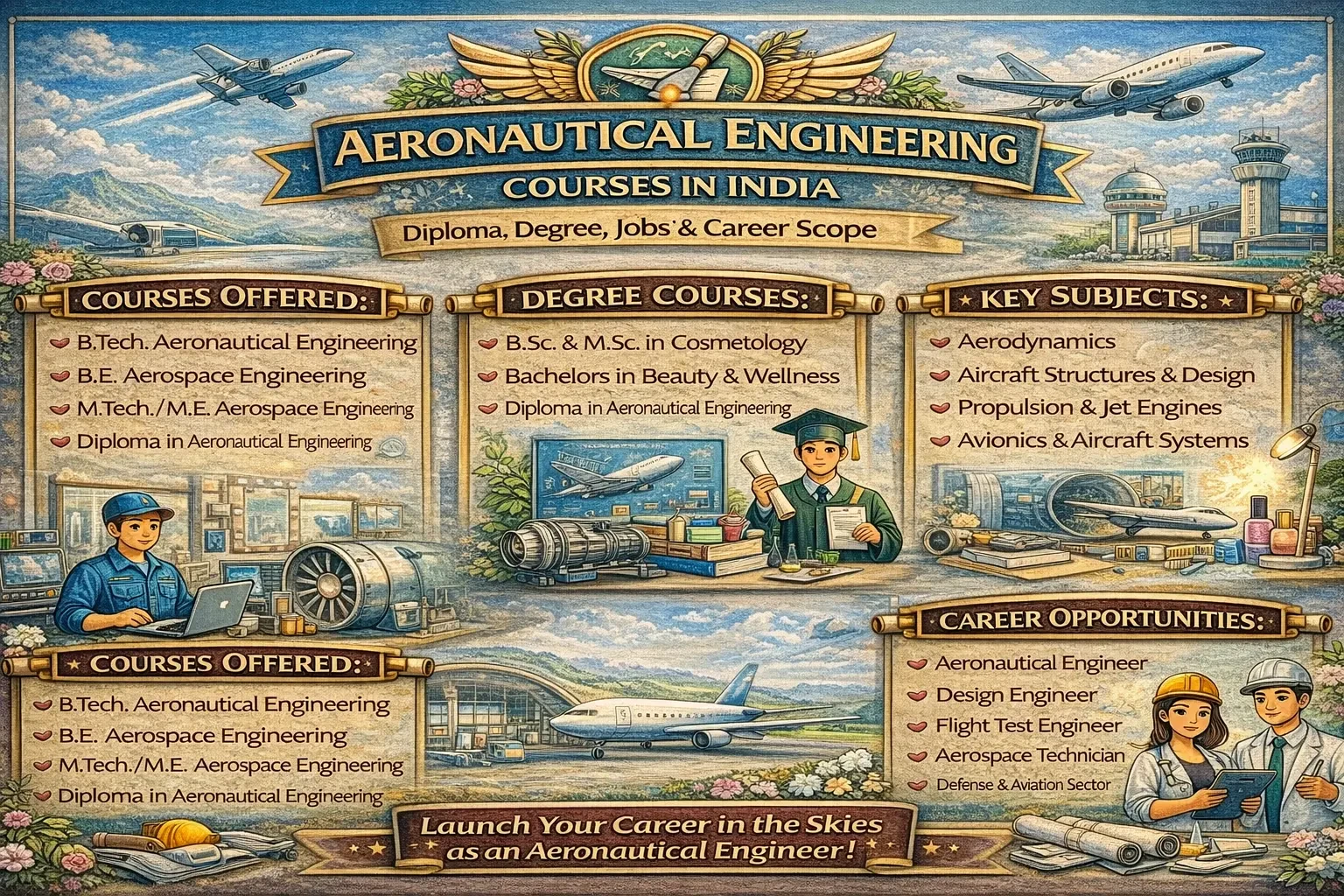
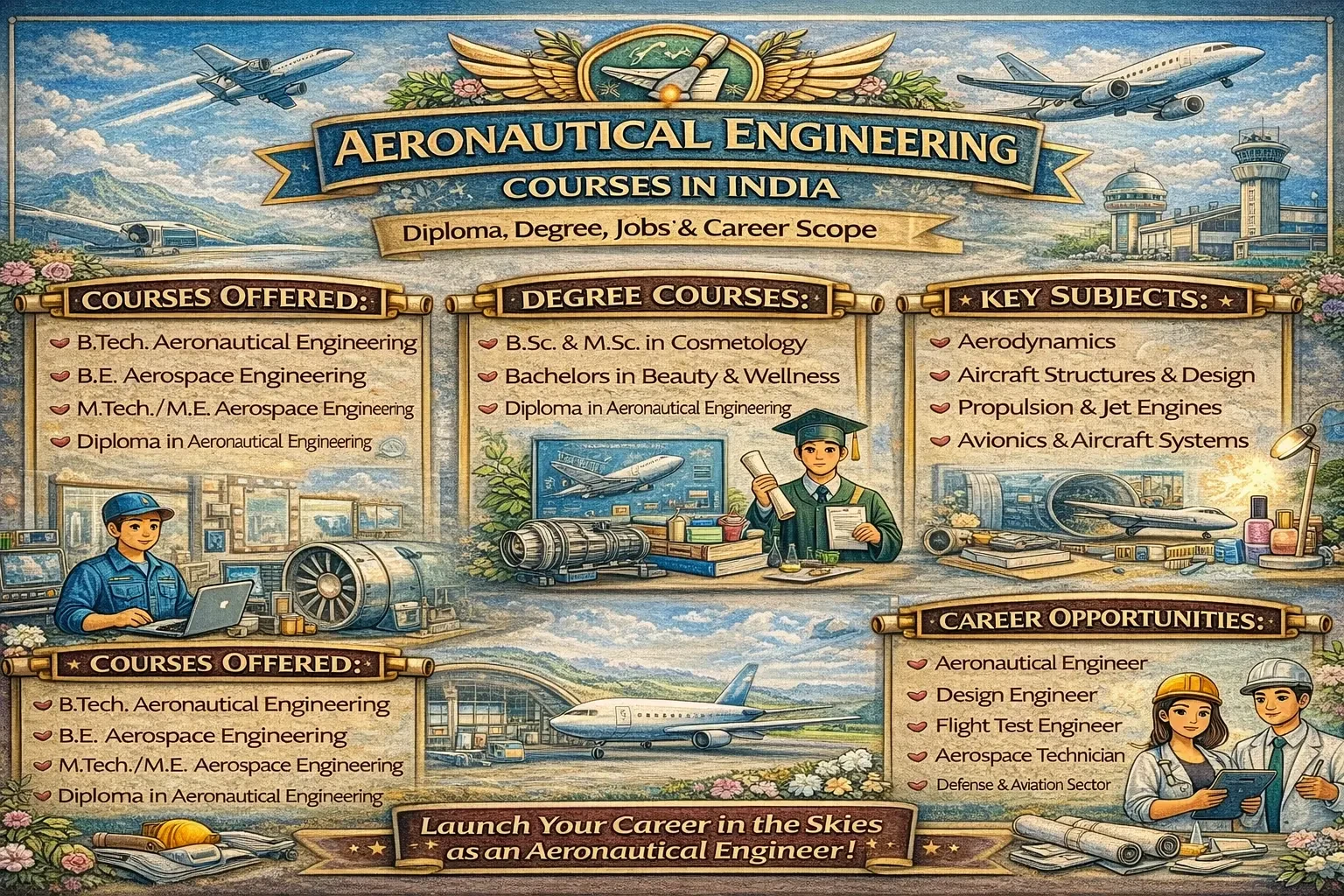
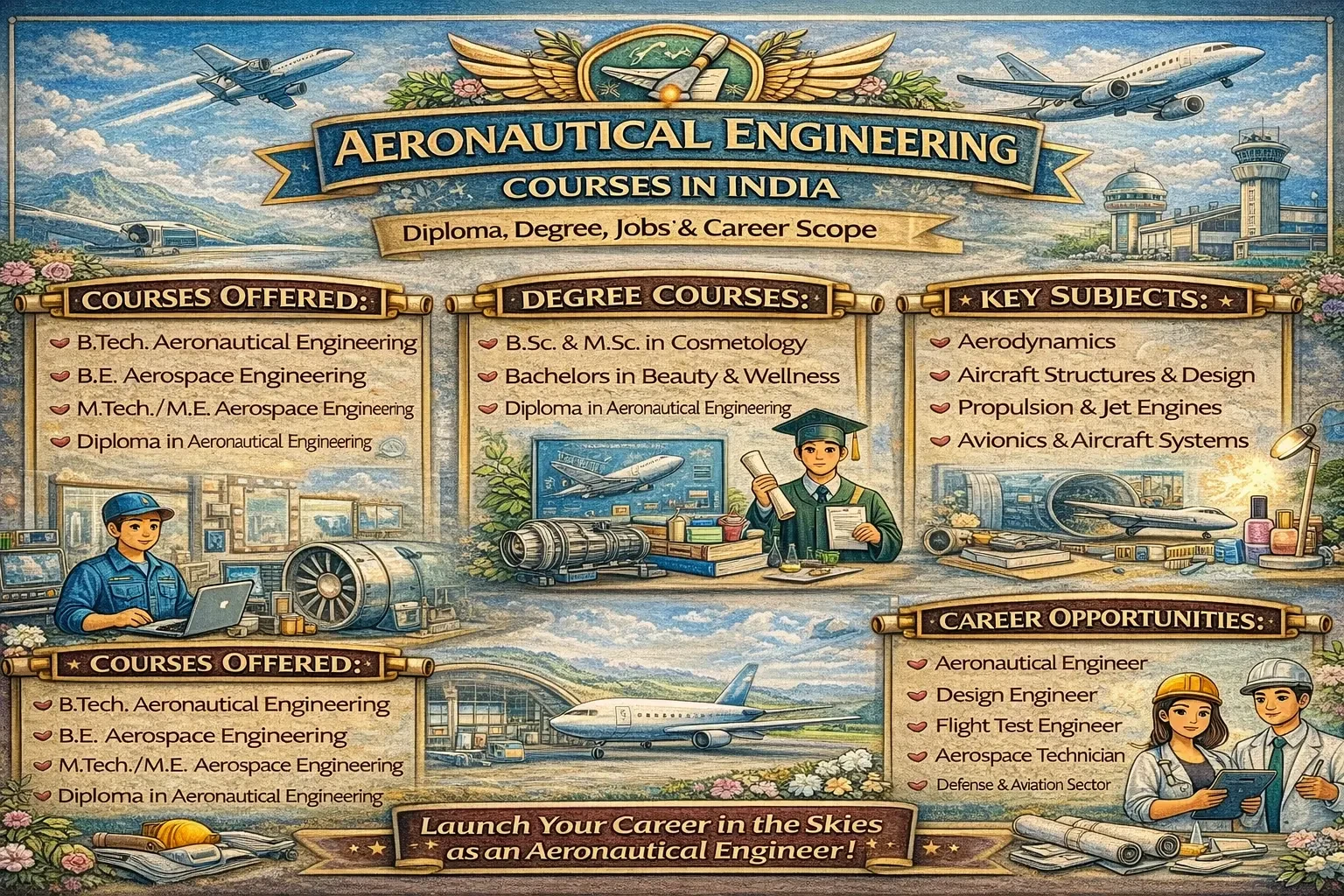
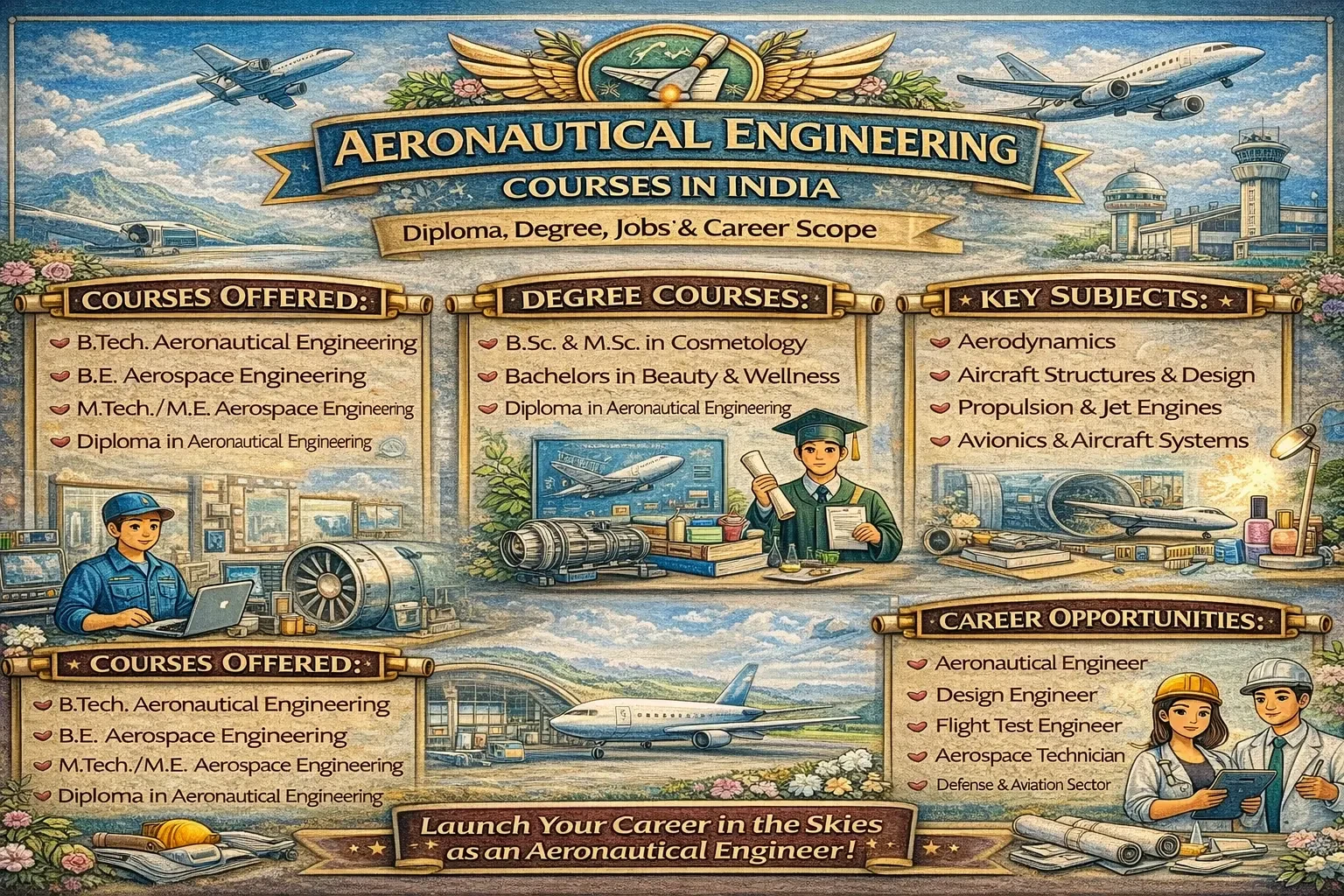
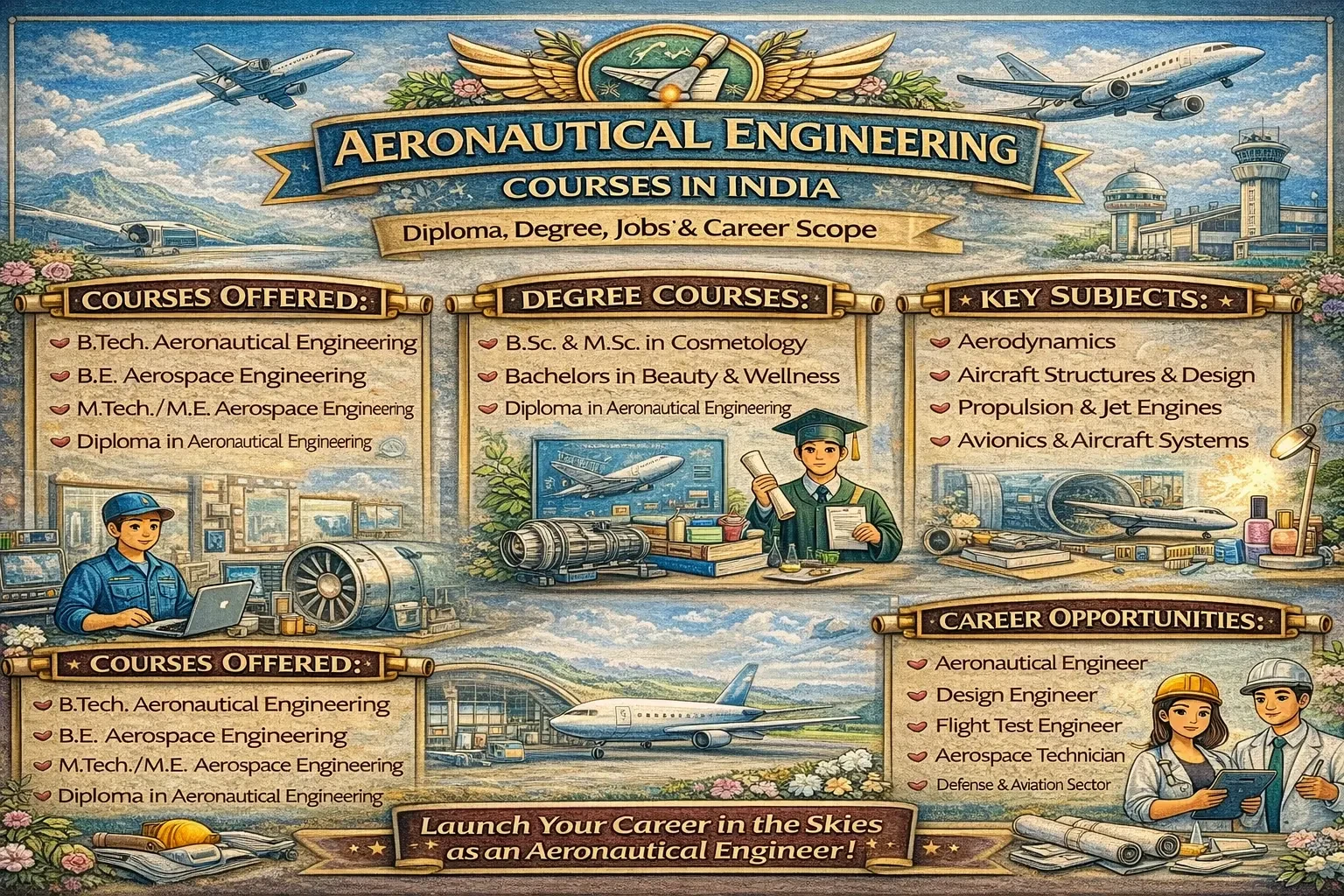
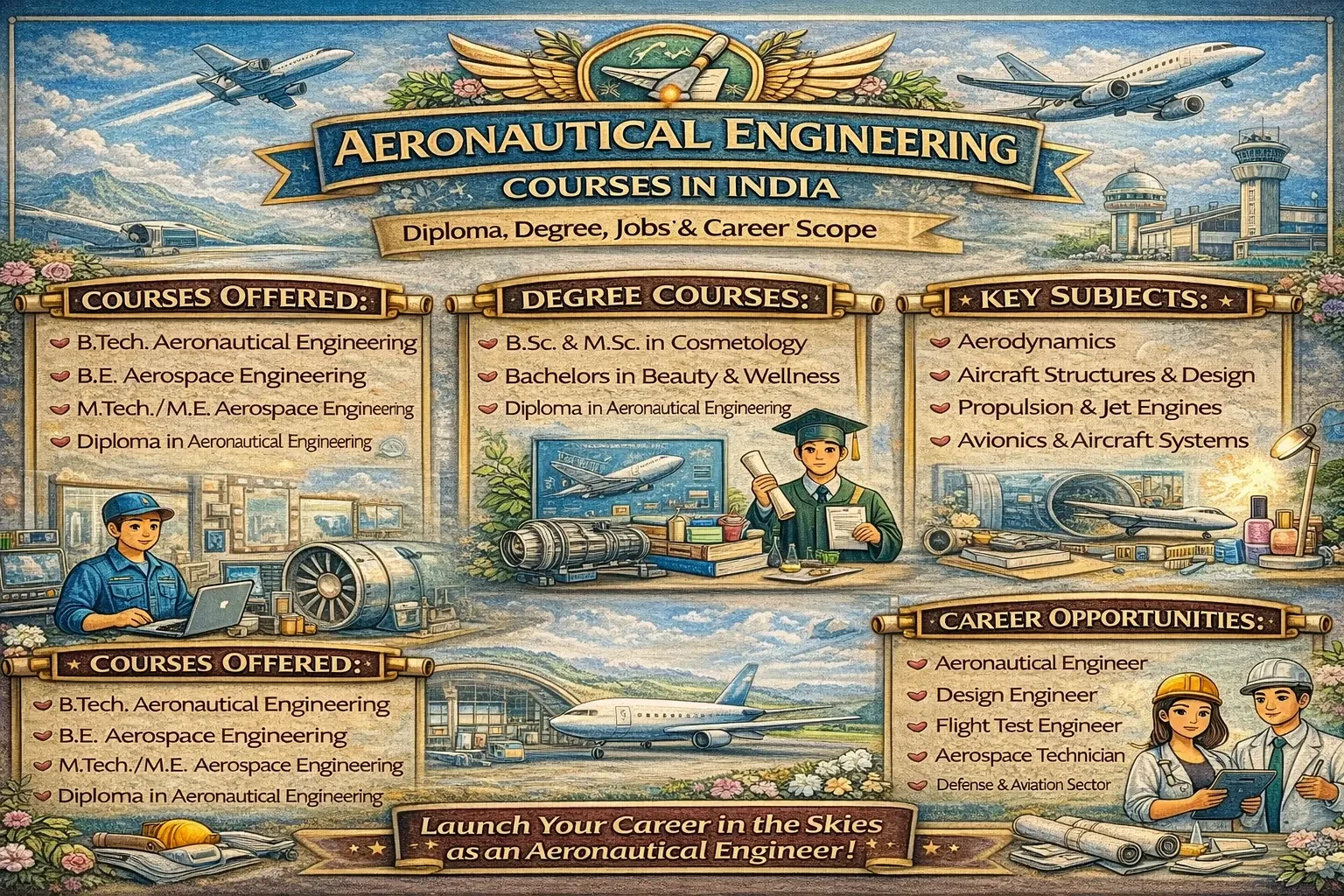
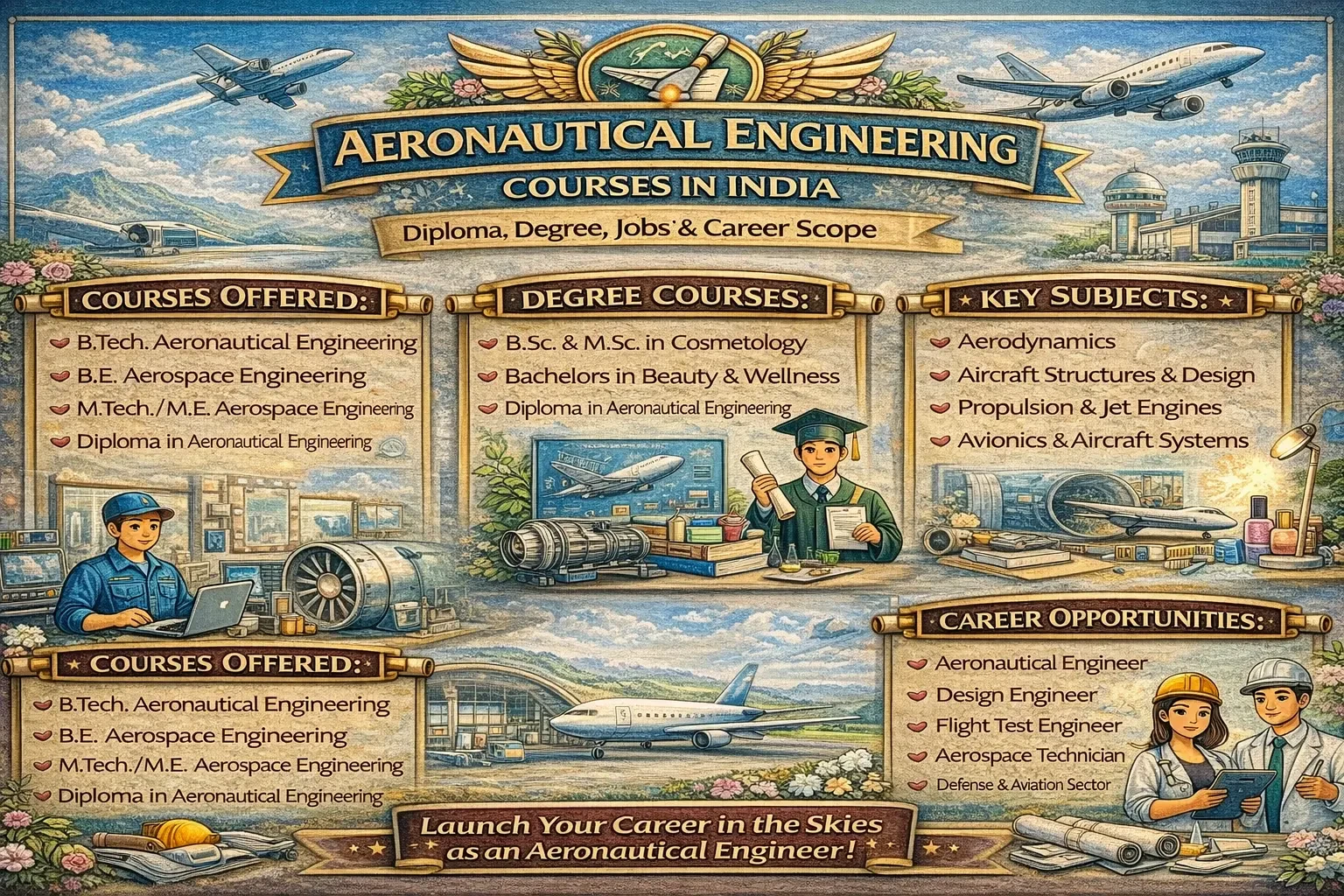
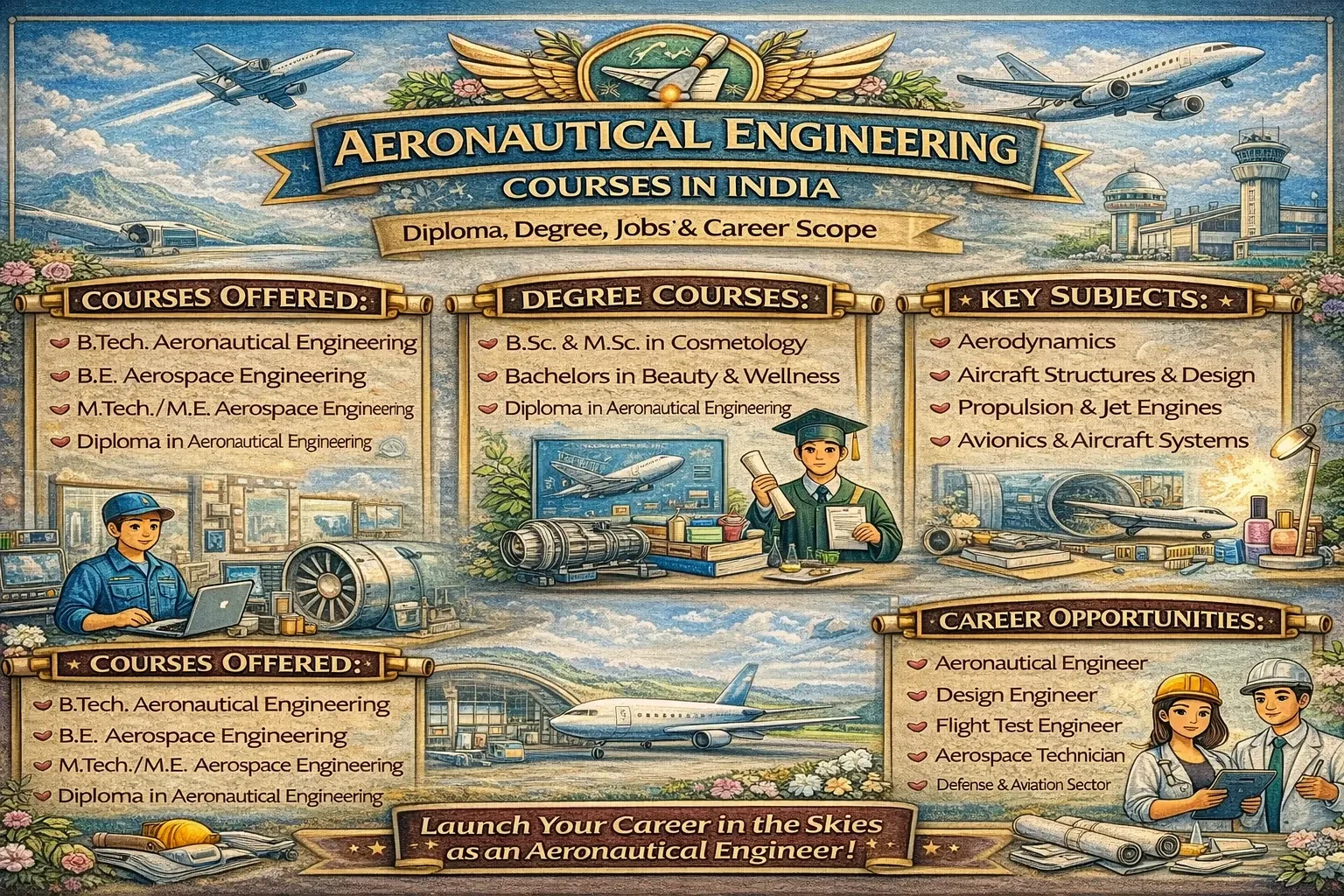
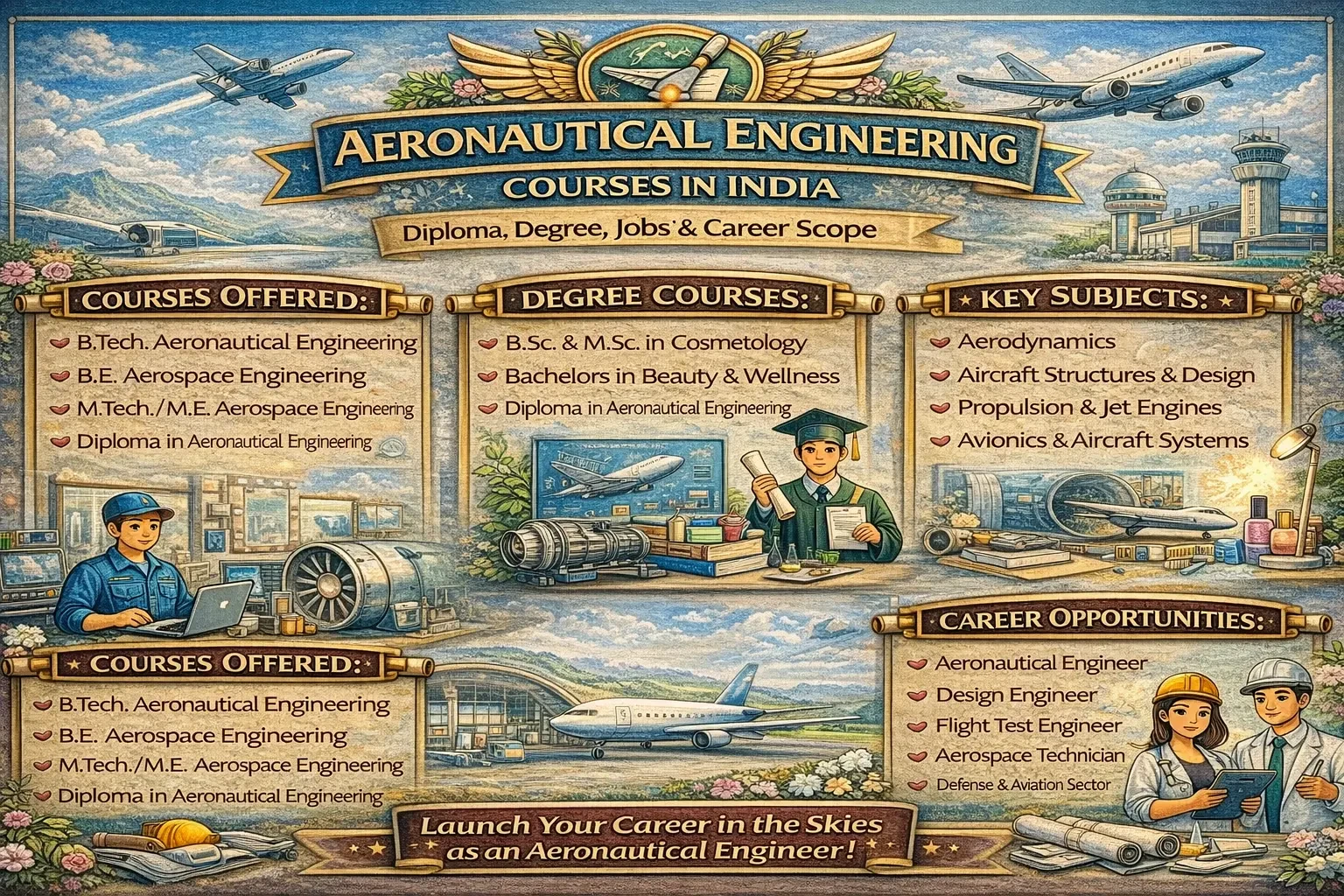
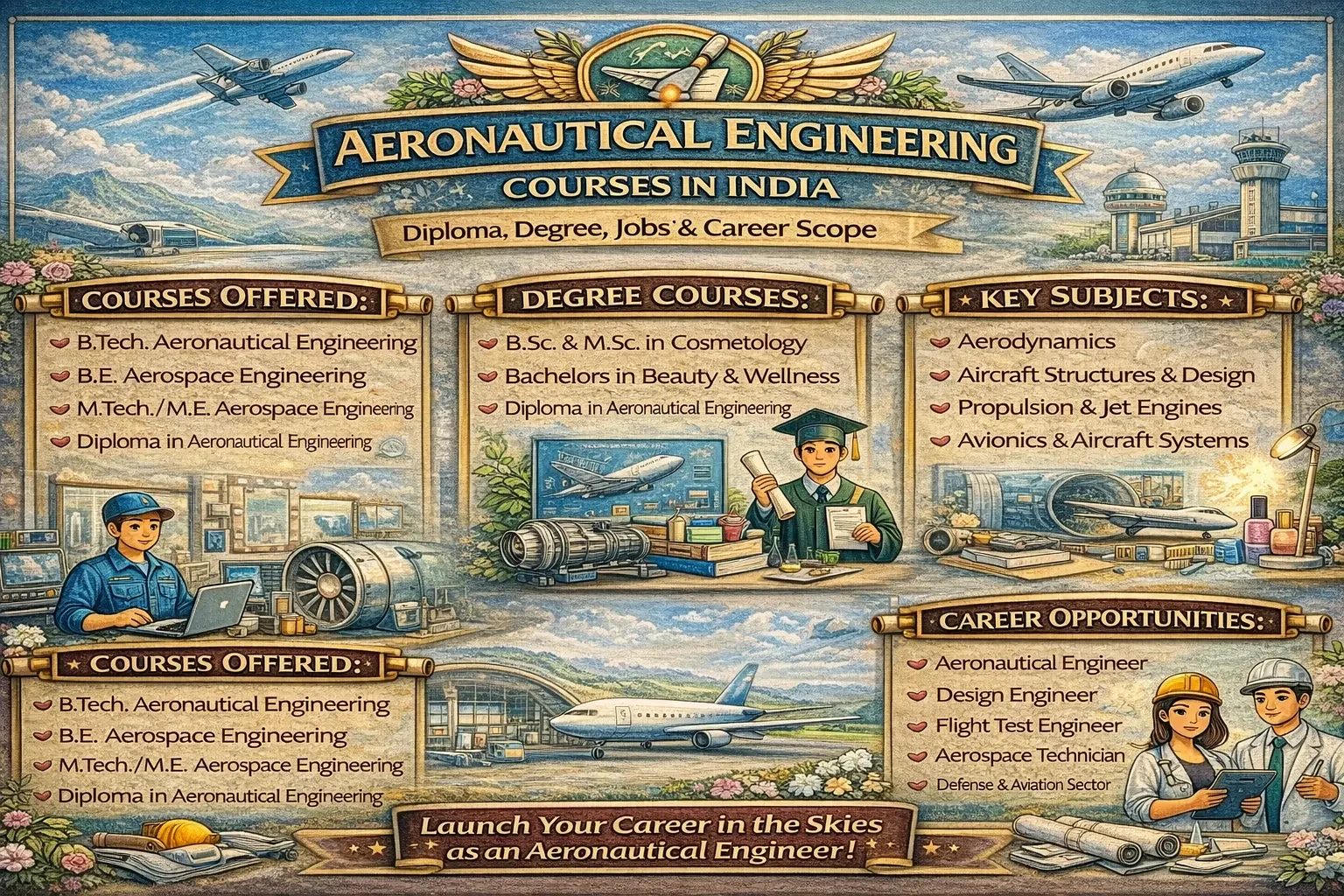
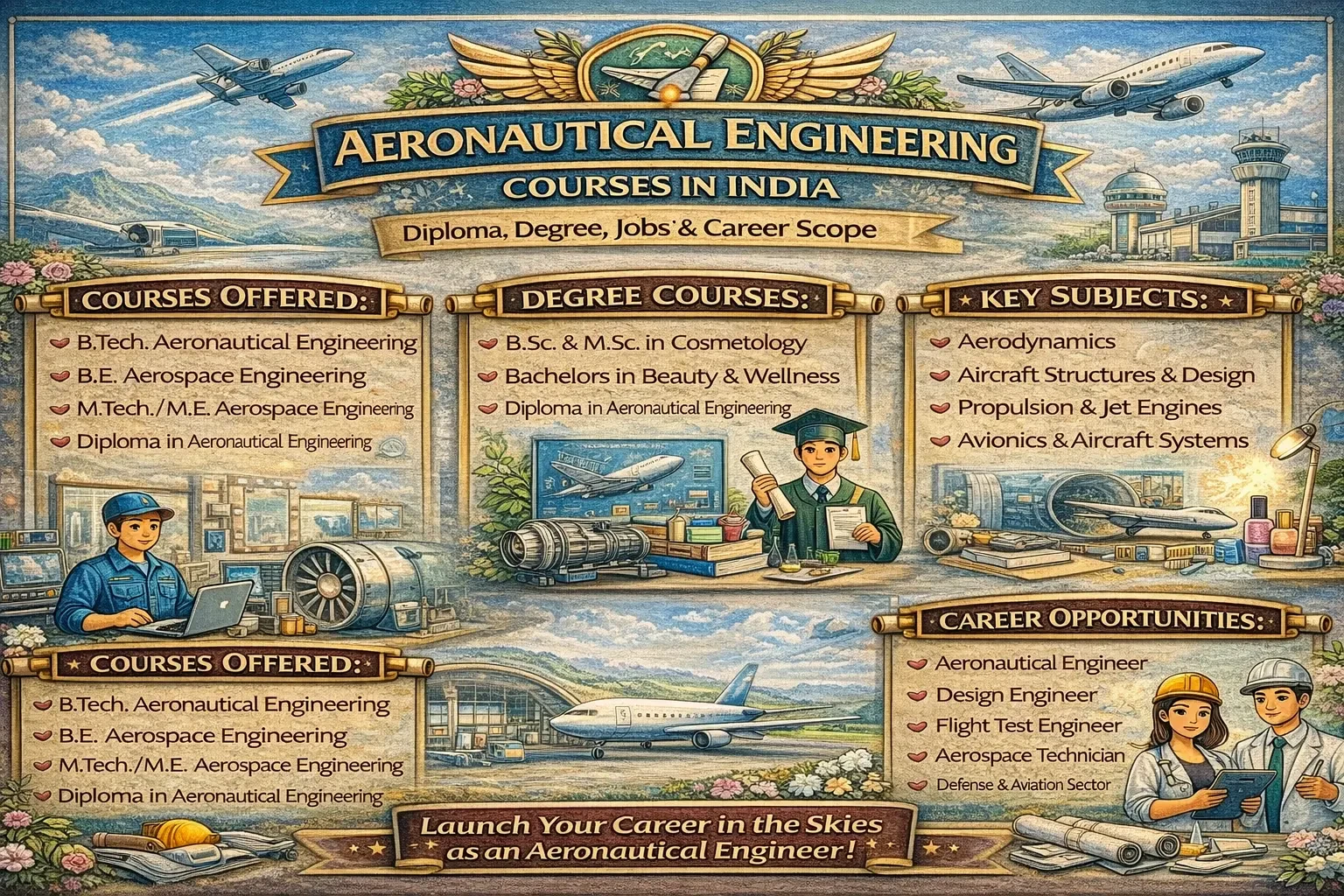
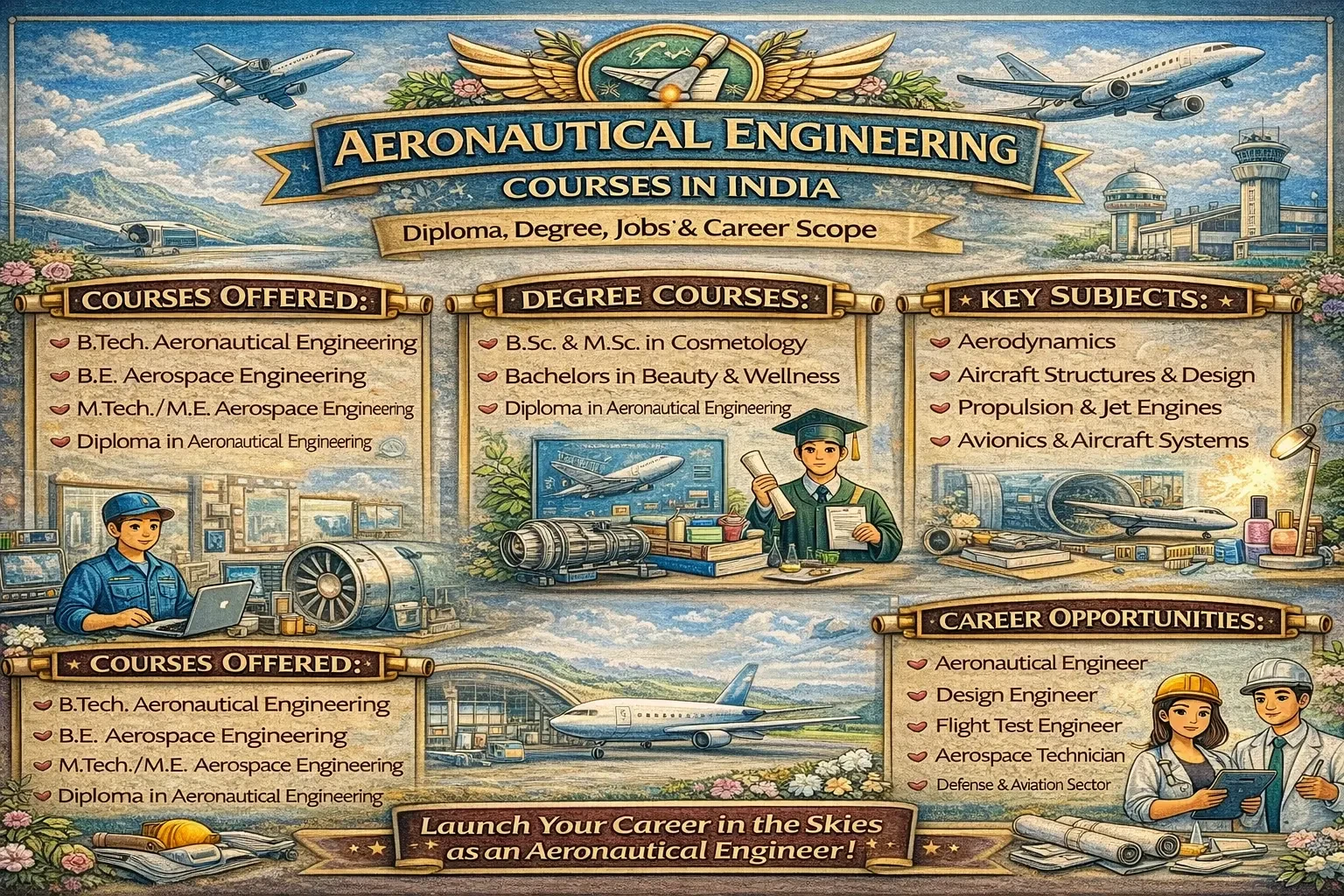
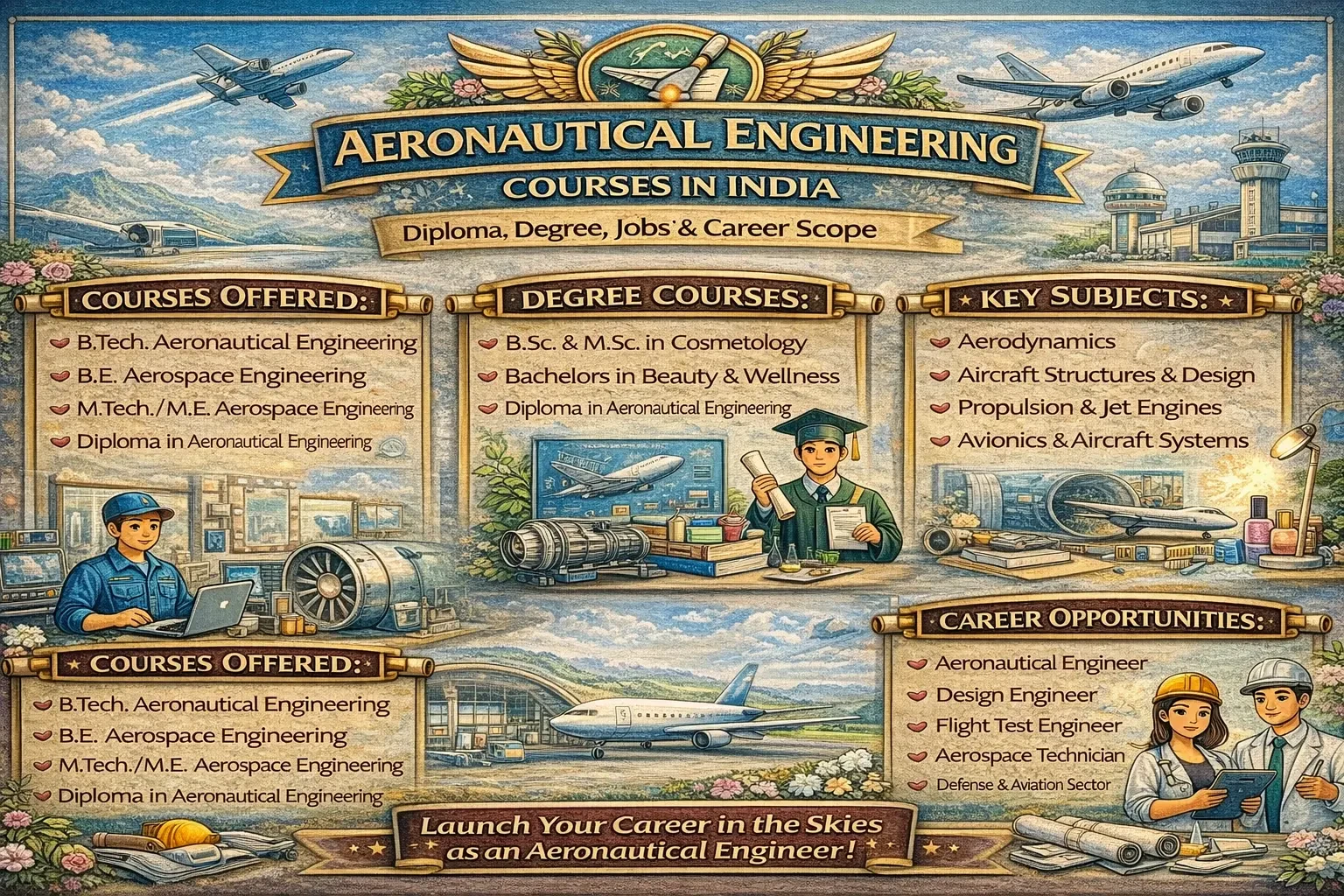
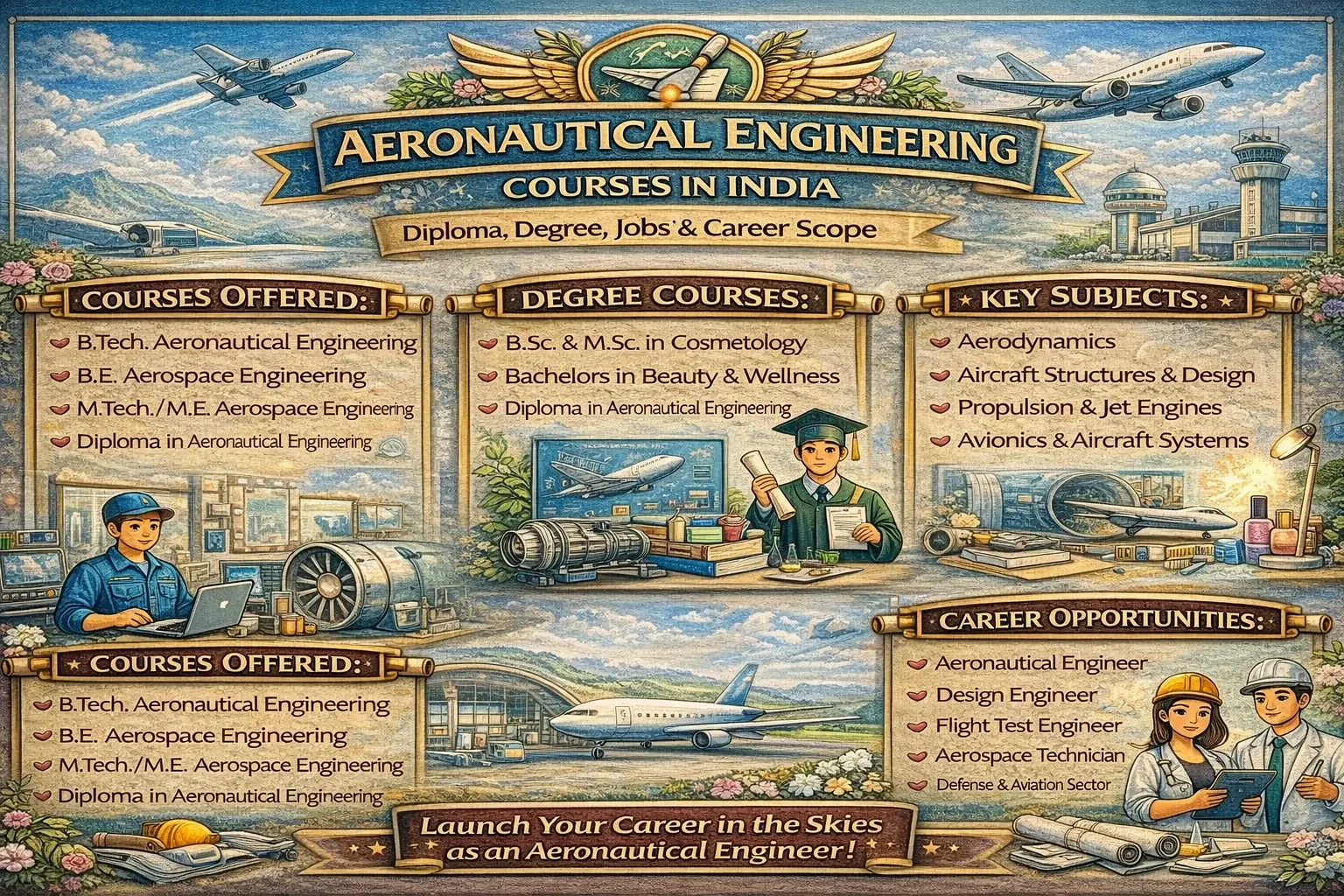
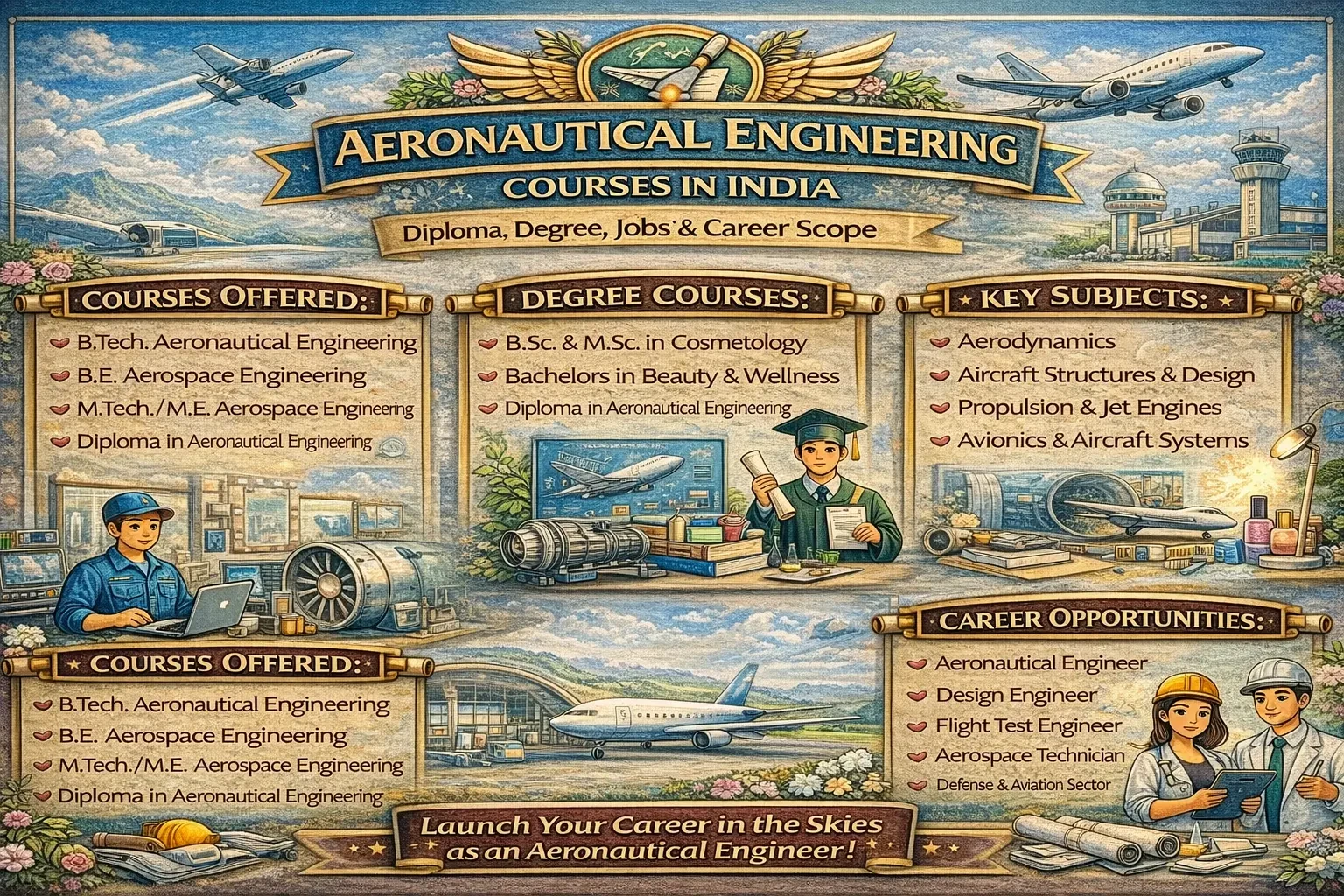
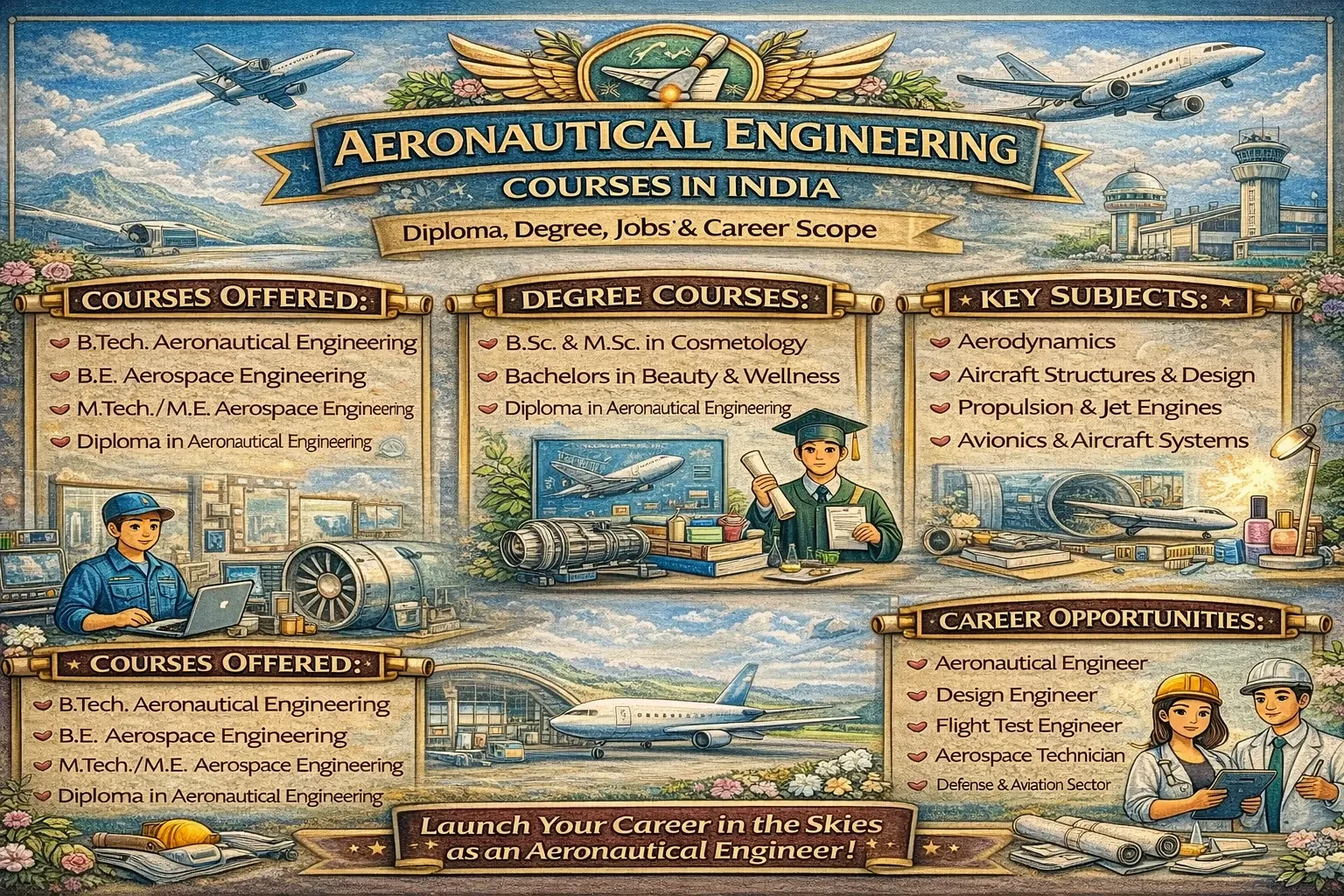
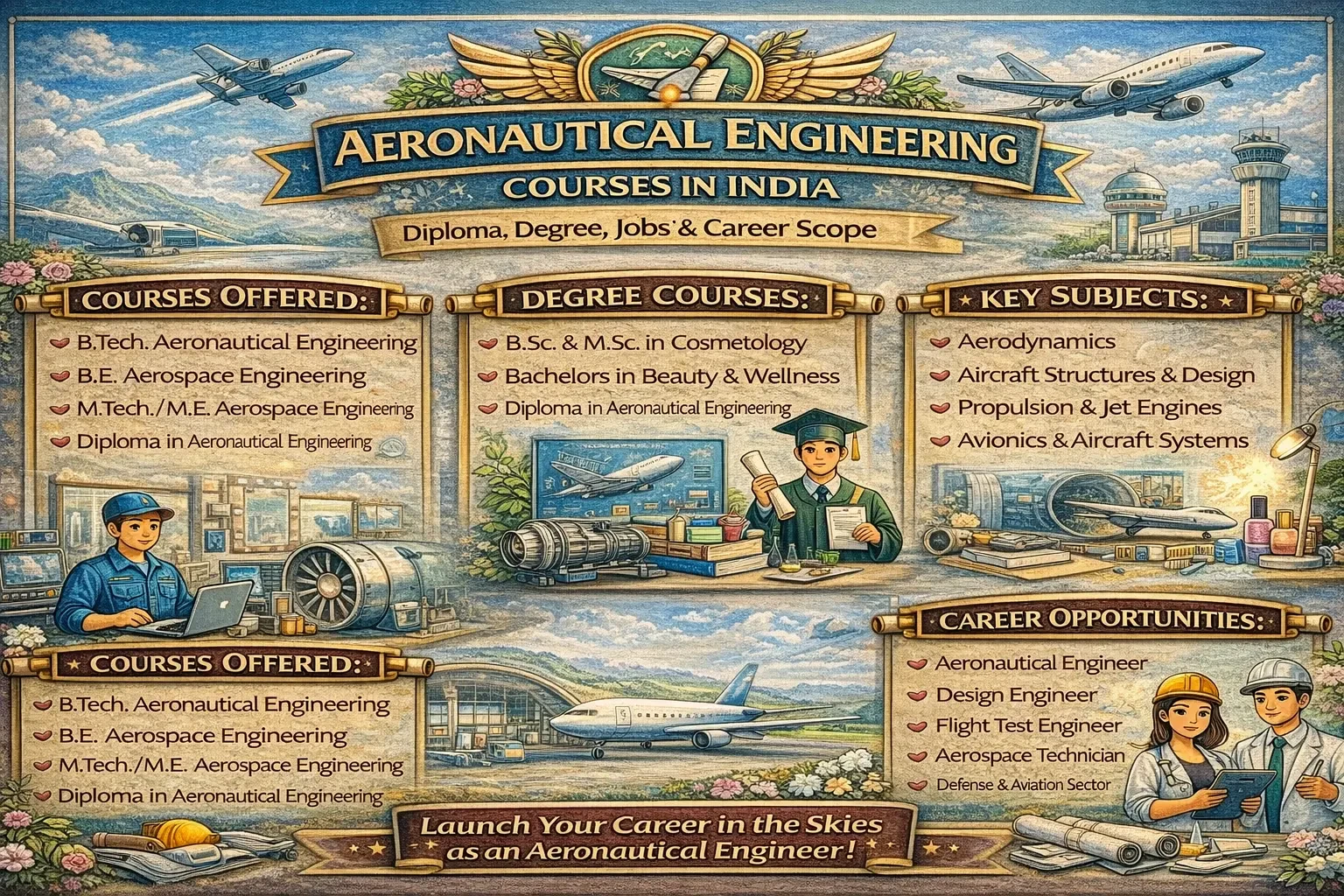
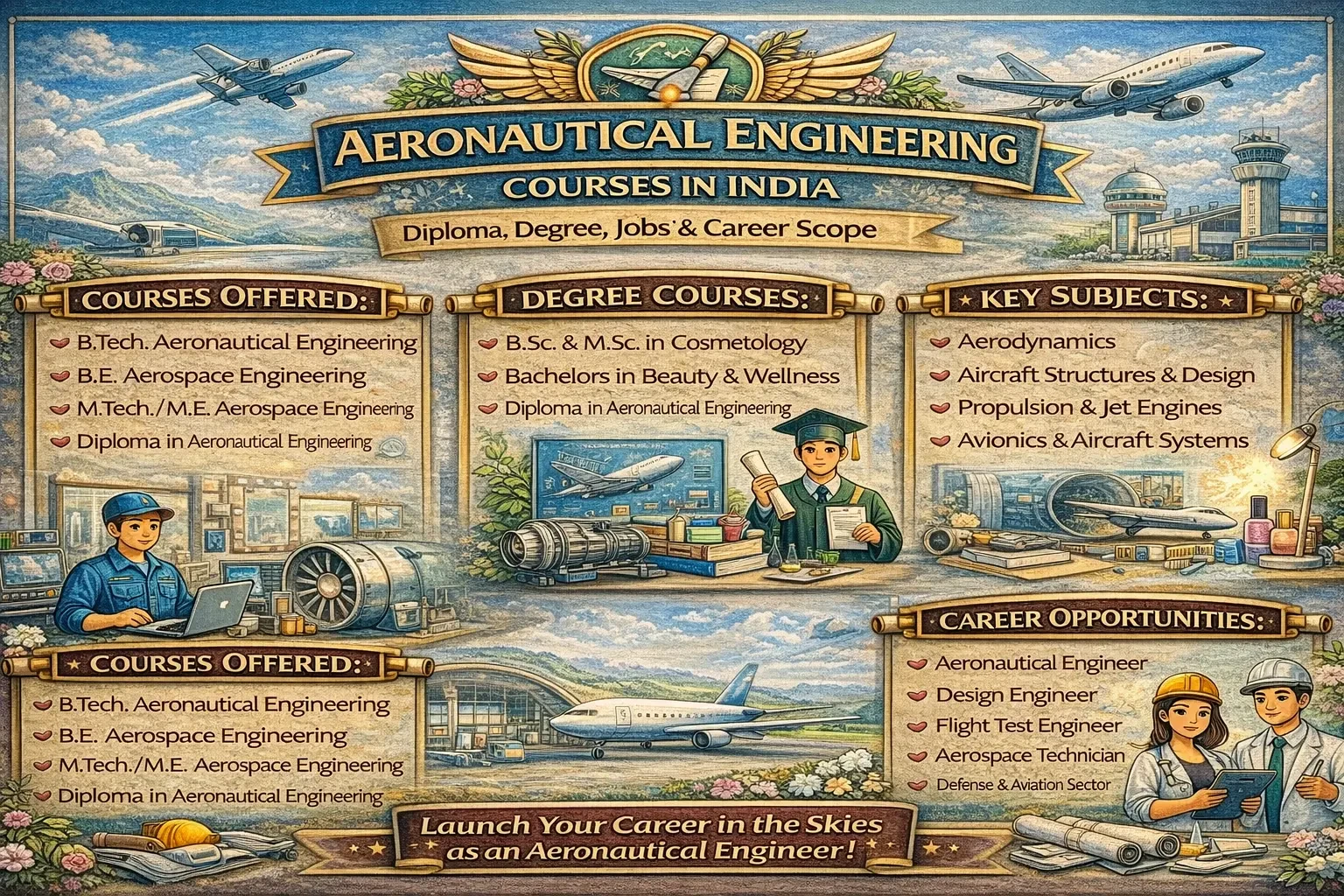
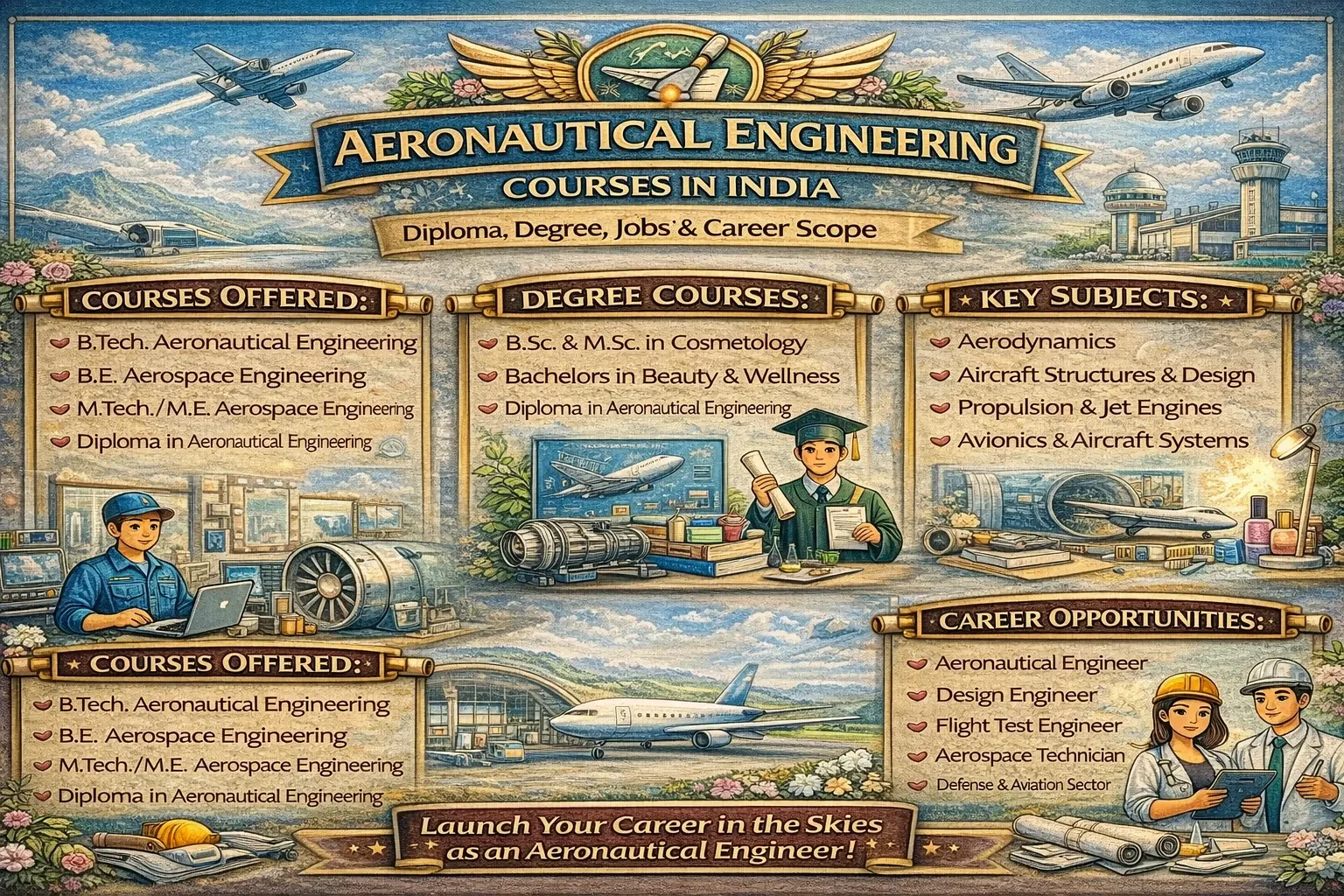
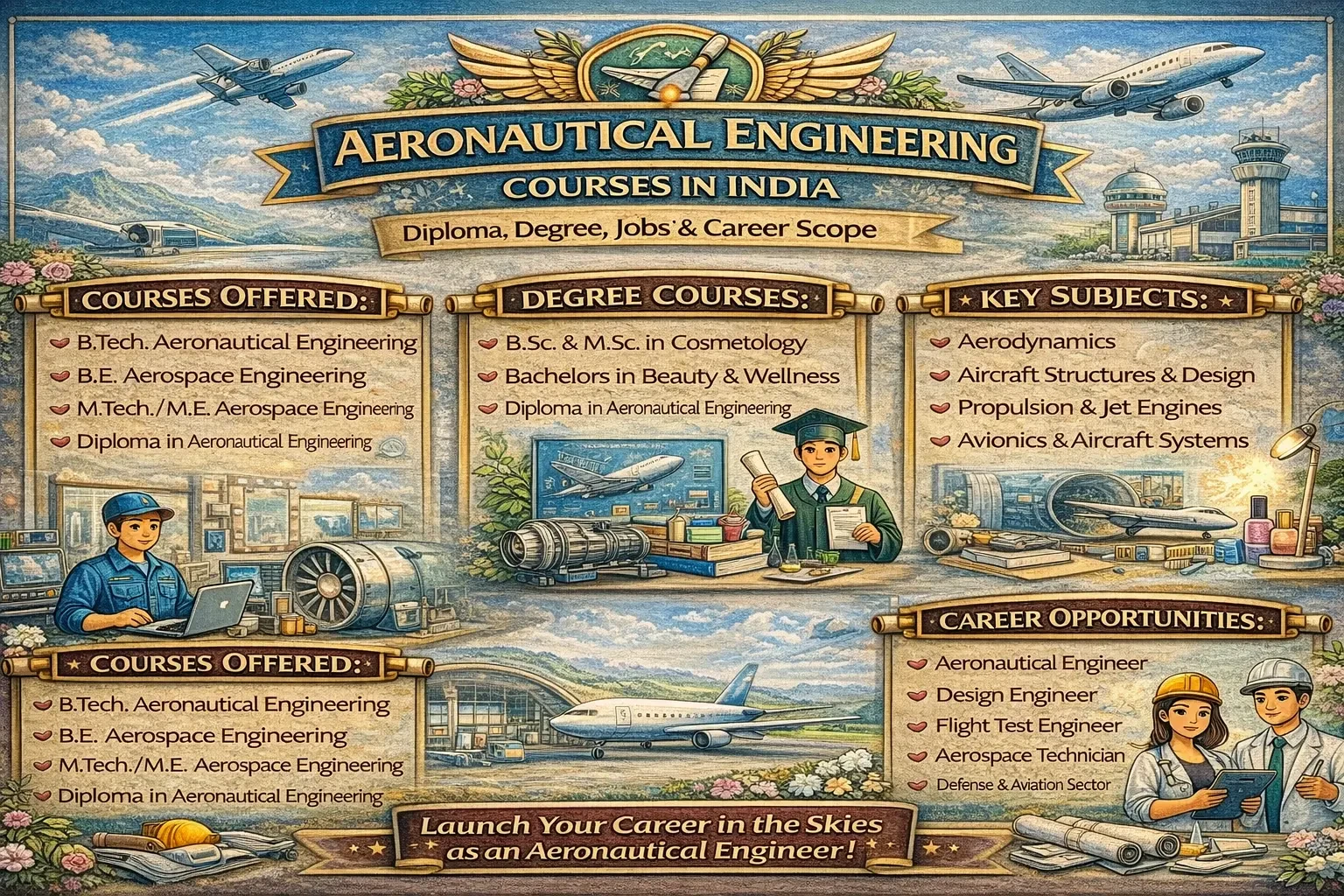
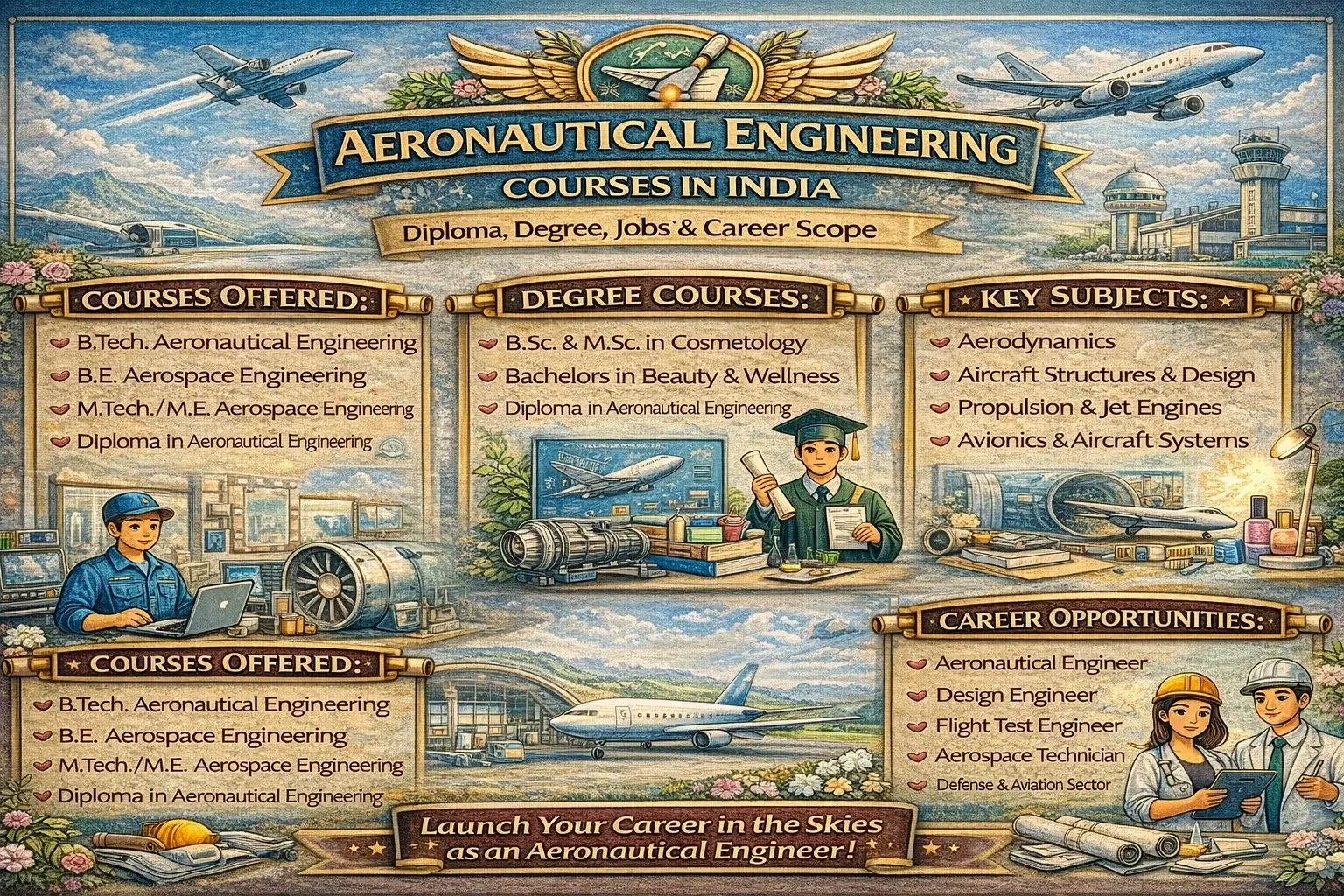
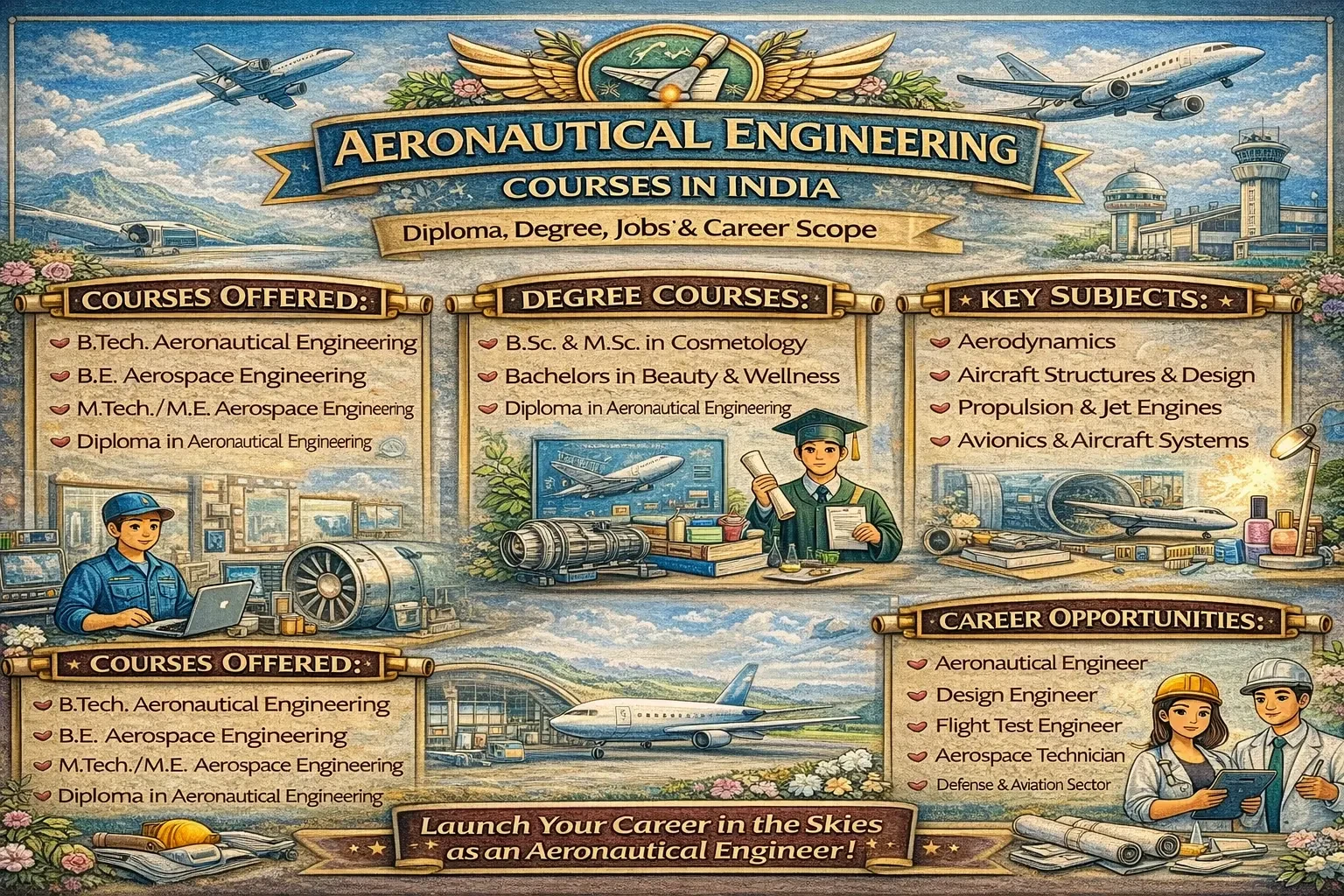
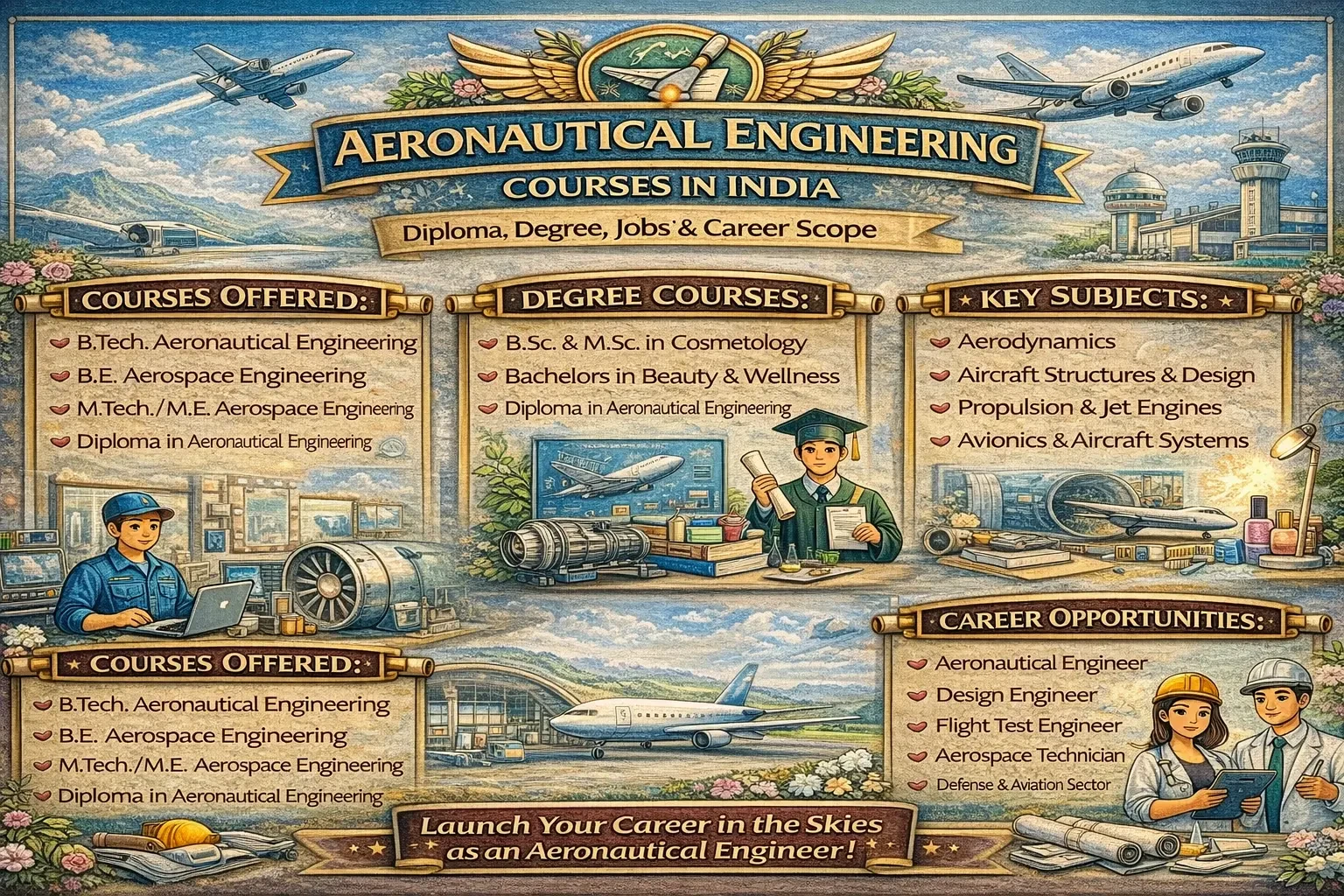
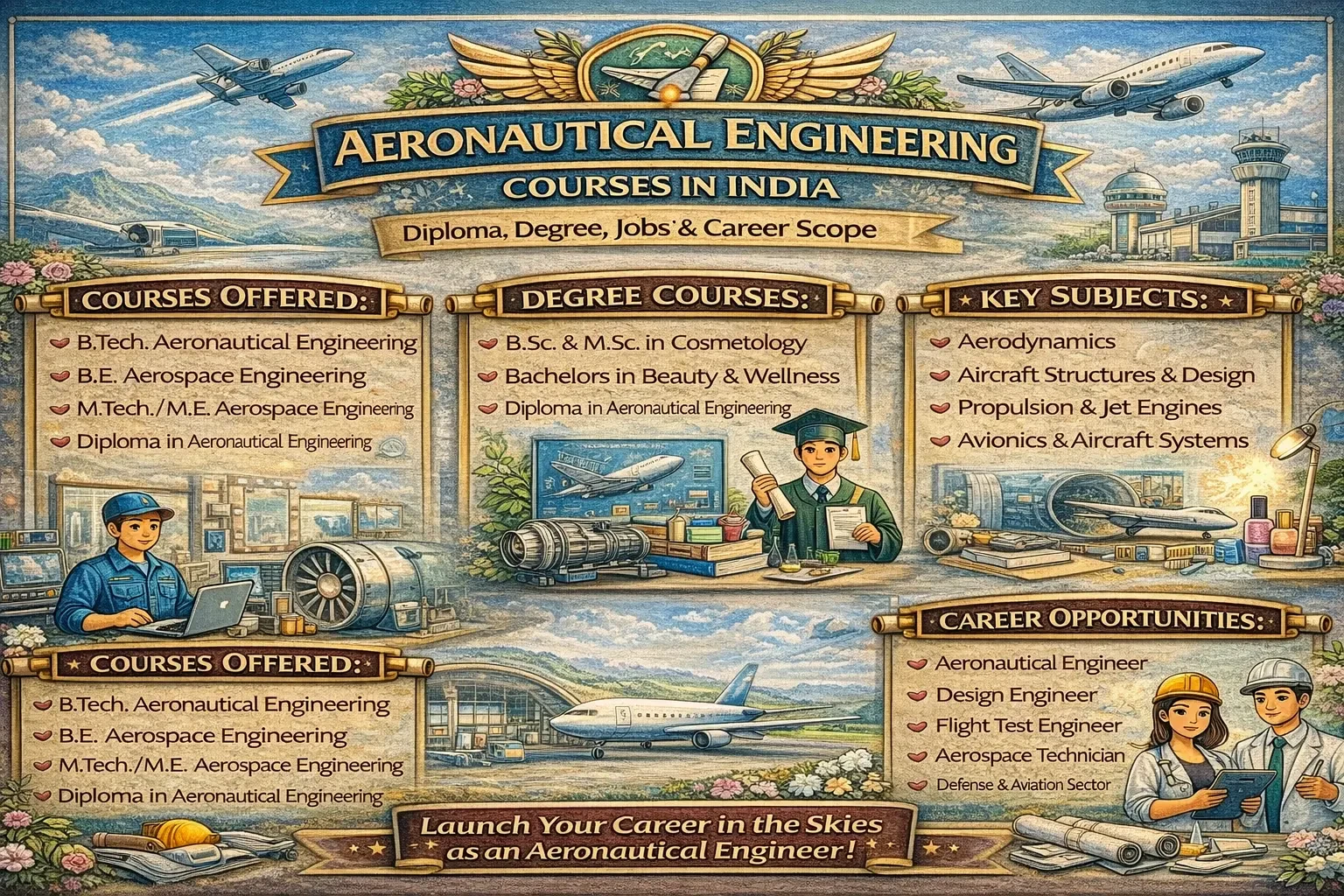
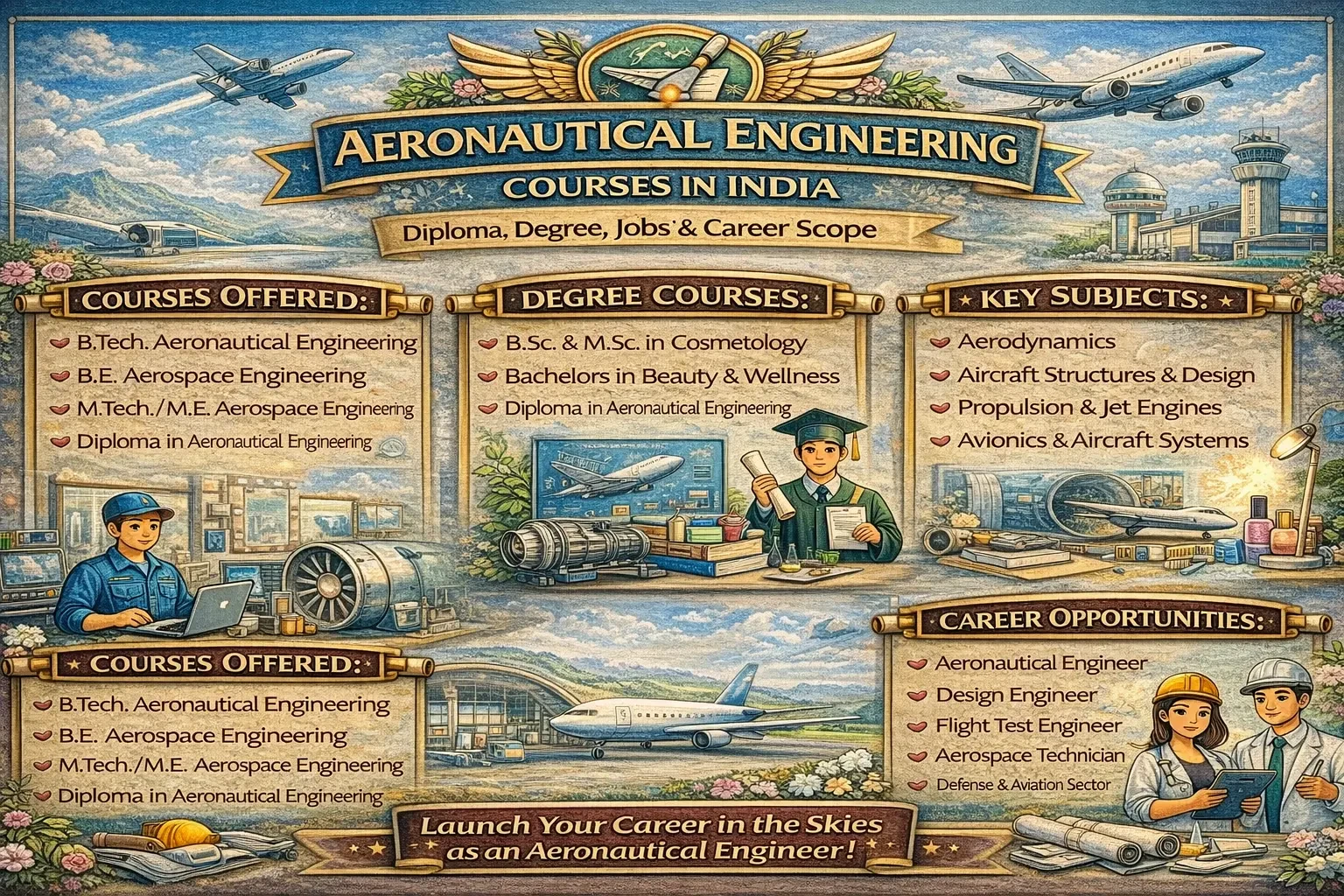
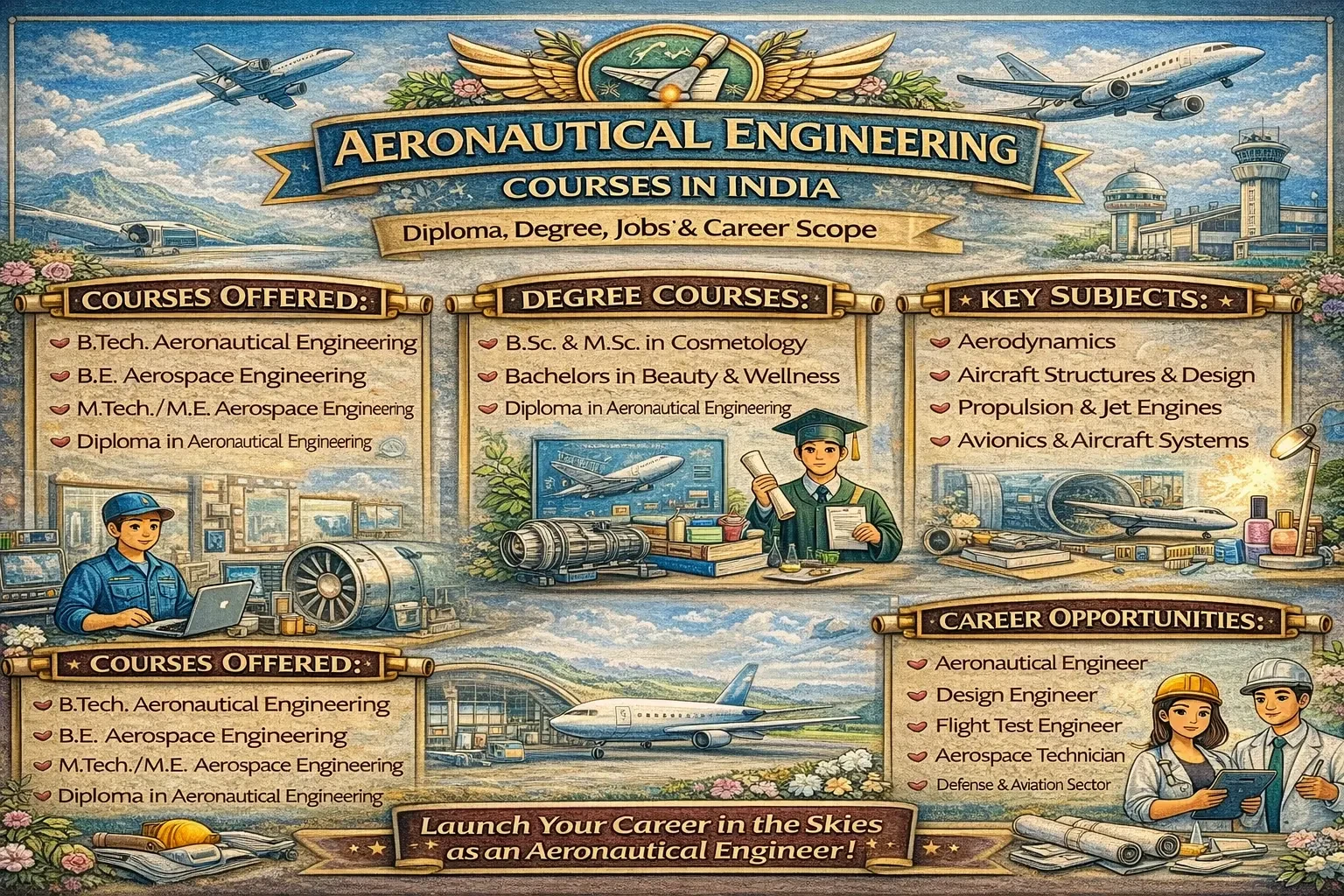
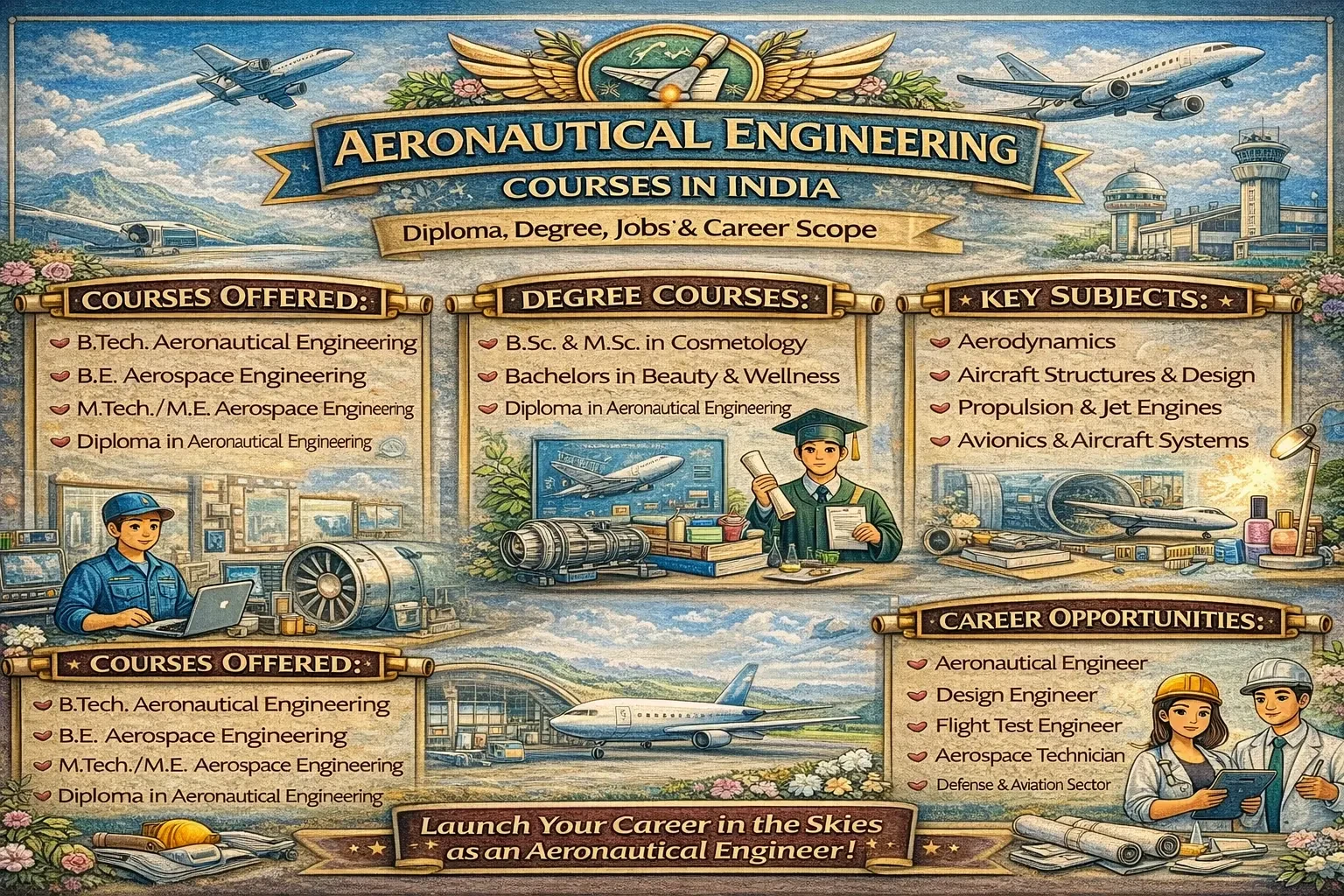
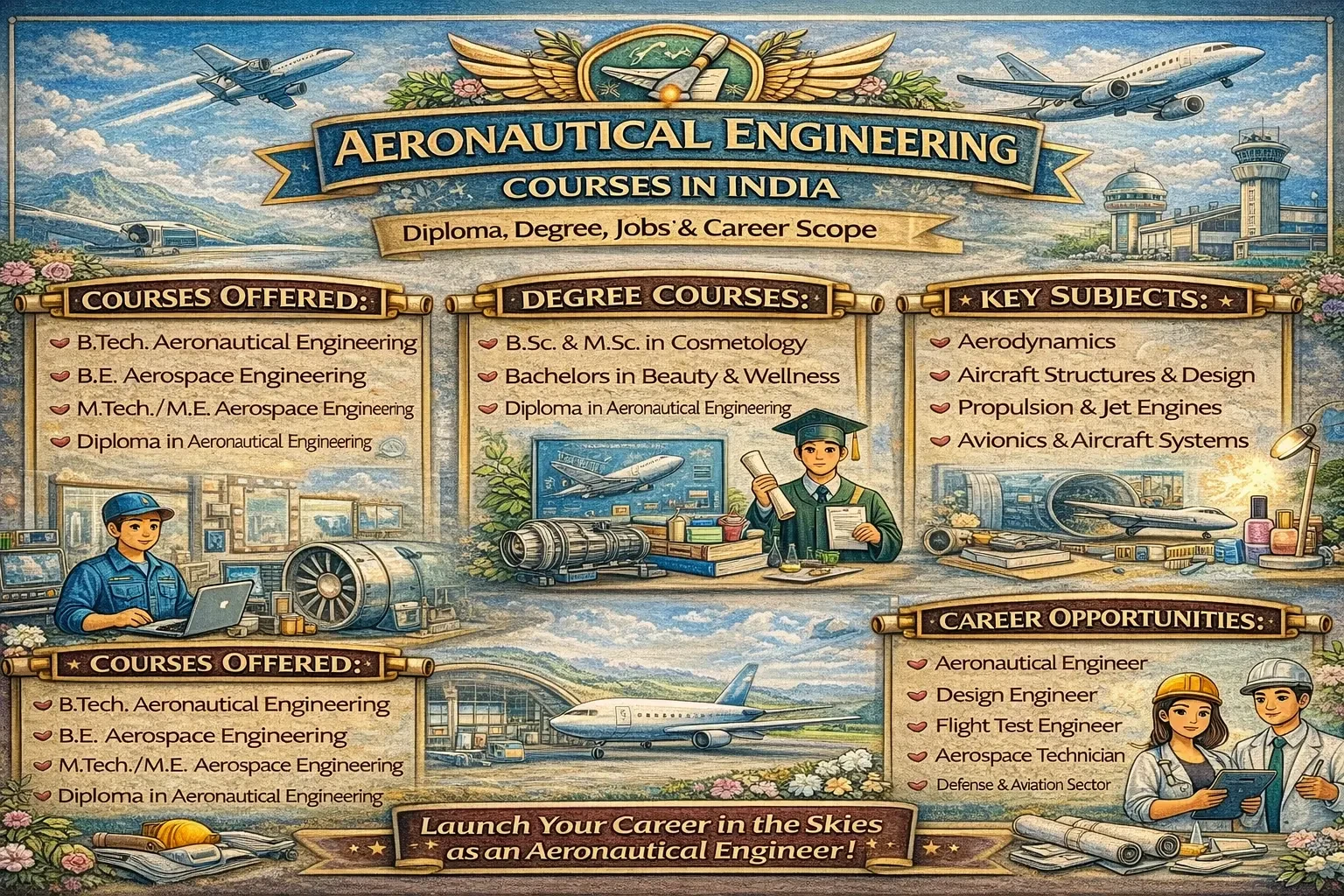
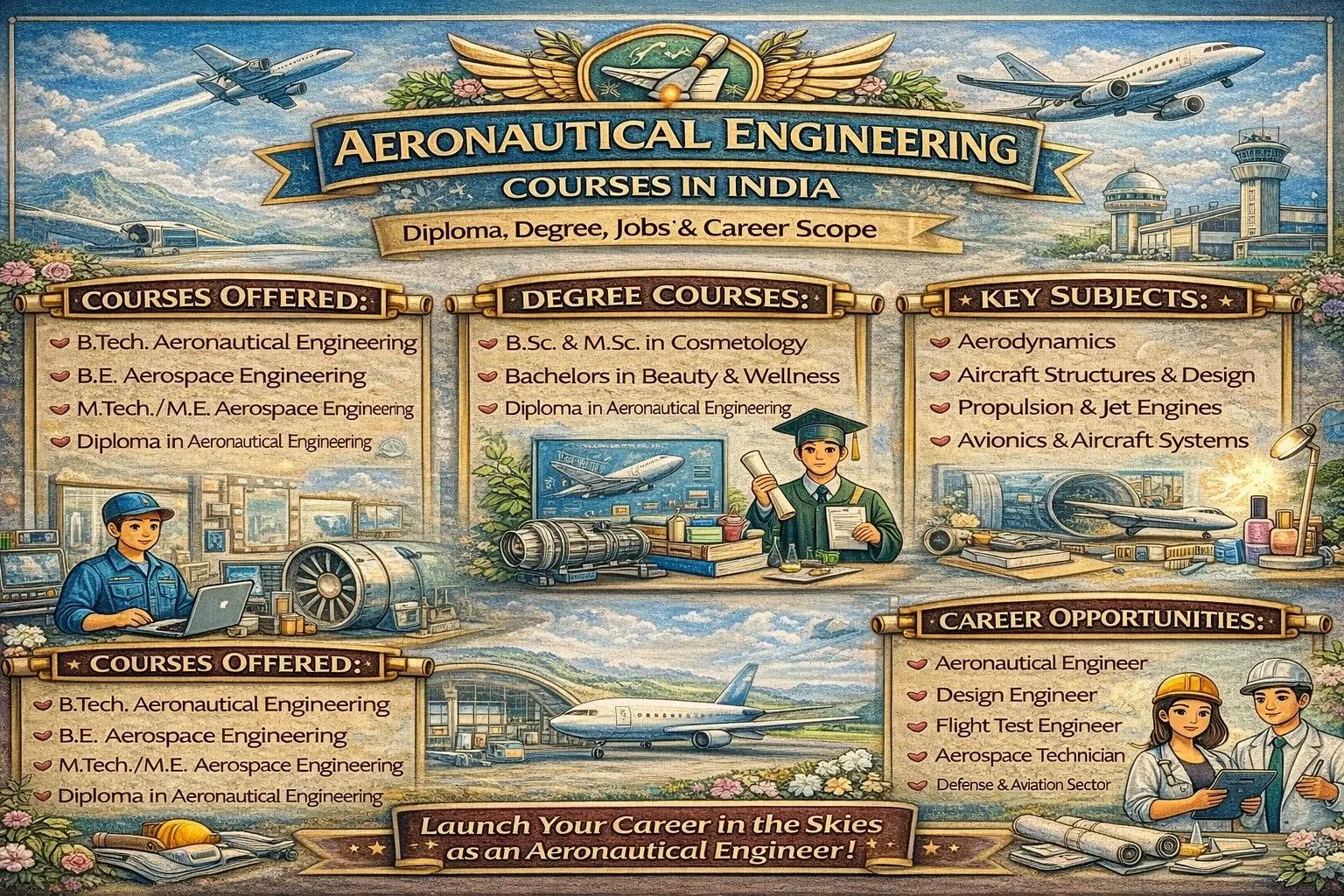
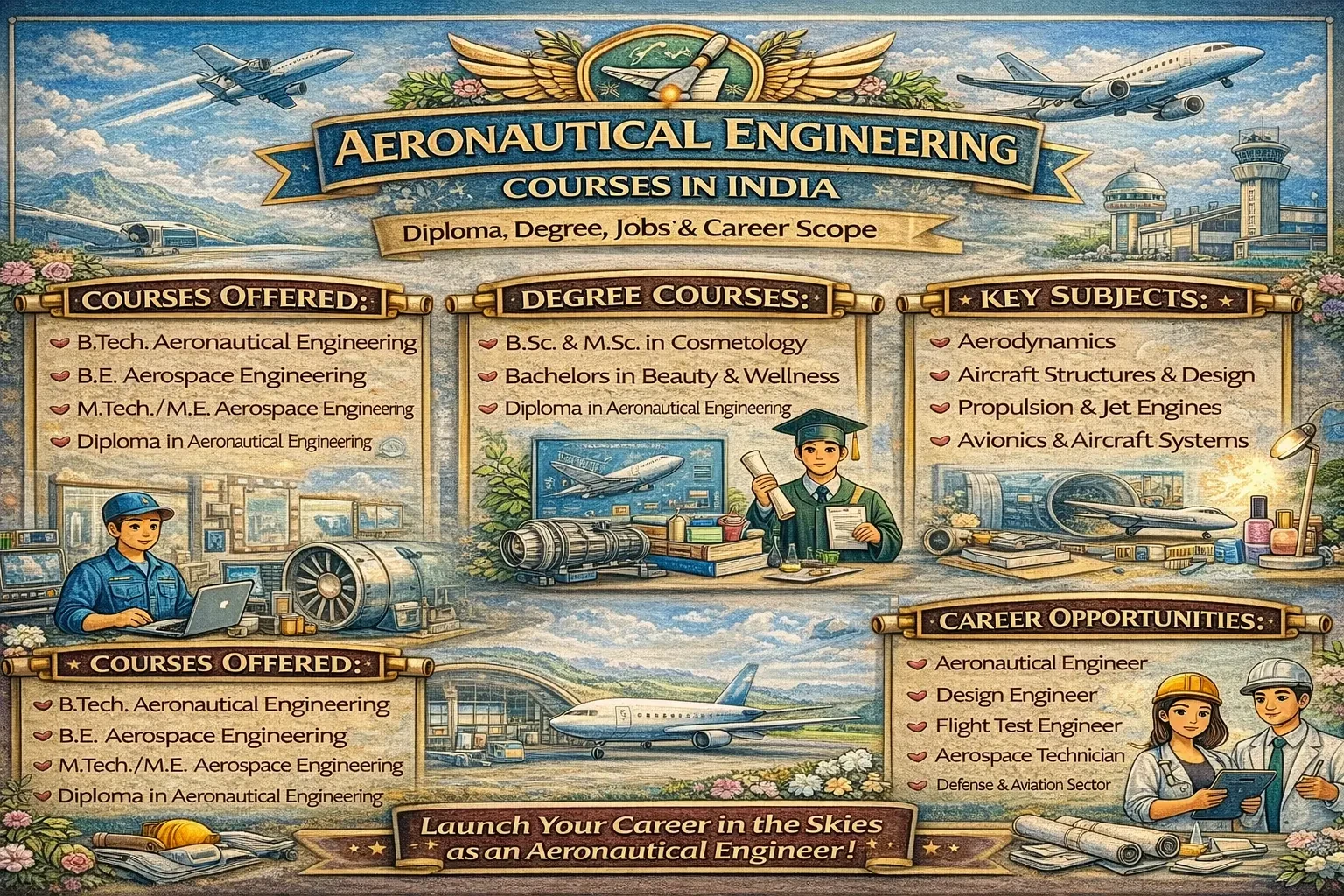
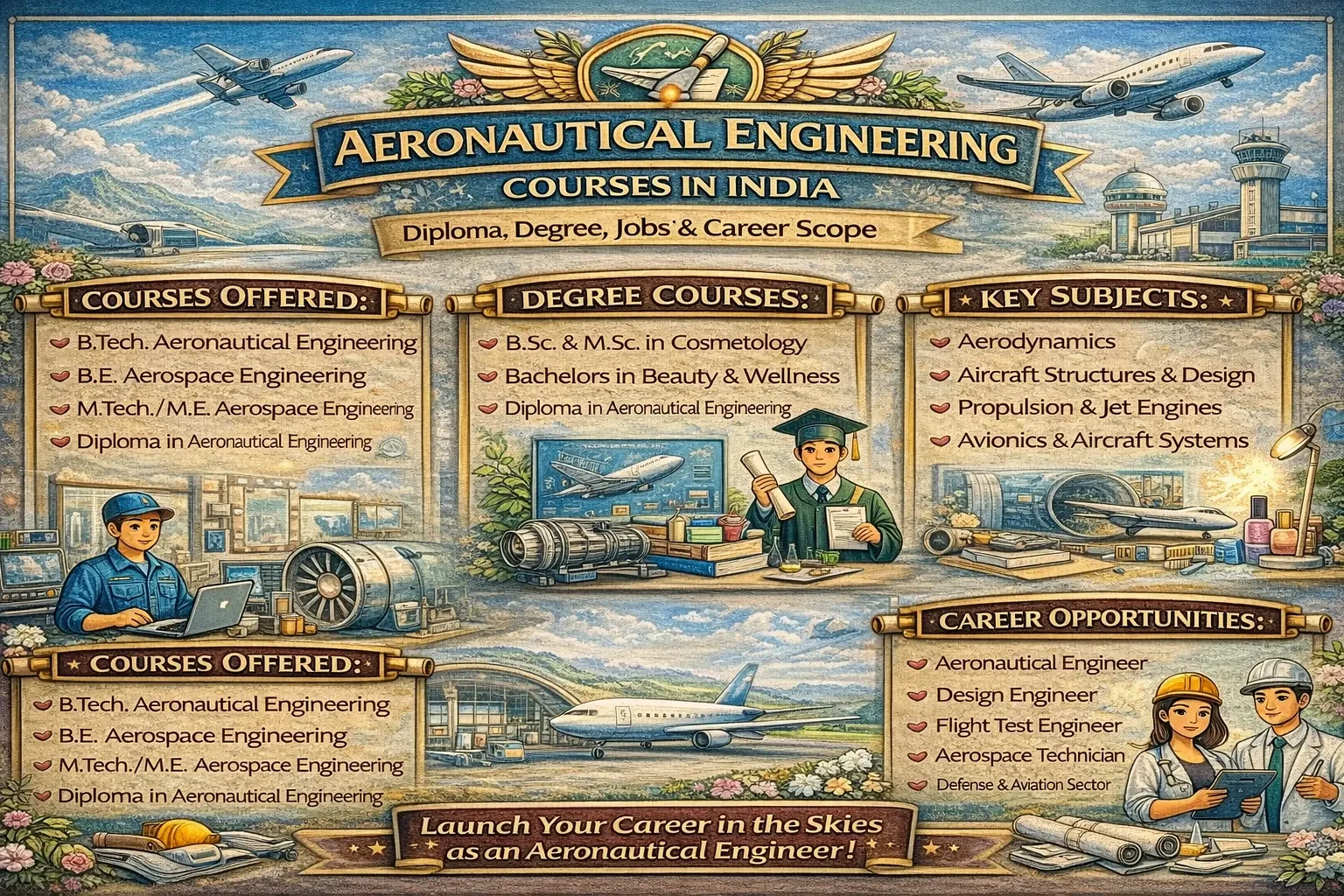
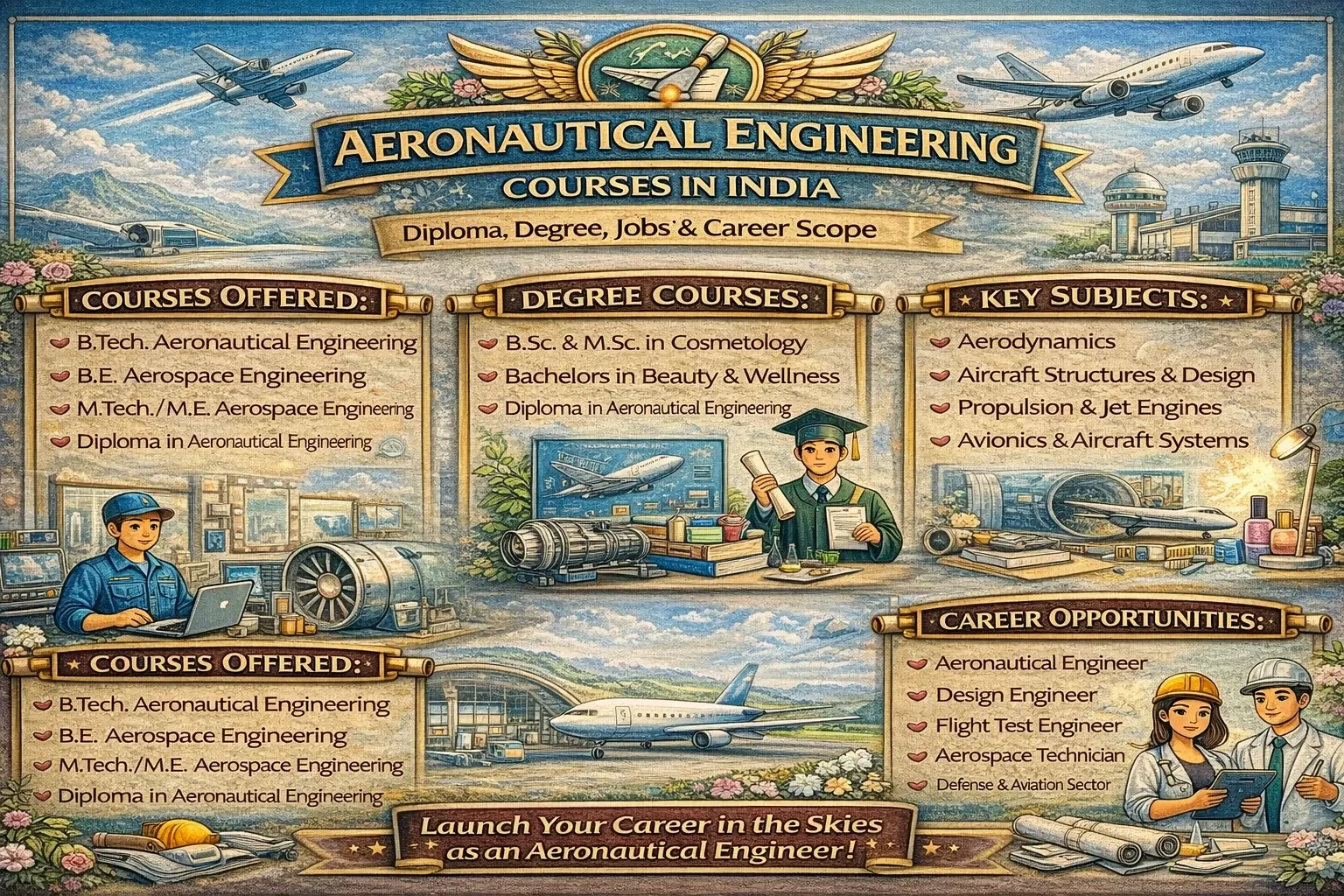
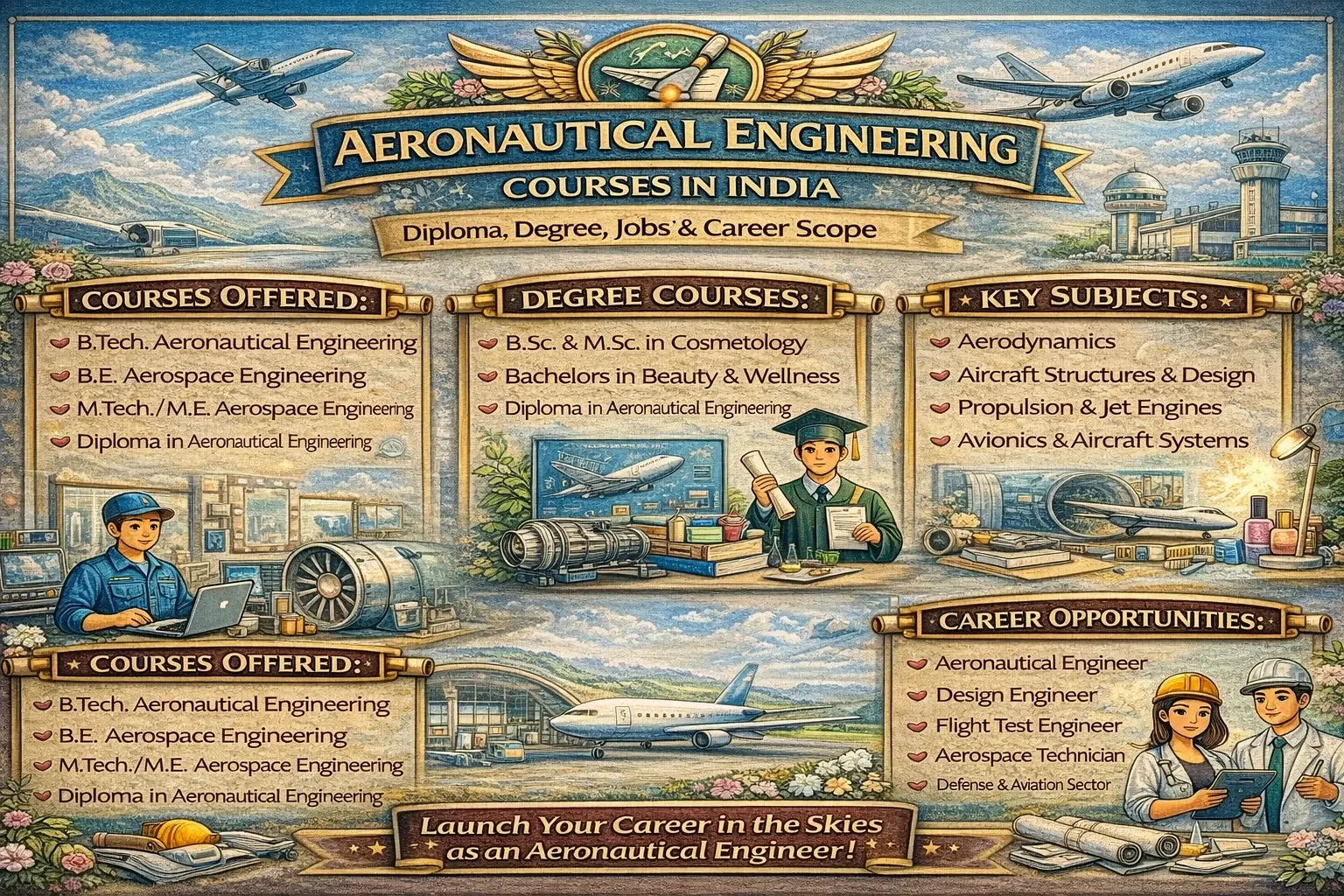
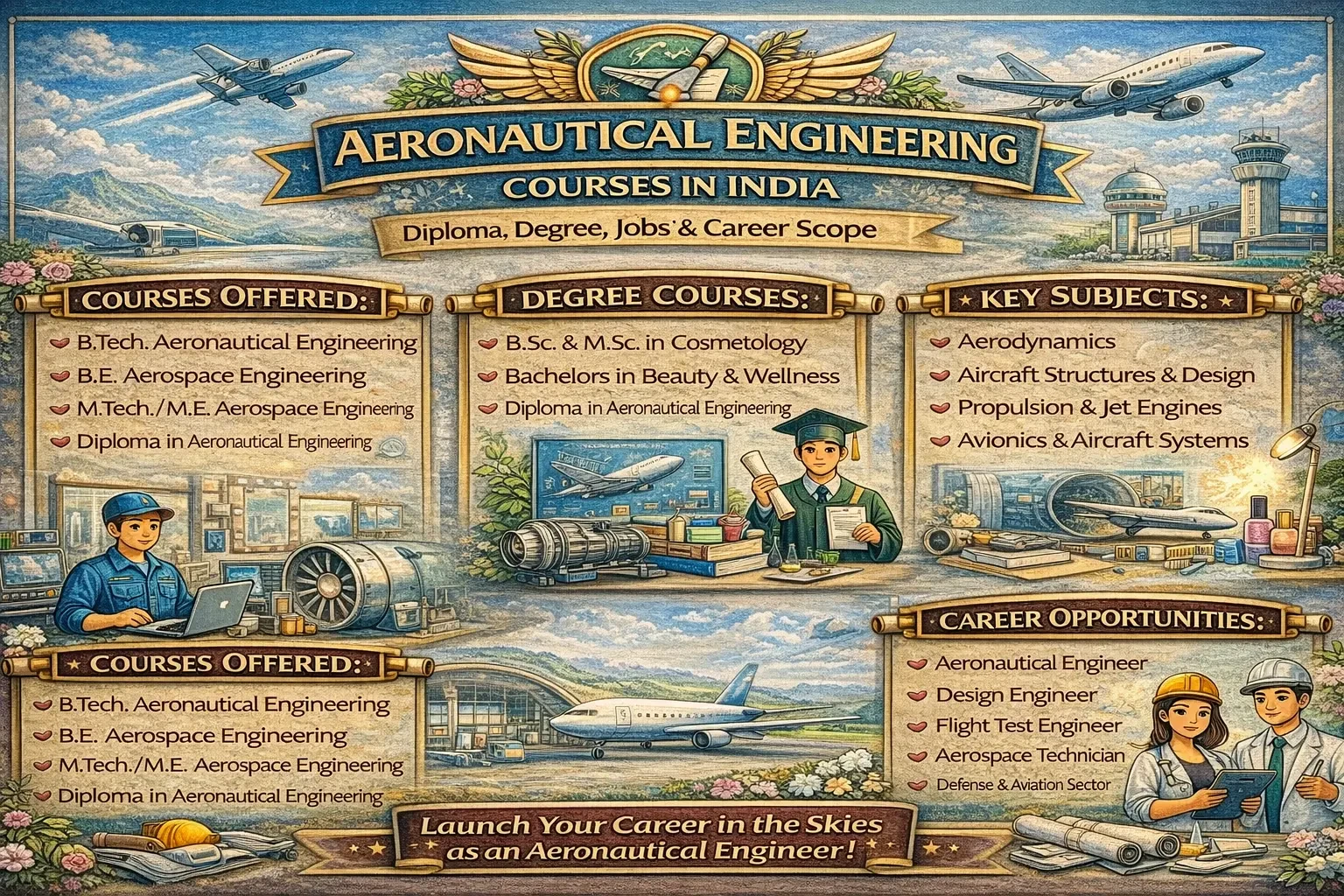
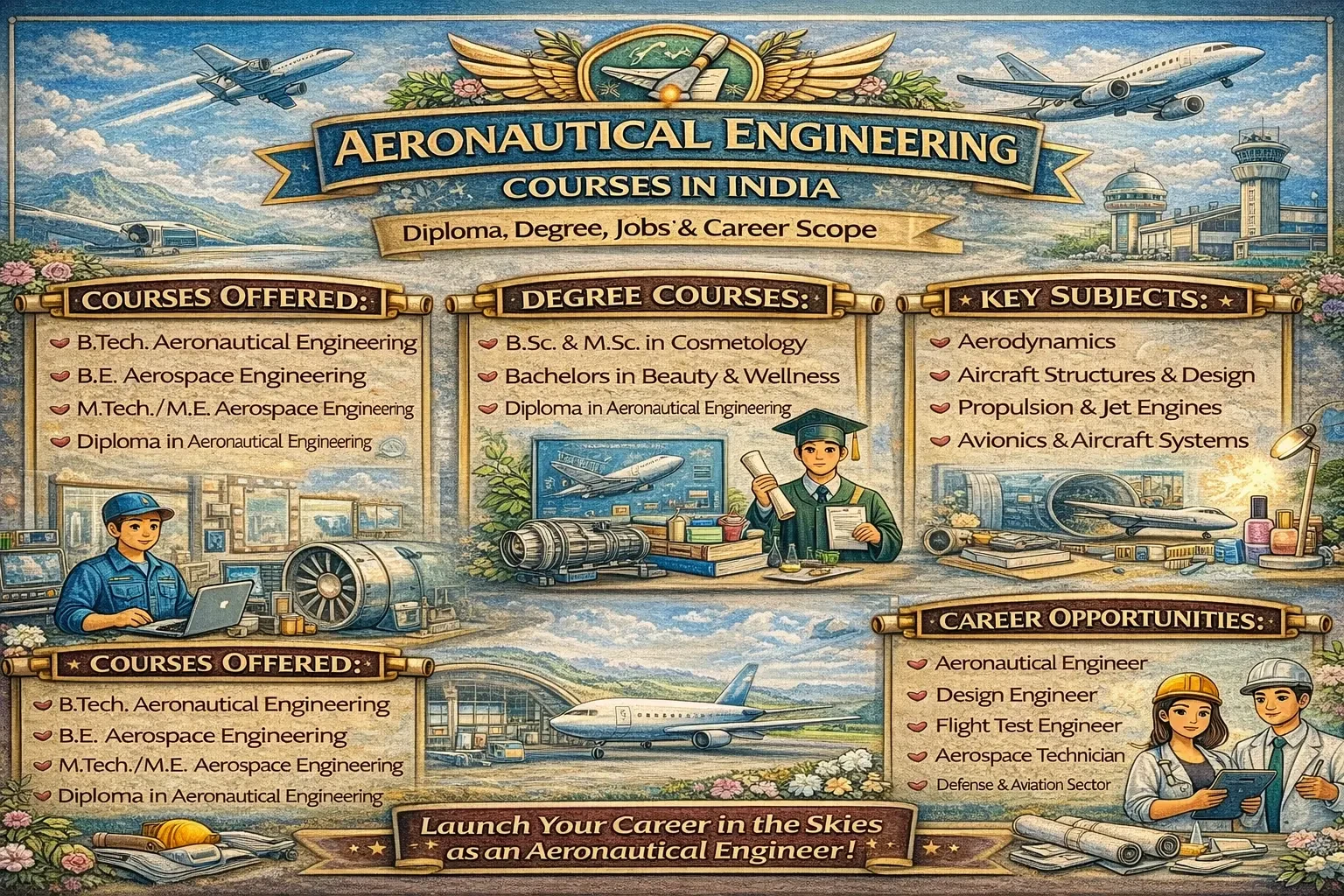
Aircraft fly because someone figured out how to build them right. In India, classrooms turn curiosity into skill by exploring air movement around planes. Some lessons focus on frames that hold everything together. Engines come alive through hands-on study of power and thrust. Wires, sensors, signals - each part speaks through electronics built for sky travel. Movement in three dimensions gets broken down, step by step. Learning happens where theory meets runway dust.
Air travel, military tech, space exploration, and commercial flights are expanding fast - this shift lifts aeronautical engineering into view. Machines that fly now demand sharper minds behind them. Not just gears and wires, but smart design shapes how things move above ground. Tough challenges push this work forward. Curiosity drives it, too.
Aeronautical Engineering Course Goals
The main objectives of aeronautical engineering courses are to:
- Develop technical knowledge of aircraft and flight systems
- Understand aerodynamics and aircraft structures
- Train students in aircraft maintenance and safety
- Prepare engineers for aviation and aerospace industries
- Promote innovation and research in aeronautical sciences
Aeronautical Engineering Course Overview
A typical outline covers these points:
- Engineering Mathematics and Physics
- Basics of Aeronautics
- Aerodynamics
- Aircraft Structures
- Aircraft Propulsion Systems
- Flight Mechanics
- Avionics Systems
- Aircraft Materials and Manufacturing
- Aircraft Maintenance and Safety
- Computer-Aided Design (CAD)
- Project Work and Industrial Training
Sophisticated Areas Within Aircraft Engineering
Students can specialize in:
- Aircraft Design Engineering
- Aircraft Maintenance Engineering
- Aerodynamics and Fluid Mechanics
- Avionics and Navigation Systems
- Propulsion and Engine Systems
- Unmanned Aerial Vehicles (UAVs / Drones)
Types of Aeronautical Engineering Courses in India
Diploma Courses in Aeronautical Engineering
- Diploma in Aeronautical Engineering
- Duration: 3 years
- Focus on aircraft maintenance and basic engineering
Degree Courses in Aeronautical Engineering
- B.Tech / B.E in Aeronautical Engineering
- Aerospace Engineering degree, either a B.Tech or a B.E
- Duration: 4 years
Postgraduate Courses
- M.Tech / M.E in Aeronautical or Aerospace Engineering
- Research-oriented programs
Eligibility Criteria for Aeronautical Engineering Courses
- Physics, chemistry, mathematics - that's what fills out the PCM combo after 10 plus two years more of school. A path shaped by numbers, reactions, forces, taken step by step beyond tenth grade
- Minimum qualifying marks as per institute norms
- Getting into engineering often starts with tests such as JEE Main. Some go on to tackle JEE Advanced after that. Others choose entrance exams run by individual states instead
- Those who hold a diploma might enter at an advanced stage
Schools in India That Teach Airplane Engineering
- Indian Institute of Technology (IITs – Aerospace Programs)
- Indian Institute of Science (IISc), Bengaluru
- Hindustan Institute of Technology and Science (HITS)
- Madras Institute of Technology (MIT)
- Amity University
- Lovely Professional University (LPU)
- Government Engineering Colleges
Personality Traits Needed
- Strong analytical and problem-solving skills
- Interest in aircraft and aviation technology
- High level of precision and discipline
- Ability to work under pressure
- Teamwork and technical communication skills
Job Opportunities After Aeronautical Engineering Studies
Aeronautical engineering graduates can work in:
- Aircraft manufacturing companies
- Airlines and aviation companies
- Defense and military aviation sectors
- Space research organizations
- Flying machine fixers
Major Employment Areas
- Aviation Industry
- Aerospace and Defense Groups
- Aircraft Manufacturing Units
- research and development centers
- Maintenance Repair and Overhaul Companies
Job Roles in Aeronautical Engineering
- Aeronautical Engineer
- Aircraft Design Engineer
- Maintenance Engineer
- Avionics Engineer
- Flight Test Engineer
- Quality Assurance Engineer
- UAV / Drone Engineer
Salary Structure in Aeronautical Engineering
- Entry Level: ₹4–6 LPA
- Mid-Level: ₹8–15 LPA
- Senior Engineers / Specialists: ₹20–40 LPA+
Pay shifts based on what you know, where you work, because expertise changes value
Career Opportunities in Aeronautical Engineering
Flying machines need clever minds behind them. Because of this, jobs pop up everywhere - nearby towns, faraway countries too. Building things that soar takes skill, so demand stays strong. People who understand airflow, materials, power sources find doors open wide. Experience here works just as well abroad. The work travels, even if you do not
- Expansion of civil aviation and airlines
- Growth in defense and aerospace research
- Rising demand for skilled aircraft engineers
- Advancements in drone and space technologies
Some engineers choose advanced degrees, others dive into research. Global jobs in aviation open doors too. A few head overseas for new challenges. Learning never stops after graduation. Opportunities spread far beyond the first job.
Conclusion
A sky full of machines means minds are needed to shape them. Those drawn to flight often find their purpose here. Learning happens through blueprints, wind tunnels, metal that bends but does not break. Curiosity fuels long nights near engine models. Ideas take off where others see only runways. Few choose this road because it demands sharp focus. Innovation thrives when numbers meet motion in real space. The journey rewards those who listen closely to physics.
Air travel relies on careful design - engineers shape how planes move through sky. Their work keeps flights steady, smart, smooth. Each decision affects speed, fuel, stability high above ground.
 About Us
 Blog
Blog
 Insights & Awareness








 Ensure TV